What matters when choosing?
Start with the sources you will play and where the equipment can safely stand. Then decide whether separated stereo speakers, compact placement or room for a later bass upgrade matters most.
Powered stereo speakers
Choose when: You want two positioned speakers for vinyl or another wired source and have a suitable LINE-level connection.
Allow for: Two cabinets and their cables; a PHONO-only turntable needs a phono stage before an ordinary line input.
Compact wireless speaker
Choose when: Streaming, Bluetooth and a smaller placement area take priority over a separated stereo pair.
Allow for: A single cabinet’s stereo-spacing limitation and, where required, an adapter and cable for turntable playback. Sonos specifies a separate Line-In Adapter for Era 100.
Passive speakers and amplifier
Choose when: You already have amplification or want to select the speakers and amplifier separately.
Allow for: Another component and more cabling. Passive speakers cannot be driven directly by a turntable; a PHONO-level turntable also needs a suitable phono stage or PHONO input.
| Concern |
What to check |
Who this matters to |
| Vinyl connection |
Check the turntable’s PHONO/LINE setting and the chosen system’s input. A PHONO-level signal needs suitable preamplification before a standard line input. |
If records are my main source, I need the turntable and speaker inputs to work together without an avoidable connection problem. Around 42% of consumers put correct vinyl connection first. |
| Bass and expansion |
Consider stated frequency response alongside its measurement conditions, tone controls and whether a subwoofer output is available; wattage alone is not a bass test. |
When the bass line drives what I enjoy in reggae, I want to consider whether the setup leaves room to adjust or expand it. Fuller bass and expansion are the first concern for around 33% of consumers. |
| Space and daily use |
Measure a stable, dry position; check the playback options you use and the accessories needed for any wired source. |
If the worktop also serves everyday kitchen tasks, I need a speaker I can position safely and use with my regular sources. Compact, multi-source use comes first for around 25% of consumers. |
Joybuy speaker choices
These tabletop and desktop Edifier models offer Bluetooth playback in different formats. If vinyl is central to your choice, check each model’s analogue connection, your turntable’s output and the space available before deciding.
 No image available
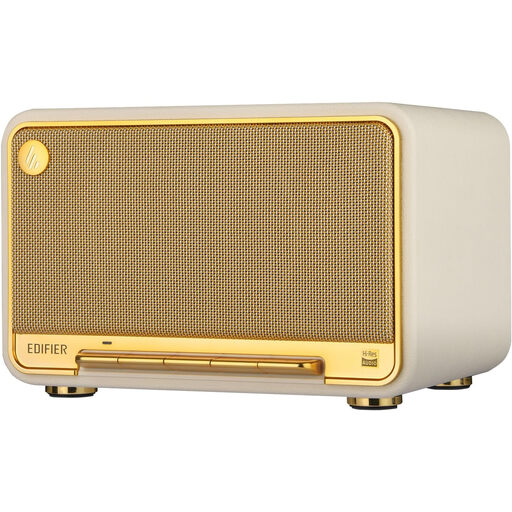
Edifier D32 tabletop wireless speaker
Consider this tabletop model if you want Bluetooth listening as well as an AUX input for a suitable line-level source.
The listing names Bluetooth 5.3, AirPlay 2, USB-C, 60 W RMS and 11-hour playtime. Check the turntable’s output and the space needed for safe placement; an AUX input alone does not establish a PHONO input.
Joybuy
 No image available
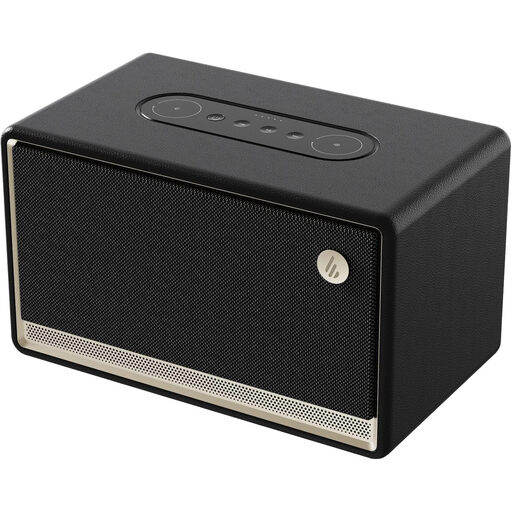
Edifier ES300 tabletop wireless speaker, Black
This tabletop model is relevant if Bluetooth playback and the ability to move the speaker between suitable positions matter to you.
The listing names Bluetooth 5.3 and 12-hour playtime. For records, confirm the analogue connection and any required phono stage before buying; also measure the stable, dry space where you intend to use it.
Joybuy
 No image available
Edifier M60 multimedia speakers
Consider the M60 if a desktop-style setup with Bluetooth and an AUX input fits your planned listening position.
The listing names Bluetooth 5.3, USB-C, 66 W RMS, 3-inch mid-bass drivers and 1-inch tweeters. Confirm that the package contains the speaker cabinets you expect, and check whether your turntable needs a phono stage before using AUX.
Joybuy
Frequently asked questions
Can I connect a turntable directly to powered speakers?
Yes, if the turntable supplies LINE-level output and the speakers have a compatible line input, or the setup otherwise provides a suitable phono stage. Audio-Technica explains that the turntable’s LINE setting uses its internal preamp; a PHONO-level output needs preamplification before an ordinary line input. Avoid sending an already preamplified signal into a PHONO input.
Do I need two speakers to play reggae albums in a kitchen diner?
No: one compact speaker may suit a limited surface and regular streaming, while two properly positioned speakers provide physical left and right separation. Measure the usable space and plan the cables before deciding; neither cabinet count nor size alone establishes how the music will sound in your room.
Where can I put a powered speaker in a kitchen?
Use a stable, dry position away from the sink, cooker and obstructed ventilation, with leads routed clear of kitchen activity. Electrical Safety First says sockets and switches should, where possible, be at least 30 cm horizontally from the sink; follow the speaker manufacturer’s instructions as well.
Is a humidity-resistant speaker safe beside the sink?
No. Sonos describes the Era 100 as humidity-resistant, but that does not establish that it can withstand splashes or be placed beside a sink. Keep powered equipment away from water and follow the manufacturer’s placement instructions.


