What matters when buying?
For a family gravy serving, check whether your vessel fits, then compare reheating controls and the space the appliance takes up. Additional cooking modes matter only if they have a regular use in your kitchen.
| Concern |
What to check |
Who this matters to |
| Usable cavity space |
Measure your microwave-safe jug, including its handle and height, against the model’s internal dimensions and turntable or flatbed layout. Check the appliance’s outside dimensions too. |
I need my usual serving jug to fit, with room to handle and stir it during a family meal. Around 45% of consumers put vessel and meal capacity first. |
| Heating control |
Compare time and power controls for short heating intervals; check whether the exact model offers inverter operation or sensor reheat if those features matter to you. |
When reheating thick gravy, I want to pause, stir and assess it rather than rely on one uninterrupted cycle. Controllable reheating is the primary need for around 36% of consumers. |
| Appliance type and footprint |
Check the worktop footprint and choose solo for reheating alone. Consider grill or combi functions if you will also brown, grill, bake or roast food. |
I have limited worktop room, or I need the appliance to do more than reheat gravy. Around 19% of consumers prioritise space or additional cooking modes. |
Solo microwaves on Joybuy
These solo microwaves are options for households mainly reheating gravy; compare each model’s usable space and controls with your usual serving vessel.
 No image available
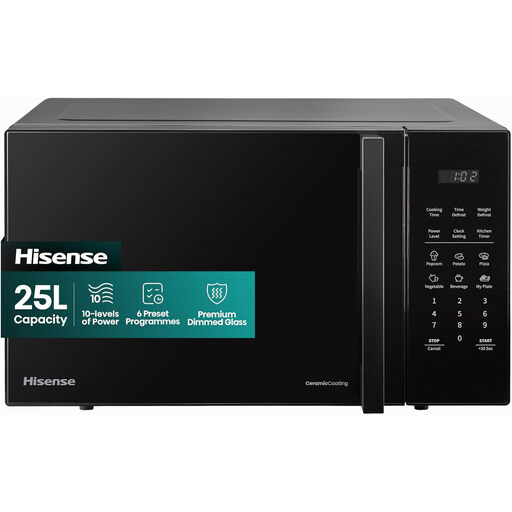
Hisense H25MOBS7HUK 25L solo microwave
Consider this model if you want a solo microwave for a family gravy serving and its cavity fits your usual jug.
Stated output: 900W. Check internal height and turntable clearance before choosing it for a handled vessel.
View on Joybuy
 No image available
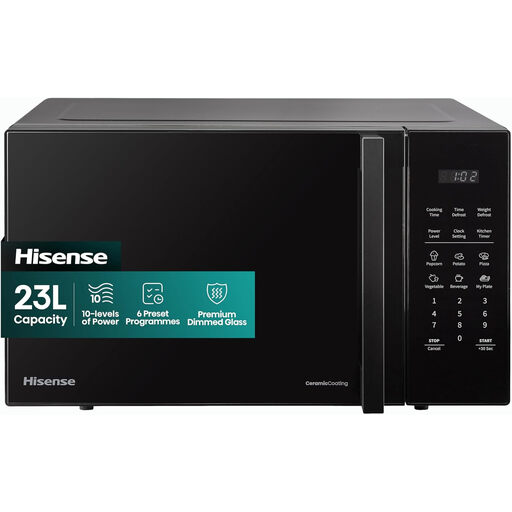
Hisense H23MOBS5HUK 23L solo microwave
This model is an option for reheating a gravy serving if your jug fits inside its cavity.
Stated output: 800W. Confirm whether the controls on this exact model are touch-operated or rotary, and check vessel clearance.
View on Joybuy
 No image available
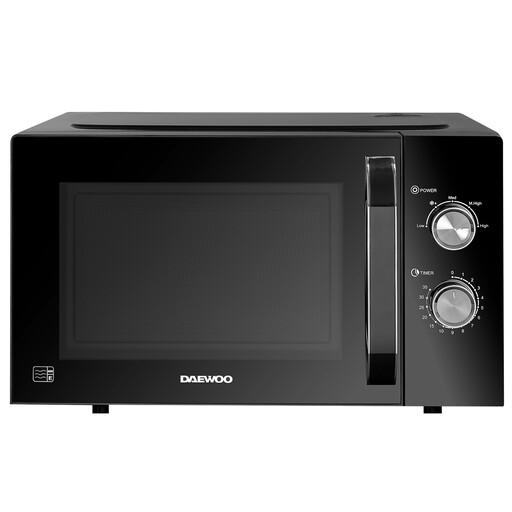
DAEWOO SDA2085GE 23L solo microwave
Consider this model if you prefer manual controls for pausing and adjusting gravy reheating.
Its name specifies 800W output and five power settings. Check the final appliance dimensions and internal jug clearance before purchase.
View on Joybuy
 No image available
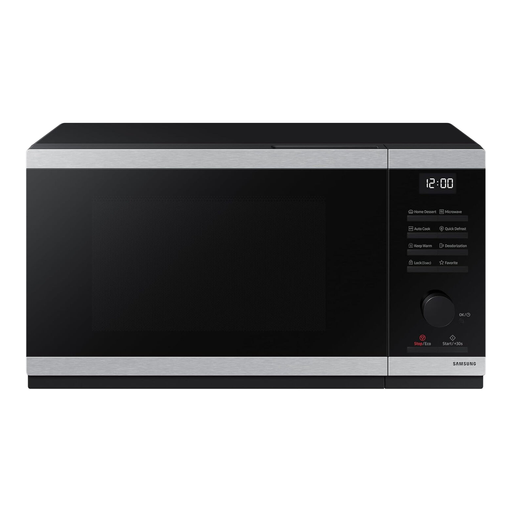
Samsung MS23DG4504ATE3 23L solo microwave
This solo model is worth comparing if your main task is reheating gravy rather than using grill or convection modes.
Stated output: 800W. Check the cavity and turntable dimensions, along with the time and power controls, against your usual reheating routine.
View on Joybuy
 No image available
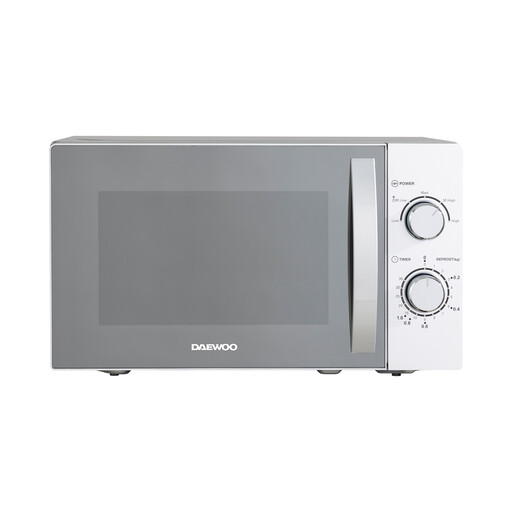
DAEWOO 20L mechanical solo microwave
Consider this smaller-capacity solo option if straightforward operation matters and your gravy vessel fits.
Check the exact model’s output, power settings and internal dimensions rather than assuming that a 20L rating establishes jug clearance.
View on Joybuy
Questions about reheating gravy
Do I need a grill or combi microwave just to reheat onion gravy?
No: a solo microwave covers reheating without those additional cooking modes. Consider a grill or combi model if you will also use it for tasks such as browning, grilling, baking or roasting.
What microwave size should I consider for a family gravy serving?
Start with the dimensions of your microwave-safe jug or bowl, not the cavity’s litre rating alone. LG UK describes 21–27L models as suited to shared meals and 28–32L models as options for larger dishes, but the exact model still needs enough usable space for your vessel.
How should I reheat onion gravy in a microwave?
Use a microwave-safe container, heat the gravy in short intervals and stir so heat is redistributed. Check that it is steaming hot throughout before serving, and remove any cover carefully because escaping steam can burn.
Can I cover the gravy with foil or a plastic storage bag?
Do not use foil or cutlery in the microwave, and use a cover only if it is clearly marked microwave-safe. Electrical Safety First also advises against plastic storage bags that are not designed for microwave use.
Can I plug a freestanding microwave into an extension lead?
Use an appropriate wall socket rather than an extension lead. Electrical Safety First advises that countertop microwaves have a fused UK three-pin plug and warns that extension leads can be overloaded when high-power appliances are connected.


