Teacher with a compact quiz group
Needs a straightforward connection to a teaching laptop when pupils can answer near a centrally placed speakerphone.


Choose a speakerphone around where pupils will give their answers, rather than an attendee count alone. One centrally placed USB speakerphone may suit a compact group; teams spread around a classroom may need linked microphones or a room system. Test the seating plan, conferencing platform and remote participant’s audio before the quiz.
Needs a straightforward connection to a teaching laptop when pupils can answer near a centrally placed speakerphone.
Needs to check whether answers from separate tables will reach the remote host, or whether linked units or expansion microphones are necessary.
Needs a repeatable setup on the school-approved conferencing service, with an audio check before lessons and appropriate procedures for pupils’ personal data.
Start with the furthest position from which a pupil will answer. That determines whether one tabletop device is plausible before connection and portability become deciding factors.
Choose when: Pupils can answer close to one central device connected to the teaching computer.
Trade-off: A single pickup point may not serve teams spread across the room.
Choose when: Answers come from more than one area and the exact model supports linking two units.
Trade-off: Both units and the required connection must be set up and tested before the quiz.
Choose when: A recurring classroom setup must also show presenters, teams or teaching materials to remote participants.
Trade-off: Camera placement and a room-computer setup add work that a portable speakerphone does not require.
| Concern | What to check | Who this matters to |
|---|---|---|
| Microphone coverage | Measure the furthest speaking position and compare it with the exact model’s stated pickup guidance; check supported expansion options. | If teams answer from different tables, I need the remote host to hear pupils beyond the teacher’s position. Around 36% of consumers put coverage first. |
| Two-way speech | Check the model’s full-duplex and echo-control claims, then trial a conversation with people speaking at both ends. | During quick question-and-answer rounds, I do not want echo or room noise to obscure a reply. Around 29% of consumers primarily need clearer two-way speech. |
| Connection and setup | Check the teaching computer’s ports and confirm that the approved conferencing platform selects the intended microphone and speaker. | With a quiz due to start, I need the classroom device to connect predictably rather than spend lesson time on pairing. For around 21% of consumers, setup is the primary concern. |
| Portability | Check how the device connects and charges, what cables are included and whether its stated coverage fits each intended room. | If quizzes move between classrooms, I need equipment I can carry and set up without a permanent installation. Portability comes first for around 14% of consumers. |
An attendee limit does not tell you how far a microphone can pick up a pupil’s answer. A group clustered near one device presents a different challenge from teams around a classroom.
Measure the furthest speaking position, check the exact model’s pickup guidance and make a trial call from that position.
Two-way audio does not show the remote host who is answering, or display a whiteboard or quiz materials.
If a room view is needed, plan the camera’s position and content sharing separately, or assess a room system that includes video.
A connected speakerphone can still be the wrong microphone in the conferencing platform, while echo or a weak connection may only become apparent during conversation.
Run a call from the actual classroom using the intended computer and platform. Check both directions of speech and the network connection before pupils join.
A remote quiz may involve pupils’ personal data, particularly if the service also handles recordings, transcriptions, chat or shared files. The Department for Education advises school staff to protect personal data, and the National Cyber Security Centre advises organisations to protect video-call data.
Use the school-approved service and follow its procedures. Consult the relevant school lead before introducing recording or a new provider.
Portable speakerphones are relevant to a compact quiz group when the seating plan fits the stated coverage.
A centrally placed speakerphone may suit a laptop-led quiz with pupils seated within its pickup area.
A conference system is relevant when remote participants also need a camera view of a recurring classroom setup.
Portable conference speakerphones offer a route to consider when equipment needs to move between rooms or be linked.
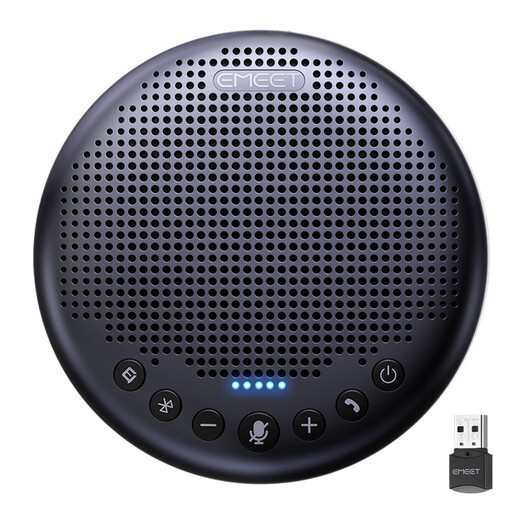
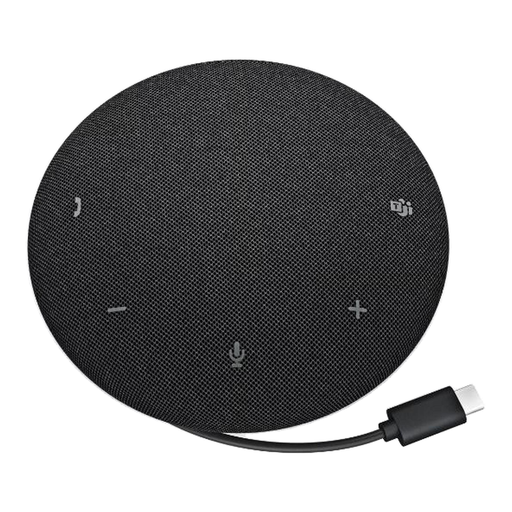
These speakerphones are relevant to two classroom approaches: an EMEET Lunaplus setup to assess if linking units is needed, and a wired Dell device to assess for a compact, laptop-led group. Neither replaces a separate camera where remote participants need to see the room.
 No image available
Consider this model if a movable speakerphone or a linked two-unit arrangement fits the quiz seating plan. Its listing identifies eight microphones, Bluetooth connectivity and a 5 W speaker; EMEET states that two Luna Plus units can be daisy-chained for up to 18 attendees.
Before planning around two units, check the package contents and required linking connection. Test whether pupils at the furthest tables can be heard in the actual classroom.
 No image available
Consider this wired speakerphone for a laptop-led quiz with pupils gathered near one device. Check that its cable reaches the intended central position and test answers from the furthest pupil seat using the school’s conferencing platform.
Only if pupils who need to speak are within that model’s stated pickup guidance and can be heard in a trial call. Jabra specifies pickup up to 2.5 m for the Speak2 75, and HP gives the same pickup distance for the Poly Sync 40; their stated room-size guidance is not a substitute for checking the furthest seat. For a spread-out group, assess linked units or expansion microphones.
USB avoids a Bluetooth pairing step when the computer and chosen speakerphone support the connection. Bluetooth may suit a compatible tablet or phone, but pair and test it before the quiz. Whichever connection you use, confirm that the conferencing platform has selected the speakerphone for both input and output.
Make a call from the actual classroom on the intended conferencing platform, with one person speaking from the furthest pupil position and someone responding remotely. Check the selected microphone and speaker, listen for echo and confirm that the connection remains usable. The University of Edinburgh’s virtual-classroom guidance also notes that video conferencing depends on a strong internet connection.
Follow the school’s procedures before recording pupils or using a conferencing service that handles their personal data. The Department for Education advises staff to protect personal data, while the National Cyber Security Centre advises organisations to protect video-call data. Consult the relevant school lead about the approved platform and intended recording arrangements.