
24/7 Customer Support

Free returns

Same-day & Next-day Delivery

Quality Guaranteed

Unlock Your Welcome Offers: FREE Delivery | Up to 80% OFF | Free 30-day JoyPlus trial
Download the APP
Choosing remote control cars for kids can be more complicated than it first appears. Product listings often highlight dramatic spins, bright lights and impressive speed, but these features do not necessarily mean a vehicle will suit your child, home or local outdoor space.
Parents and gift buyers commonly encounter three purchasing traps:
The right choice depends on where the vehicle will be used, how confidently the child can operate controls and whether you want a simple toy or a more technical hobby model.
For younger children, look for straightforward steering and throttle controls, a lower-speed setting or a one-button stunt function. 2.4GHz remote control is useful when several kids’ RC cars are being used together, as compatible vehicles can generally operate with less signal conflict than older basic systems.
Some remote control drift cars and high-performance models use proportional throttle and steering. These controls offer greater precision but may require practice. A two-speed selector, adjustable gyro or automatic demonstration mode can help beginners build confidence.
Always follow the manufacturer’s stated age range and warnings. A toy labelled 8+ may be unsuitable for a preschool child even if its body is robust. For children aged 2-6, a non-battery pull-back vehicle may be more manageable than a fast RC model, although small parts warnings still apply.
4WD remote control cars distribute power across four wheels, which can improve traction on grass, paving and compacted earth. Larger tyres, deep tread and independent suspension are useful for off-road RC cars, while low-profile tyres are more suitable for smooth indoor floors.
RC stunt cars with Mecanum or omnidirectional wheels can move sideways, rotate and perform flips. These functions are entertaining, but they need open floor space and can be harder to control near furniture. Remote control drift cars usually work more predictably on smooth surfaces than on carpet or loose gravel.
For water use, check whether a product is specifically described as an amphibious RC tank or waterproof vehicle. “Splash resistant” does not mean a car can float or drive through a pool. Even sealed models should be used only in the water conditions specified by the seller, with careful drying and charging precautions afterwards.
Rechargeable RC cars reduce the need for disposable batteries, but compare the claimed running time with the listed charge time. A vehicle offering around 30-50 minutes of use may still need several hours before the next session.
ABS plastic can provide a practical balance of weight and impact resistance. Metal chassis components and oil-filled shocks are more relevant to hobby-grade models used for jumps or frequent high-speed driving. Look for replaceable tyres, accessible battery compartments and spare parts if the vehicle is likely to receive heavy use.
For ride-on cars and electric go-karts for children, check maximum load, seat dimensions, speed range, braking method and supervision requirements. UK buyers should look for relevant conformity information and instructions, including references such as EN71 for toy safety and EN62115 for electrically operated toys where applicable. These markings do not replace adult supervision, suitable protective equipment or sensible location choices. Ride-on products should not be used on public roads.
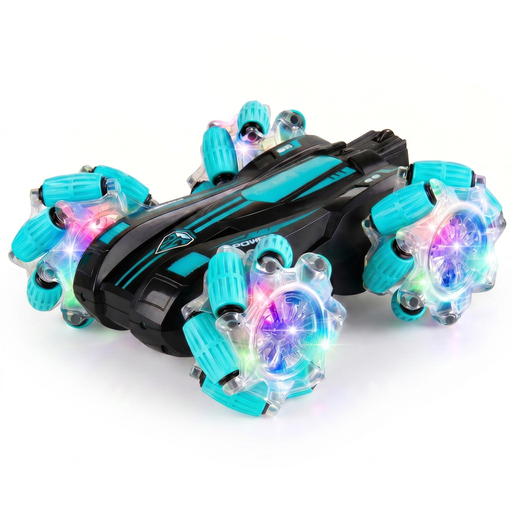
Why This Fits Their Persona: A compact option for children who want visible tricks without moving to a larger hobby vehicle. It is suited to indoor rooms or flat outdoor surfaces where there is space for spins.
The specification identifies rechargeable power, 4WD drive, dual-sided operation and shock-resistant ABS construction rather than relying only on visual effects.
Mecanum wheels support sideways movement, while LED wheels and automatic demonstration mode add accessible play features.
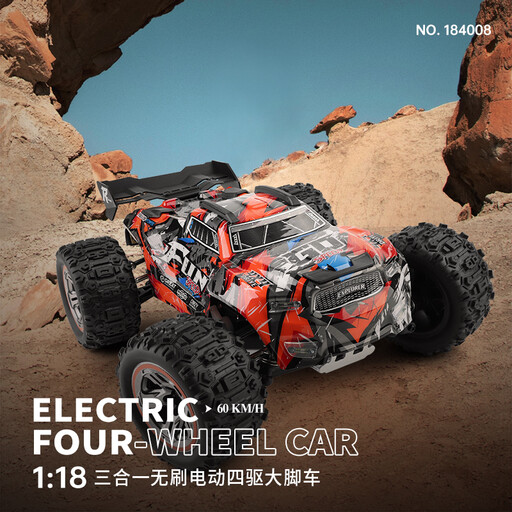
Why This Fits Their Persona: Appropriate for older children, beginners moving towards hobby driving and adults seeking a more substantial off-road model.
Its listed aluminium alloy chassis, oil-filled shocks and large off-road tyres provide more relevant durability features than lights or sound alone.
The brushless motor and 4WD system are designed for acceleration and traction across grass, dirt and pavement.
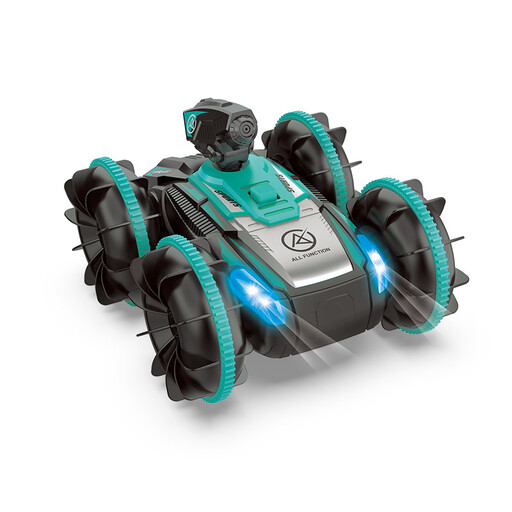
Why This Fits Their Persona: A feature-led choice for families wanting land and shallow-water play, group games and more than conventional forward-and-back driving.
The listing specifies sealed waterproof construction for shallow water, rather than leaving “water play” undefined. Follow the supplied instructions and dry the vehicle before charging.
It offers handheld and gesture controls, 360-degree spinning, LED lights, 4WD and water-shooting play.
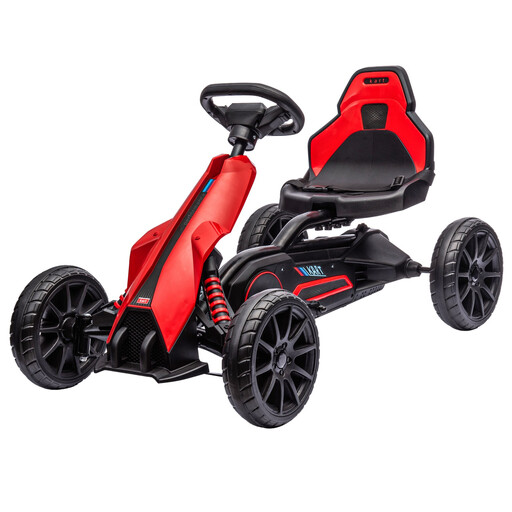
Why This Fits Their Persona: Designed for children aged 3-8 who want to sit in and drive a larger vehicle around a suitable private outdoor area.
The listing gives specific speed, load and seat measurements, making it easier to assess fit than a generic “kids’ car” description.
It has two speed settings of 3-5 km/h, a two-point safety belt, EVA wheels and forward/reverse movement.
Kids' ride-on cars and electric go-karts for children require more storage space, charging or physical effort than handheld vehicles. They also need a flat, private area and direct adult supervision. A pedal go-kart avoids battery charging but requires the child to operate pedals and a brake.
For smaller homes, rechargeable RC cars are easier to store and can be used on suitable flooring. LED light RC cars add visibility in dim areas, but lights should be treated as a play feature rather than a substitute for supervision.
Buyers looking for remote control toys for boys and girls can choose by play style rather than gender: stunt models suit trick-based play, drift cars suit practice and racing and off-road models suit gardens, parks and rougher surfaces.
We have compiled a complete, real-time list of products that fully satisfy these strict selection criteria and UK safety regulations.
The main running costs are electricity and replacement batteries, tyres or parts. Rechargeable models avoid regular disposable battery purchases, but check the battery type, charging time and whether the charger is supplied. A spare compatible battery can reduce waiting between sessions, if the product supports one.
Small, low-speed models are generally more practical indoors, provided the floor is clear and the vehicle is used away from stairs, breakable items and pets. Fast 4WD models and RC monster trucks may need outdoor space because of their speed, tyre size and turning distance.
Lifespan depends on collisions, storage, charging habits and playing surface. Choose a body with impact-resistant materials, avoid driving through unsuitable water and follow the battery instructions. After each session, remove dirt, inspect the wheels and store the vehicle and charger in a dry place.