
24/7 Customer Support

Free returns

Same-day & Next-day Delivery

Quality Guaranteed

Unlock Your Welcome Offers: FREE Delivery | Up to 80% OFF | Free 30-day JoyPlus trial
Download the APP
Remote control cars can be entertaining gifts, but the wrong model may disappoint quickly. A car advertised as “high speed” may only perform well on smooth flooring, while a vehicle described as “off-road” may struggle on wet grass or loose gravel. Battery claims can also be unclear, particularly when charging time, play time and spare battery availability are not shown together.
Before choosing among RC cars for kids, hobby vehicles and rechargeable remote control cars, check how the model will actually be used. The right choice depends on age, driving surface, control difficulty, maintenance requirements and the type of play desired.
A high speed figure does not automatically mean better handling. Fast electric RC cars need suitable space, responsive steering and a surface with enough grip. A powerful car can be difficult for a younger child to control indoors and may be unsuitable for a small garden.
Look for a balance of speed control, proportional steering, drive system and suspension. Adjustable speed modes are particularly useful when a beginner is learning.
Four-wheel drive can improve traction, but tyres, ground clearance, suspension and weight also affect performance. A low-profile 4WD sports car may suit asphalt and hard flooring, whereas an off-road truck with deep-tread tyres is more appropriate for grass, dirt and uneven ground.
Be cautious with vague “all-terrain” wording. Check whether the product description specifically refers to grass, gravel, sand, shallow water or indoor surfaces.
A rechargeable battery reduces the need for disposable vehicle batteries, but the remote control may still require AA or other batteries. Also check whether the battery and charger are included, how long charging takes and whether a replacement battery is readily available.
A quoted working time can vary with speed, surface, temperature and driving style. For longer outdoor sessions, a removable battery or spare compatible pack can be more practical than relying on one charge.
Brushless motors are commonly found in faster hobby-style vehicles and can deliver strong acceleration, but they may be less forgiving for inexperienced drivers. Carbon-brush motors are used in many accessible off-road models and can be suitable for casual driving.
A 2.4GHz controller is a practical feature for families and groups because several compatible vehicles can usually operate at the same time without the signal conflicts associated with older systems. For precise driving, check for proportional throttle, steering trim and adjustable speed settings.
Scale affects where the car can be used. A compact 1:24 or 1:28 vehicle may work well indoors, while a larger 1:12 truck needs more room and can be easier to see outdoors.
For rough driving, features such as an aluminium alloy chassis, reinforced body, independent suspension, oil-filled shocks and replaceable tyres may help with everyday impacts. They do not make a vehicle indestructible, so inspect the car, wheels, battery connector and fasteners before each session.
For children, follow the stated age guidance and warnings. Models containing small parts should be kept away from children under three. Adult supervision is advisable where products have higher speeds, detachable components, water-play features or lithium batteries. Check the listing and packaging for applicable CE or UKCA compliance information, manufacturer details and instructions.
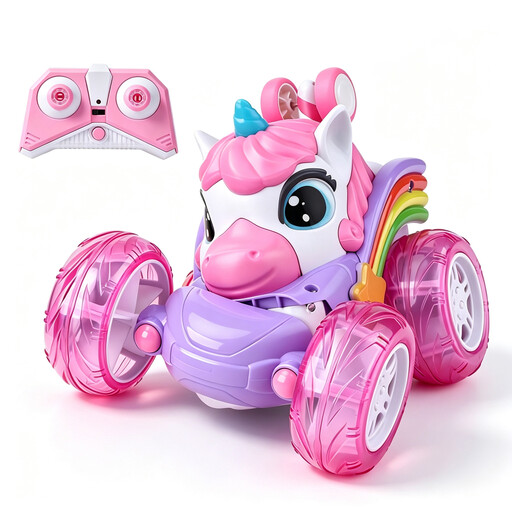
Why This Fits Their Persona: A compact, gift-friendly option for children who want lights and stunt movement rather than a specialist racing vehicle. The stated guidance is for children from age 3, with adult supervision and small-parts precautions.
The listing specifies a USB-rechargeable vehicle battery, approximately 60 minutes of play time after a two-hour charge and a 40-metre control distance, rather than leaving the power arrangement unclear.
USB charging, 2.4GHz control, LED body and tyre lights, plus 360-degree stunt movement.
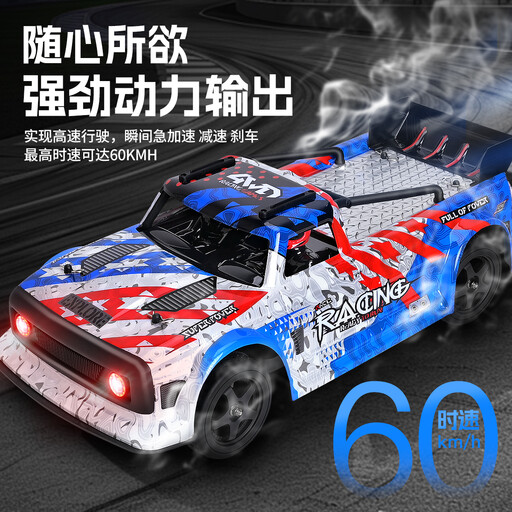
Why This Fits Their Persona: Suited to teens, adults and hobby newcomers wanting a faster sports-style vehicle for asphalt, hard ground and outdoor tracks.
Its stated specification identifies a brushless motor, full-time 4WD, independent suspension and a lightweight chassis, giving more useful detail than a speed-only advertisement.
Brushless electric motor, 4WD traction and independent suspension for bumps and jumps.
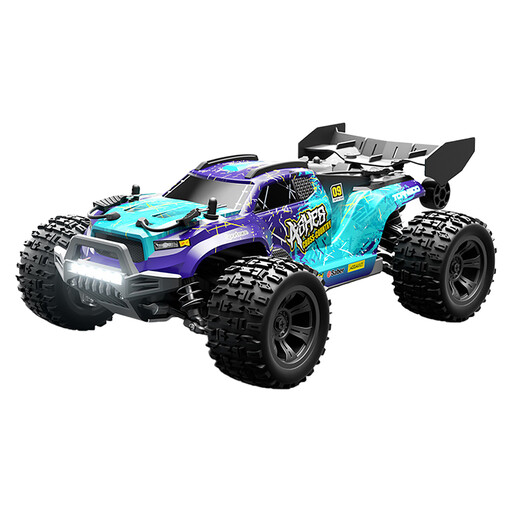
Why This Fits Their Persona: A practical match for older users seeking off-road driving, climbing and higher-speed outdoor play. The listing states suitability for ages 14 and over.
The product information identifies a 7.4V 1500mAh battery, USB charging cable, 4WD, reinforced aluminium chassis and adjustable transmitter functions.
Deep-tread off-road tyres, front LED lights, 2.4GHz control and stated support for sand, grass, shallow water and snow.
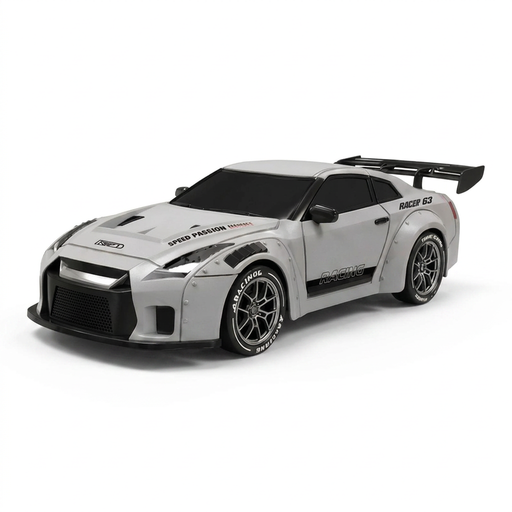
Why This Fits Their Persona: Designed for teens and adults who prefer controlled drifting, racing lines and indoor practice on tile or other smooth flooring.
The listing states that two tyre sets are included, allowing users to switch between drift and racing use instead of buying a separate vehicle for each surface.
4WD, adjustable gyro and steering servo, proportional control, LED lights and stated 20–40-minute play time.
We have compiled a complete, real-time list of products that fully satisfy these strict selection criteria and UK safety regulations.
Running costs are usually linked to charging electricity, replacement batteries, tyres and damaged components. A rechargeable model can reduce repeated disposable battery purchases for the car, but check the controller’s battery requirements. Brushless and high-speed models may also wear tyres and driveline parts more quickly when driven aggressively.
For younger children, choose a model with simple controls, a manageable speed, robust bumpers and clear age guidance. Stunt cars with low and high speed modes can be easier to learn than high-performance hobby vehicles. Always check for small parts and supervise play, particularly indoors or near stairs, roads and water.
First charge the vehicle battery according to the instructions and install the required controller batteries. Switch on the transmitter before the car, test steering and throttle at low speed, then practise on a clear, flat area. For off-road RC cars, begin on short grass or firm ground before attempting slopes, gravel or jumps.