People replacing a missing or slow charger
If you mainly charge one phone, check its supported wired charging mode before choosing an adapter. Apple Support (UK) and Samsung Support UK set out model-specific charging and cable requirements.


Start with your exact phone model and its manufacturer’s charging guidance, then match the adapter, charging protocol and cable before paying for a higher-wattage plug. Choose extra ports if you charge devices together, or a wireless pad if your phone supports it; check shared-port output, what is included and the safety information that applies where the charger will be supplied.
If you mainly charge one phone, check its supported wired charging mode before choosing an adapter. Apple Support (UK) and Samsung Support UK set out model-specific charging and cable requirements.
If you are replacing an unfamiliar or suspect adapter, check its exact identity, seller information and relevant safety notices rather than judging it by price or branding. The Office for Product Safety and Standards and GOV.UK provide product-safety information.
If you want to charge several devices from one outlet, check the charger’s output with the ports in use. If you prefer cable-free placement, confirm your phone supports the proposed wireless arrangement; Belkin and the Wireless Power Consortium provide product-specific information and certification checks.
For a replacement charging setup, identify your phone’s supported charging mode first, then decide whether you need a different cable, simultaneous charging or wireless placement.
| Concern | What to check when buying | Who this matters to |
|---|---|---|
| Supported wired charging | Check your exact phone’s charging instructions, adapter protocol and supported output; a higher wattage alone does not establish faster charging. | If I am replacing a slow or missing plug, I want the wired mode my phone supports without paying for output it cannot use. About 29% of consumers put the supported charging mode first. |
| Mains-product safety | Check the product’s identity and seller, relevant conformity information and current safety notices. Great Britain and Northern Ireland have different marking arrangements. | If I am replacing an unfamiliar adapter, I want to check the specific product and its safety information rather than rely on price or appearance. About 23% of consumers make mains-product safety their primary concern. |
| Cable and connector fit | Check both connector ends, any phone-specific cable requirement and whether the exact adapter variant includes a cable. | If my existing cable is missing or has the wrong connector, I want to know whether it fits both my phone and adapter before ordering. About 18% of consumers put cable fit first. |
| Charging devices together | Check the port types and the manufacturer’s stated output when you use the intended ports at the same time. | If I need to charge a phone and another device from one outlet, I want to know what output remains available with both connected. About 18% of consumers prioritise simultaneous charging. |
| Wireless placement | Check your phone’s wireless support, the charger’s stated standard and certification, and whether the required power adapter is included. | If I want a place to set my phone down without connecting a cable, I need a compatible wireless arrangement and clear package details. About 12% of consumers prioritise wireless convenience. |
A charger’s stated output can change when you connect a second device. Belkin gives different one-port and two-port maxima for its WCH011myBK, and Anker describes lower USB-C output when its A2331 charges two devices.
Compare the stated output for the exact ports you expect to use at the same time.
Connector requirements vary by phone and charging mode. Samsung’s EP-T2510NBEGGB listing specifies that a cable is not included, while Apple’s faster wired-charging guidance specifies different cable ends for different iPhone generations.
Check both connector ends, any model-specific cable requirements and the contents of the exact adapter package.
A separate suitable cable may be needed if the one you have does not meet the requirements.
An Office for Product Safety and Standards report identified a serious fire risk in a specific USB charger station because of inadequate earthing. That report concerns the identified product; it does not establish that all inexpensive or third-party chargers are unsafe.
Check the exact product and seller, relevant conformity information and official safety alerts. A printed marking is not, by itself, independent proof of testing.
Phone support, wireless standard, magnetic attachment, charging rate and included power accessories are separate product-specific questions.
Check your phone’s wireless capabilities, the charger’s stated standard and certification, and the product’s instructions and package contents.
Depending on the package, you may need a separate suitable power adapter.
Apple provides model-specific wired and wireless charging guidance, which can help when comparing Apple adapters with compatible alternatives.
Samsung offers UK-plug USB-C adapters and model-specific Galaxy charging guidance.
Anker’s UK-listed A2331 is a USB-C and USB-A option for people who sometimes need a second port.
Belkin has UK-listed wired and wireless options for comparing simultaneous charging with cable-free placement.
UGREEN’s UK-listed Nexode 65W three-port charger is relevant to people combining phone charging with other USB-C or USB-A devices.
These Joybuy options cover wired adapters, a replacement USB-C cable, multi-port charging and a wireless charging stand. Check each product’s specifications against your phone and intended setup.
 No image available
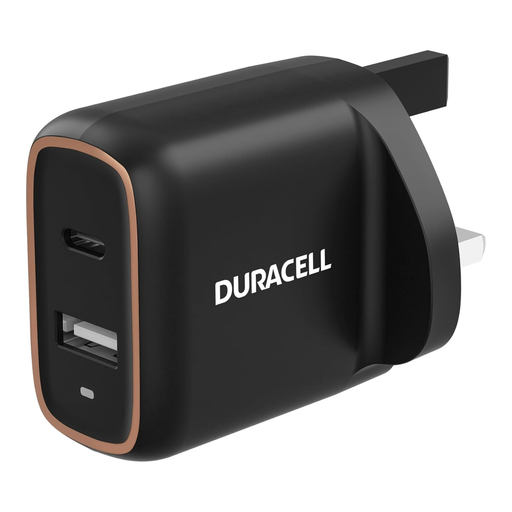
A wall charger option if you need USB-C and USB-A connections for charging devices.
The product name specifies a 20W charger with USB-C and USB-A ports and a UK plug. Charging cables are sold separately.
 No image available
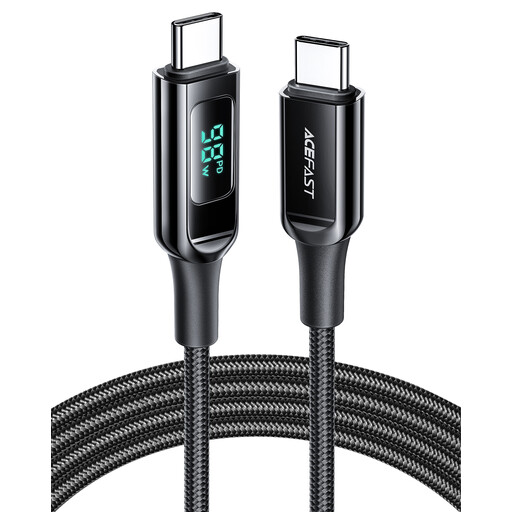
A replacement cable option if your phone and adapter use USB-C at both ends.
The product name specifies a 1.2 m cable. Its listing says a compatible USB-C Power Delivery wall charger rated at 100W or higher is required for the cable’s full 100W charging speed.
 No image available
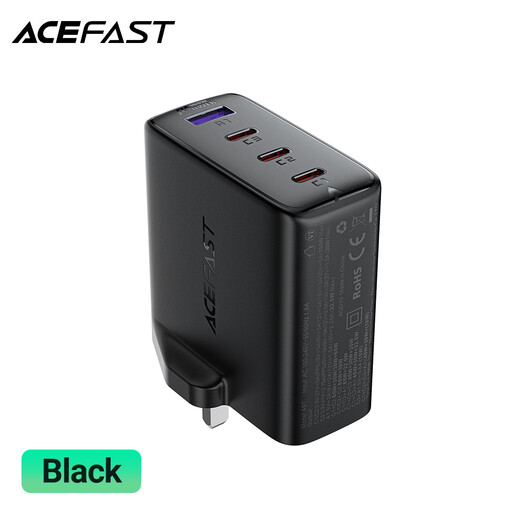
A multi-port option to consider if you want to charge a phone alongside other devices.
The product name specifies PD100W, three USB-C ports and one USB-A port. Check the output available to your devices in the port combination you plan to use.
 No image available
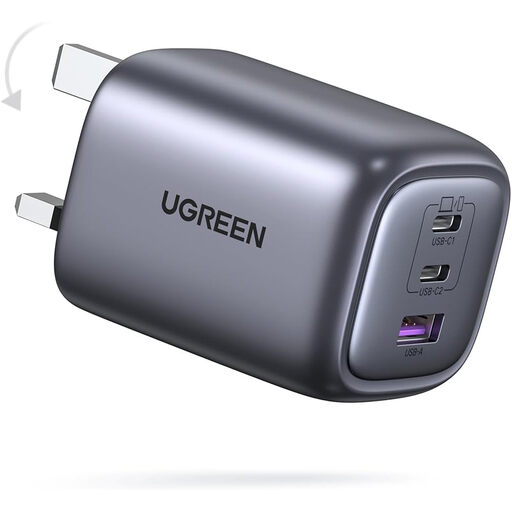
An adapter option to compare if you need a charger for a phone and other devices.
The product name identifies it as a 65W GaN charger and lists selected phone and tablet models. Check that your exact device and charging requirements are covered.
 No image available
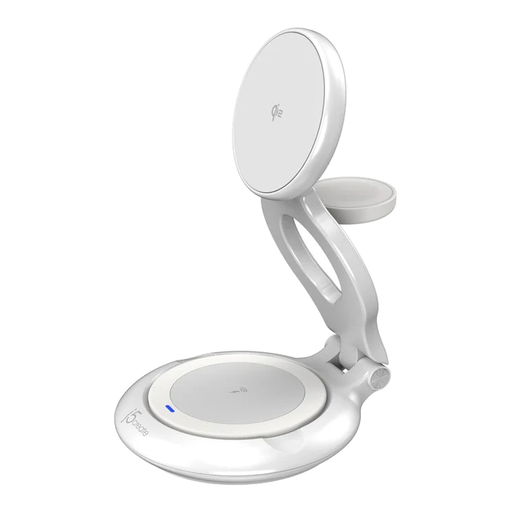
A wireless charging option if your devices support the arrangement specified for this station.
The product name specifies Qi2, a foldable design and 3-in-1 charging. Its listing specifies Qi2-enabled devices for compatibility; check the product details and required power connection for your setup.
No: the printed wattage alone does not establish a speed increase. Check your exact phone’s supported charging arrangement, the adapter protocol and the cable. Apple specifies USB-C Power Delivery and a generation-appropriate cable for faster wired iPhone charging; Samsung specifies a particular adapter-and-cable combination for the 45W Galaxy S24 mode described in its guidance.
Start by confirming that your exact phone supports the proposed wireless standard and check whether the charger includes its required power adapter. For a Qi certification claim, the Wireless Power Consortium provides a database where you can check the product; do not assume an advertised maximum applies to every phone.
Check both connector ends, any phone-specific cable requirement and the contents of the exact product variant. For wireless charging, also check whether a suitable mains power adapter is included or needed.
No. Office for Product Safety and Standards guidance published on 25 March 2025 says Great Britain continues to recognise CE marking indefinitely alongside UKCA for electrical equipment in scope. A marking is a manufacturer’s conformity statement, not a substitute for checking product identity and safety information.
No. Northern Ireland has a distinct framework. GOV.UK guidance updated on 8 April 2026 describes CE, or CE together with UKNI where applicable, for products placed on its market. Check the rules for the particular product and supply route rather than assuming Great Britain’s arrangements apply unchanged.