
24/7 Customer Support

Free returns

Same-day & Next-day Delivery

Quality Guaranteed

Unlock Your Welcome Offers: FREE Delivery | Up to 80% OFF | Free 30-day JoyPlus trial
Download the APP
Resistance bands have become a cornerstone of modern fitness, offering a versatile, portable and effective way to build strength, tone muscle and aid in rehabilitation. Whether you're setting up a home gym or need a travel-friendly workout solution, they seem like a straightforward purchase. However, the market is flooded with options, and many buyers find their new equipment gathering dust or, worse, snapping mid-stretch.
As a Joybuy Product Recommendation Officer, my role is to help you navigate the options and avoid the common pitfalls that lead to wasted money and frustration. Before you add a set to your basket, let's look at the frequent traps many fall into.
booty bands when you need assistance with pull-ups, or a heavy-duty power band for gentle physical therapy, is a common error. Each band type is designed for a specific purpose.resistance bands set might seem like great value, but if only two of the bands match your strength level, you've paid for three that will go unused.By understanding a few key parameters, you can confidently select a band or set that truly meets your needs and is built to last.
To make an informed choice, it helps to understand the core differences in materials and types. These factors directly influence a band's performance, durability and suitability for your fitness goals.
The material of a resistance band is perhaps the most critical factor in its feel and longevity.
home workout bands.loop resistance bands for lower-body exercises. Their main advantages are that they do not roll up during squats or hip thrusts and are exceptionally durable. These are often referred to as booty bands or hip bands.Not all bands are created equal. The shape and size determine the exercises they are suited for.
resistance bands with handles attached to each end. They are excellent for replicating gym machine and dumbbell exercises like bicep curls, chest presses and rows. Many come in sets that allow you to clip multiple bands to the handles to adjust the resistance.loop resistance bands designed for heavy-duty work. They are ideal as pull up assist bands (looping over the bar and under your foot/knee) or for adding resistance to deadlifts and squats.physical therapy bands and gentle mobility work.To help you match a product to your specific needs, we've identified several options that align with different user profiles, keeping the common pitfalls in mind.
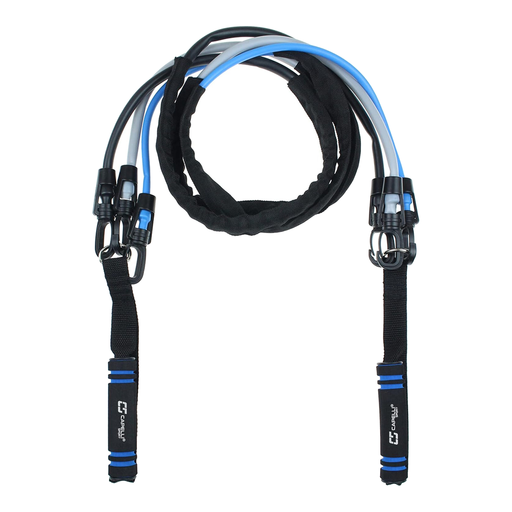
Why This Fits Their Persona: Ideal for anyone starting a home fitness routine. This set provides the versatility to perform a wide range of upper and lower body exercises without needing a full rack of weights. The foam handles offer a comfortable grip for exercises like rows and presses.
It directly solves the "deceptive set" problem. Instead of fixed-resistance bands, the easy-adjust clips let you combine the light, medium and heavy tubes to create customised resistance levels as you get stronger.
The TPE material is durable and latex-free, suitable for all users. The interchangeable system offers progressive overload in a single, compact package.
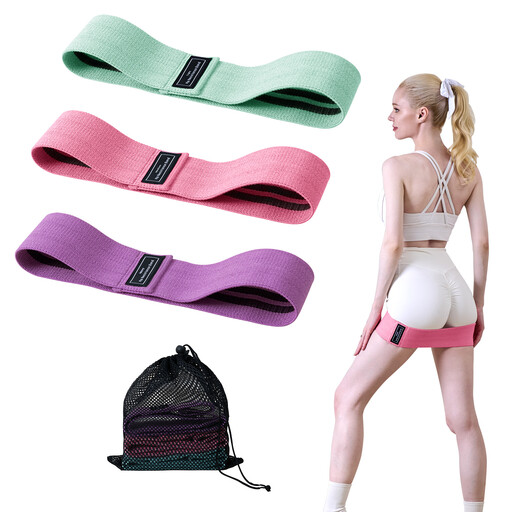
Why This Fits Their Persona: For those focused on strengthening and toning their glutes and legs. These fabric resistance bands are specifically designed for exercises like squats, hip thrusts and glute bridges, providing substantial resistance right where it's needed.
This set avoids the "snap and regret" pitfall common with cheap latex loops. The high-quality cotton fabric construction is built for durability and, crucially, features a non-slip design that prevents the band from rolling up mid-exercise.
The primary advantage is the non-slip fabric material, which stays comfortably in place. The set includes three distinct resistance levels, allowing for clear progression in your lower-body workouts.
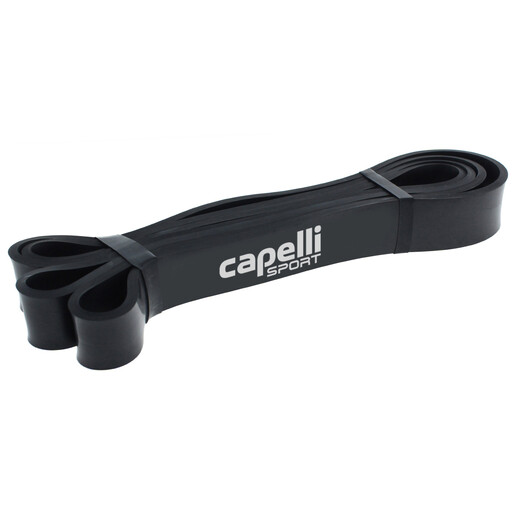
Why This Fits Their Persona: This is for the individual focused on building serious strength or mastering bodyweight exercises like pull-ups. Its length and high resistance are specifically for this purpose, providing meaningful assistance or heavy resistance for strength training.
It avoids the "wrong tool for the job" trap. You cannot effectively use a small loop band for pull-up assistance. This band is purpose-built with a 208cm circumference and thick natural latex to handle high tension safely.
The key advantage is its high-resistance (40-50lb) and durable 100% natural latex construction. It's a single, specialised tool that does its job exceptionally well for assisted bodyweight training and powerlifting.
We have compiled a complete, real-time list of products that fully satisfy these strict selection criteria and UK safety regulations.
How long should my resistance bands last? The lifespan of a resistance band depends on its material, frequency of use and how it's cared for. A high-quality latex or TPE band, stored away from direct sunlight and sharp objects, can last for a year or more with regular use. Fabric bands are generally more durable. Always inspect your bands for nicks, tears or brittleness before each workout and replace them if you see any signs of damage.
Are fabric or latex resistance bands better for glute workouts? For exercises around the thighs, fabric resistance bands are often preferred. Their main benefit is that they are wide and have a non-slip texture, which prevents them from rolling or digging into your skin during movements like squats and hip thrusts. Latex loop resistance bands can offer a greater stretch range but may slip or roll if not positioned correctly.
Can I build significant muscle with only a resistance bands set? Yes, you can. The principle of building muscle is progressive overload, which means continually challenging your muscles. With a resistance bands set, you can achieve this by moving to a band with higher resistance, combining bands for more tension or increasing the number of repetitions and sets in your workout. They are highly effective for toning and building functional strength.