
24/7 Customer Support

Free returns

Same-day & Next-day Delivery

Quality Guaranteed

Unlock Your Welcome Offers: FREE Delivery | Up to 80% OFF | Free 30-day JoyPlus trial
Download the APP
As a Joybuy Product Recommendation Officer, my role is to help you navigate the crowded market of home fitness equipment. Resistance bands are praised for their versatility and affordability, making them a staple for home workouts, physical therapy and strength training. However, not all exercise bands are created equal. Many shoppers find themselves with a set of bands that either snap after a few uses, roll up during exercises or simply don't provide the right level of challenge.
Before you add a set to your basket, let's look at the common pitfalls that lead to a disappointing purchase and how you can avoid them.
resistance bands set might seem like great value, but it's often bulked out with flimsy accessories or bands with such low resistance they're practically useless for anything other than light rehabilitation. The handles might be uncomfortable or the door anchor might feel unsafe.To ensure you get a durable and effective product, focus on these key specifications.
The material of your fitness bands dictates their feel, durability and suitability for different exercises.
pull up assist bands. However, it can cause allergic reactions in some individuals and can degrade if left in direct sunlight.physical therapy bands. While generally durable, it may not offer the same level of elasticity as high-quality latex.glute bands.The style of the band is just as important as the material.
resistance bands with handles that excel at mimicking movements you might do with dumbbells or cable machines, such as bicep curls, chest presses and rows. The handles provide a secure and comfortable grip.loop resistance bands are ideal for providing assistance with pull-ups or adding heavy resistance to squats. Smaller, wider loops (often fabric) are designed for hip abduction and glute activation exercises.Based on a careful review of product specifications and user needs, here are some recommendations tailored to different fitness profiles.
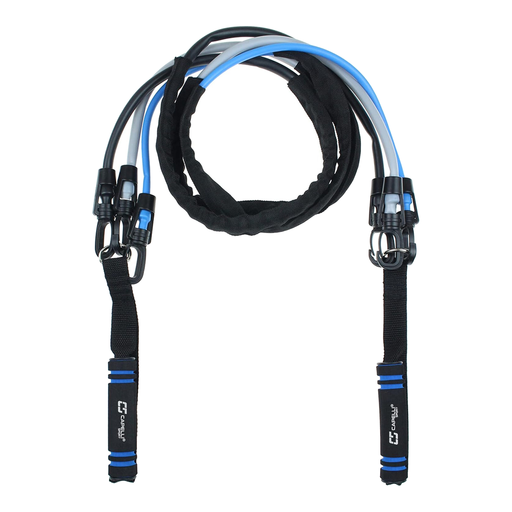
Why This Fits Their Persona: This set is ideal for anyone starting their home fitness journey. It provides three distinct and usable resistance levels, allowing for progression as you get stronger. The tube-and-handle design is perfect for learning foundational strength exercises at home.
It avoids the "complete set" illusion by focusing on what matters: three interchangeable bands (Light, Medium, Heavy) and comfortable foam handles. The TPE material also makes it a safe, latex-free option.
The easy-adjust clips allow you to quickly swap or even combine bands to customise the resistance level for different exercises, offering true versatility.
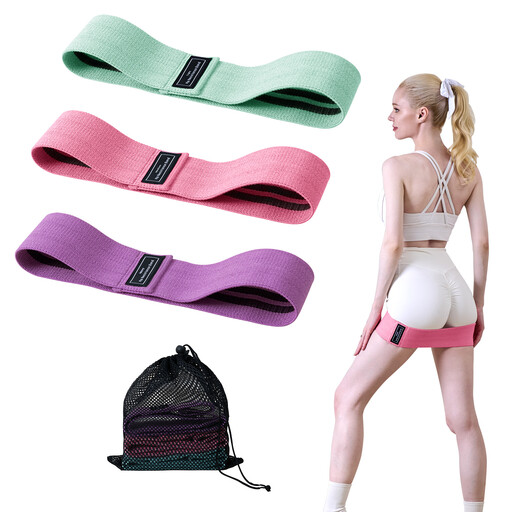
Why This Fits Their Persona: For anyone serious about lower-body training, these fabric glute bands are a must-have. They are specifically designed for exercises like squats, hip thrusts and glute bridges, where standard latex bands often fail.
The wide, cotton fabric construction directly solves the problem of bands rolling up or digging into your skin during intense leg workouts. It's a purpose-built tool, not a flimsy accessory.
The non-slip grip and high durability provide stability and substantial resistance, allowing for effective targeting of the glutes and hips. The set includes three distinct resistance levels for progression.
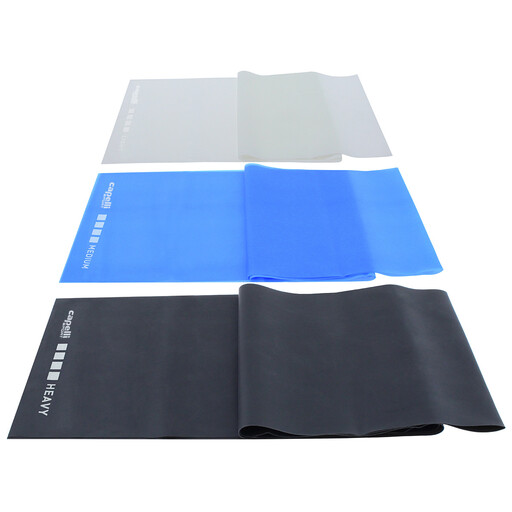
Why This Fits Their Persona: This set is perfect for individuals undergoing physical therapy or focusing on mobility and light toning. The flat, handle-free design is the standard for clinical rehabilitation exercises, allowing for precise control over movement.
It avoids the material trap by using TPE, a latex-free and odourless material that is gentle on the skin. The set provides three genuinely useful light-to-medium resistance levels suitable for recovery.
The simple, portable design makes these bands easy to use anywhere. Their soft touch and excellent stretchability are ideal for the controlled movements required in yoga, Pilates and rehabilitation.
We have compiled a complete, real-time list of products that fully satisfy these strict selection criteria and UK safety regulations.
The lifespan of a resistance band depends on its material, frequency of use and how it's cared for. High-quality fabric bands are extremely durable and can last for years. Latex and TPE bands typically last between one to two years with regular use. To prolong their life, store them away from direct sunlight, wipe them clean after use and always inspect them for small nicks or tears before you begin a workout. Discontinue use immediately if you spot any damage.
Yes, you can absolutely build muscle using only home workout bands. The key is applying the principle of progressive overload—the same principle used in weightlifting. As an exercise becomes easier, you must increase the challenge. With resistance bands, this means moving to a band with a higher resistance level, combining bands or increasing the number of repetitions. They are a highly effective tool for stimulating muscle growth (hypertrophy).
For lower-body exercises like squats, glute bridges and hip abductions, fabric glute bands are generally considered superior. Their wide, non-slip design prevents them from rolling up or snapping, which is a common issue with latex mini-loops during intense leg workouts. While latex bands offer more versatility for full-body exercises, fabric bands provide the stability and durability needed for focused glute and hip training.