
24/7 Customer Support

Free returns

Same-day & Next-day Delivery

Quality Guaranteed

Unlock Your Welcome Offers: FREE Delivery | Up to 80% OFF | Free 30-day JoyPlus trial
Download the APP
Navigating the world of home workout equipment can feel like a minefield of clever marketing and confusing claims. Resistance bands, in particular, are often sold with a promise of a full-body workout in a tiny package. While true, many UK shoppers find their new exercise bands gathering dust after a few weeks, either because they snapped, rolled up or simply weren't right for their fitness goals.
As a Product Recommendation Officer at Joybuy, my role is to help you sidestep these common purchasing mistakes. Before you add a set of bands to your basket, let's look at the three most common pitfalls that lead to wasted money and frustration.
Understanding these issues is the first step. Now, let's break down the core features you should be looking for to ensure you get a set of resistance bands that truly works for you.
To make a smart purchase, focus on these three non-negotiable factors. They will determine the safety, effectiveness and longevity of your new home workout equipment.
The material of your exercise bands dictates their feel, performance and durability.
Not all bands are created equal. The type you choose should directly align with your workout style.
Ignore the colours and focus on the stated resistance levels. A good resistance bands set should offer a clear progression from light to heavy. If a brand doesn't specify the resistance range (e.g., in pounds or kilograms), look for clear labels like "Light," "Medium" and "Heavy." This ensures the set can adapt as your strength improves, providing long-term value.
Based on these practical criteria, we've matched a few products from our catalogue to different user needs. These selections are chosen for their functional design and material quality, helping you avoid the common pitfalls.
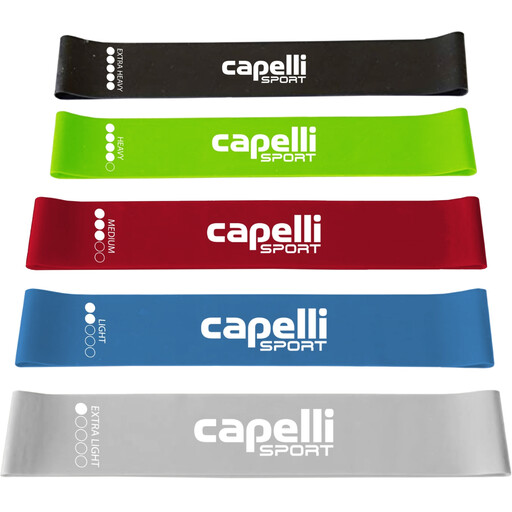
Why This Fits Their Persona: Perfect for anyone starting their fitness journey at home. This set provides a complete range of tensions to target different muscle groups and support progression without needing to buy more equipment straight away.
It directly counters the "one-size-fits-all" trap by providing five distinct, colour-coded resistance levels, from Extra Light to Extra Heavy, ensuring you always have the right tension for any exercise.
Includes a travel carry bag for portability and offers a full spectrum of resistance for both lower and upper body workouts, making it a highly versatile and cost-effective starter kit.
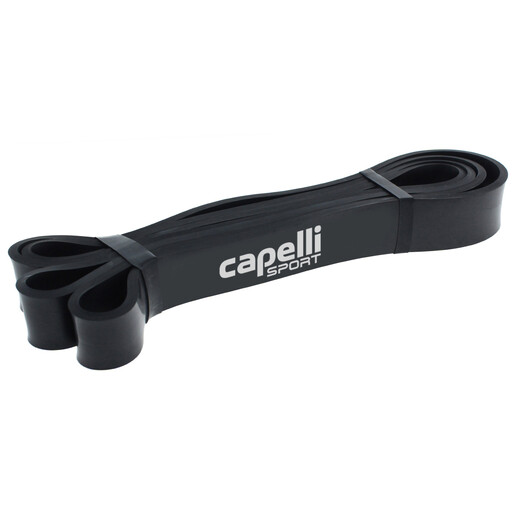
Why This Fits Their Persona: This is for the individual focused on building serious strength. It's ideal for assisting with pull-ups, adding significant resistance to barbell lifts, or performing heavy-duty bodyweight exercises.
It avoids the "durability deception" by being constructed from 100% natural latex, designed specifically for high-tension use. Its thickness and build quality are far superior to standard exercise bands.
The 208cm circumference and heavy resistance (40-50lb) make it a proper pull up band and a powerful tool for advanced strength training bands exercises that lighter bands cannot support.
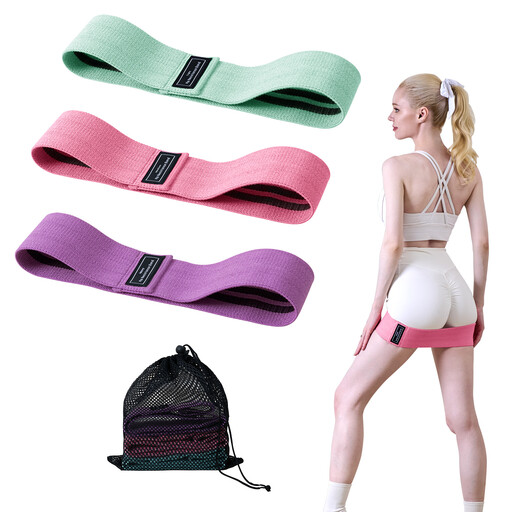
Why This Fits Their Persona: This set is for those who are tired of thin bands rolling up during squats, lunges and glute bridges. It's specifically designed for targeted lower-body work, Pilates and yoga.
It solves the "material mismatch" pitfall. The wide, cotton fabric construction provides a non-slip grip that stays firmly in place on your legs, unlike thin latex loop bands that can bunch up and pinch.
The three-tiered resistance system (Light, Medium, Heavy) offers substantial, targeted resistance for leg and glute workouts. The fabric is skin-friendly and built for comfort during intense sessions.
We have compiled a complete, real-time list of products that fully satisfy these strict selection criteria and UK safety regulations.
The lifespan of a resistance band depends on its material, frequency of use and how it's stored. High-quality latex or TPE bands can last one to two years with proper care. Always inspect your bands for nicks, tears or cracks before each workout. To prolong their life, store them in a cool, dry place away from direct sunlight, as UV rays can degrade the material.
Yes, absolutely. Muscle growth occurs through a principle called progressive overload, which means continually challenging your muscles with more resistance. You can achieve this with a resistance bands set by moving to a band with higher tension, using multiple bands at once or adjusting your form to increase the challenge. They are a highly effective tool for building and toning muscle.
Neither is inherently "better"—they are suited for different purposes. Fabric bands are superior for lower-body exercises like squats, hip thrusts and clamshells because their wide, non-slip design prevents them from rolling. Latex or TPE bands (including tube and flat bands) are more versatile for full-body workouts, offering a greater range of motion for upper-body exercises, stretching and physical therapy bands routines. Many people own both types to cover all their needs.