
24/7 Customer Support

Free returns

Same-day & Next-day Delivery

Quality Guaranteed

Unlock Your Welcome Offers: FREE Delivery | Up to 80% OFF | Free 30-day JoyPlus trial
Download the APP
As a Joybuy Product Recommendation Officer, my role is to help you navigate the crowded fitness market. Resistance bands are praised for their versatility and portability, making them a staple for home workouts. However, many UK shoppers find their initial purchase leads to frustration. The market is filled with options that look similar but perform very differently.
Before you add a set to your basket, let's look at the common pitfalls that lead to buyer's remorse. Understanding these issues is the first step to finding exercise bands that support your fitness goals, rather than holding you back.
To avoid these traps, you need to look past the marketing photos and focus on a few core parameters. These details determine the band's performance, durability and suitability for your specific needs.
The material is the single most important factor influencing a band's feel, durability and function.
Not all exercise bands are created equal. Using the wrong type for your workout is inefficient and can be unsafe.
Based on these practical criteria, we've matched several products to common UK user profiles. This isn't about finding a single "best" option, but the right option for your specific fitness journey.
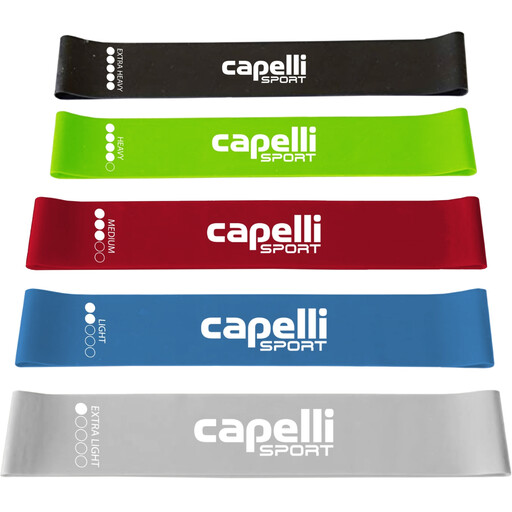
Why This Fits Their Persona: Ideal for anyone starting a home workout routine. This set provides a full spectrum of resistance levels, allowing for progression as strength increases, and is suitable for a wide range of lower body and warm-up exercises.
It directly solves the "One-Size-Fits-None" problem by providing five distinct, colour-coded resistance levels, ensuring you always have the right challenge for any exercise.
The set includes a portable carry bag, making it easy to store or take with you. The heavy-duty latex construction is designed for long-term use.
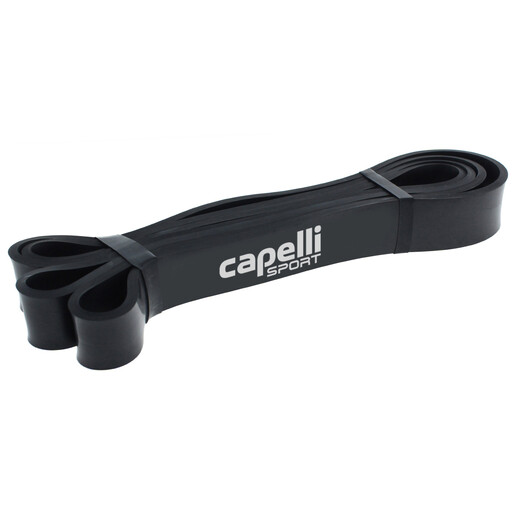
Why This Fits Their Persona: For those focused on building serious strength, mastering pull-ups and adding heavy resistance to barbell lifts. This is a specialist tool, not a general-purpose band.
It is purpose-built for high tension, avoiding the "Snap-and-Fray" flaw. Its thick, layered 100% natural latex construction is designed to withstand the stress of bodyweight assistance and heavy loads.
The 208cm circumference is standard for pull-up assistance and versatile use on squat racks. It provides substantial resistance (40-50lb equivalent) for meaningful progression.
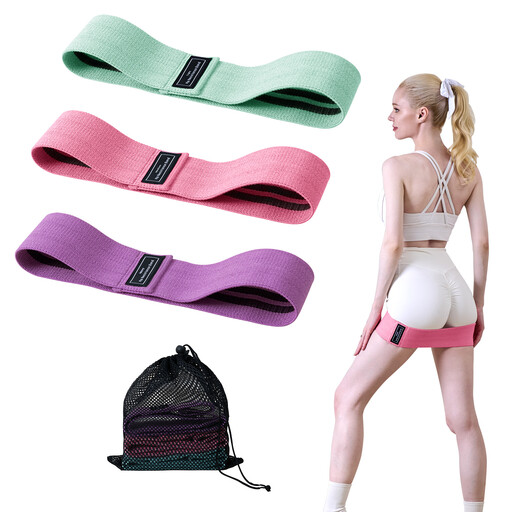
Why This Fits Their Persona: Perfect for anyone who prioritises lower-body workouts like squats, glute bridges and hip thrusts, and has been frustrated by thin bands that slip or roll.
The wide, cotton fabric construction directly solves the "Roll-and-Slip" problem. The material grips both skin and clothing, staying securely in place during dynamic movements.
The set of three provides substantial, progressive resistance specifically for leg and glute training. The fabric material is also more comfortable against bare skin than latex.
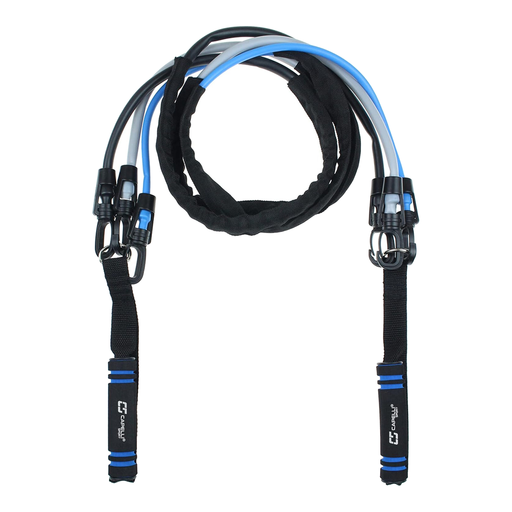
Why This Fits Their Persona: For the user who wants a complete, portable gym replacement. This set of tube bands with handles is perfect for full-body workouts, especially targeting the upper body and core with exercises that mimic free weights.
The interchangeable band system with easy-adjust clips provides a customisable and progressive workout, avoiding the "One-Size-Fits-None" issue. The foam handles offer a secure, comfortable grip.
Made from durable, latex-free TPE material. The 3-in-1 design allows you to combine bands for even greater resistance as you get stronger, offering excellent long-term value.
We have compiled a complete, real-time list of products that fully satisfy these strict selection criteria and UK safety regulations.
The lifespan of a resistance band depends on its material, quality of construction and how it's used and stored. A high-quality latex or TPE band used a few times a week should last for one to two years. Fabric bands are often more durable. To prolong their life, store them away from direct sunlight and sharp objects, and inspect them for nicks or tears before each use. Discontinue use immediately if you see any damage.
Yes, you can build muscle using resistance bands. The principle of muscle growth (hypertrophy) relies on progressive overload—continuously challenging your muscles with more resistance. By moving to a stronger band in a set or combining bands, you can effectively increase the load and stimulate muscle growth, making them a powerful tool for strength training bands.
For most people, fabric glute bands are a better choice for targeted glute and leg workouts. Their wide, non-slip design ensures they stay in place during exercises like squats, hip thrusts and clamshells. While latex loop bands can also be effective, they are more prone to rolling, which can disrupt your form and focus.