
24/7 Customer Support

Free returns

Same-day & Next-day Delivery

Quality Guaranteed

Unlock Your Welcome Offers: FREE Delivery | Up to 80% OFF | Free 30-day JoyPlus trial
Download the APP
Resistance bands can support strength training, mobility work, Pilates and stretching and provide pull-up assistance without taking up much space. However, choosing the right product is not simply a matter of selecting the colour or the highest resistance level.
Some listings make resistance sound more precise than it is, while others leave out important details about length, material or safe use. Before buying resistance bands, UK shoppers should check three common pitfalls.
A band labelled “heavy” does not provide the same force throughout every movement. Resistance increases as the material stretches, and the actual load depends on the band’s starting length, how far it is pulled and the exercise being performed.
A stated range such as 40–50 lb should therefore be treated as a product specification rather than an exact equivalent to a 40–50 lb dumbbell.
Latex resistance bands generally have an elastic, responsive feel, but natural latex can cause allergic reactions in sensitive users. TPE resistance bands use a synthetic elastomer and may suit shoppers who prefer to avoid natural latex, although material feel and durability still vary between products.
The listing should clearly state the material. Be cautious of vague descriptions that use terms such as “eco-friendly” or “professional grade” without supporting specifications.
A short loop band may work well for glute activation or Pilates exercises but be unsuitable for rows or overhead movements. Conversely, a 208 cm power band needs sufficient clearance and a secure anchor point.
Handles also affect how a band is used. Exercise bands with handles are convenient for curls, presses and rows, while looped pull-up assist bands are designed for placing around a bar and, where appropriate, under the feet or knees. Inspect all bands before use and do not use a damaged or overstretched product.
For general mobility, warm-ups and beginners, light or medium resistance bands can offer manageable tension. Medium resistance may also suit controlled arm, shoulder and lower-body exercises. Heavy resistance bands are more appropriate for users who need greater tension for strength movements or pull-up assistance, provided the band can be controlled safely.
A resistance band set with light, medium and heavy options can be more practical than buying one band, particularly if several people will use it or your training routine is likely to progress.
Check whether the band is made from natural latex, TPE or another synthetic rubber. Look for:
Foam handles can make repeated movements more comfortable, but they do not remove the need to check the connection points before every session.
A long power band can be used for stretching, assisted pull-ups and full-body strength exercises. Tube bands with handles commonly measure around 120 cm, while flat loop bands may have a stated circumference rather than a straight length.
Compare the dimensions, resistance level and included components rather than relying on colour coding alone, as colours are not standardised across manufacturers.
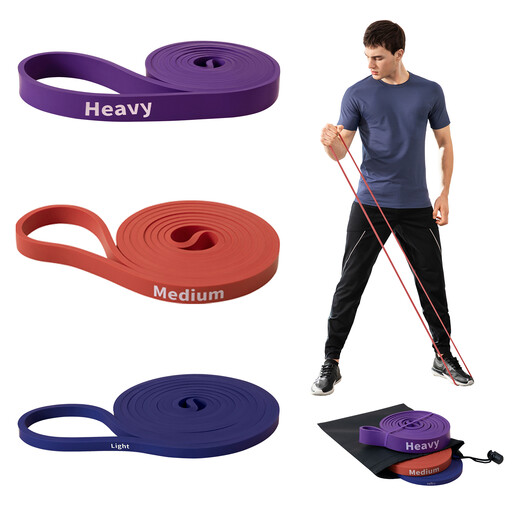
Why This Fits Their Persona: Three resistance levels make this a practical starting point for home workouts, yoga, Pilates and gradual strength training, with a carrying bag for storage.
It avoids locking beginners into a single resistance level and states the material, dimensions and included carrying bag.
Three levels; 208 cm length; 400 g total item weight; carrying bag and exercise guide included.
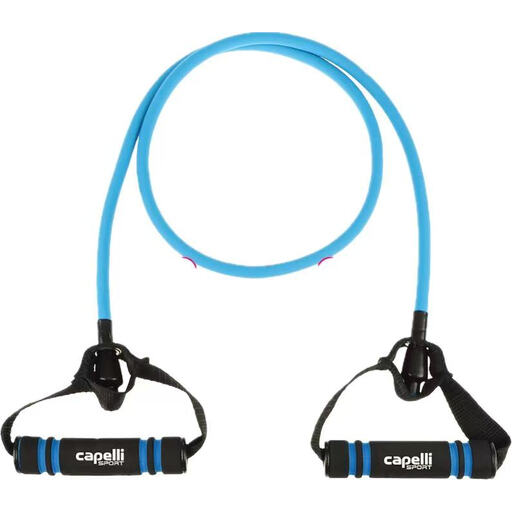
Why This Fits Their Persona: The 120 cm latex tube and foam handles suit shoppers wanting a more familiar gym-style format for rows, curls, presses and Pilates movements.
The product specifies natural latex, medium resistance, tube length and handle construction instead of relying only on colour or broad claims.
Foam sure-grip handles; security strap; 120 cm tube; suitable for home workouts, fitness and Pilates.
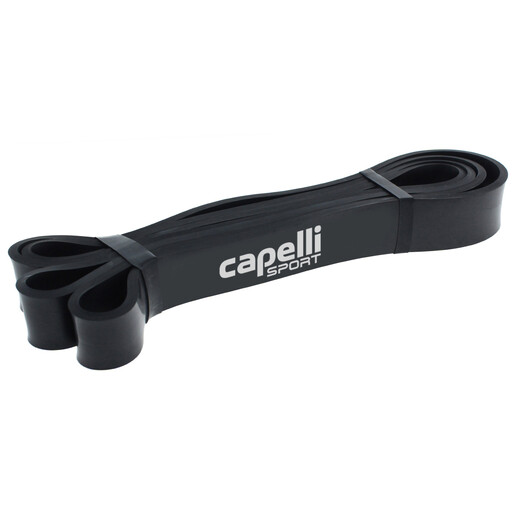
Why This Fits Their Persona: Its long loop format is suited to users focusing on pull-up assistance, body stretching, muscle training and full-body strength work.
Its stated 2.8 cm width, 208 cm circumference and 40–50 lb resistance range give shoppers more useful information than a “heavy” label alone.
100% natural latex; 0.5 thickness specification; loop design for pull-up assistance and stretching.
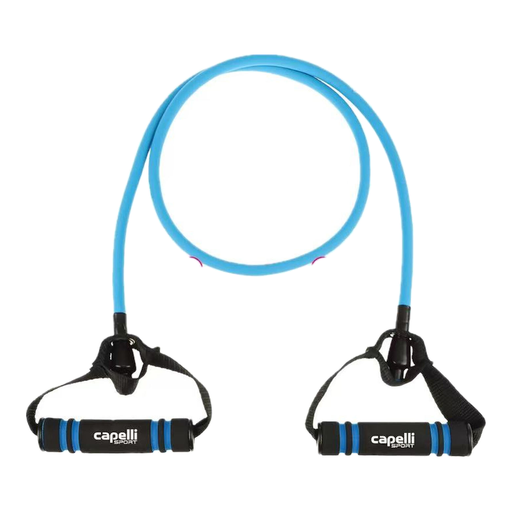
Why This Fits Their Persona: This synthetic rubber tube offers a medium resistance format for home, office or travel workouts, including rows, curls and shoulder presses.
The material is identified as TPE rather than natural latex, while maintenance and damage checks are clearly specified.
TPE construction; ergonomic foam handles; lightweight portable format; medium resistance.
Follow the product instructions and keep the following checks in your routine:
Yes, provided the resistance and movement are manageable. Beginners should start with controlled exercises, avoid excessive stretching and prioritise correct positioning. A resistance band set with several levels can help users select a more appropriate tension as their routine changes.
Lifespan depends on frequency of use, stretching range, storage and exposure to heat or sunlight. There is no universal replacement period. Regular inspection is more useful than relying on a fixed timescale. Replace a band immediately if it shows visible damage.
They can complement or replace some dumbbell exercises, but they create a different resistance profile. Dumbbells such as neoprene dumbbells or hex dumbbells provide a fixed mass, while bands usually become more difficult to pull as they extend. Many home users combine both types of equipment for varied strength training.