
24/7 Customer Support

Free returns

Same-day & Next-day Delivery

Quality Guaranteed

Unlock Your Welcome Offers: FREE Delivery | Up to 80% OFF | Free 30-day JoyPlus trial
Download the APP
Resistance bands are compact, relatively affordable and easy to store in a flat or house. However, choosing the wrong type can lead to an uncomfortable workout, limited progress or a band that becomes unusable sooner than expected.
Before buying exercise bands, watch for three common pitfalls:
Resistance bands are available in several formats, each suited to different movements:
If your main goal is general home workout equipment, a resistance band set with several levels can offer more flexibility than a single band. For a specific routine, however, choosing the correct shape may matter more than having numerous resistance options.
Dimensions affect how a band feels in use. A 60cm mini loop is compact and suited to lower-body movements, whereas a 120cm flat band or handled tube allows more reach for upper-body exercises.
For progressive training, look for at least light, medium and heavy levels. Beginners may need a lighter band for learning controlled movement, while experienced users may prefer heavier strength training bands. Remember that the same band can feel different depending on how far it is stretched, where it is anchored and which exercise is being performed.
A stated measurement such as 15cm × 120cm, 5cm wide with a 60cm circumference or 208cm circumference helps you compare products more objectively than colour alone.
Natural latex is stretchy and commonly used in resistance bands, but it can cause allergic reactions in sensitive users. If this is a concern, consider latex-free resistance bands made from TPE, while still checking the product description and care instructions.
Inspect every band before use for cracks, tears, thinning or fraying. Do not overstretch it beyond its natural range, use it near sharp edges or allow it to snap towards the face or bare skin. Store bands away from direct sunlight, excessive heat, children and pets. People using rehabilitation bands after injury or surgery should follow advice from an appropriate healthcare professional.
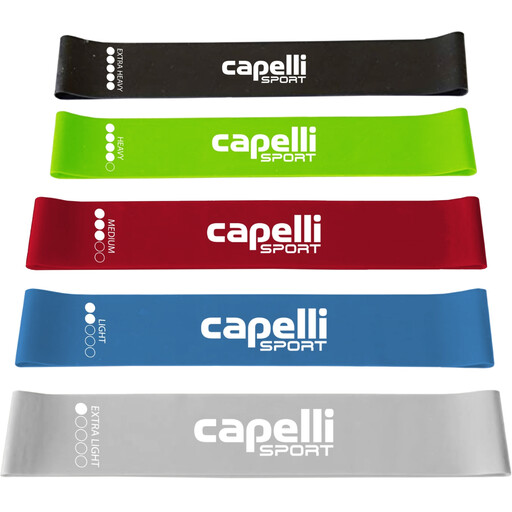
Why This Fits Their Persona: A five-level set gives beginners in the UK a way to start gently and increase resistance without buying separate bands. Its compact format suits flats, home workouts and travel.
The five colour-coded levels reduce reliance on vague single-band resistance descriptions. The product also states its 5cm width and 60cm circumference.
Five resistance levels; supplied with a travel carry bag; suitable for yoga, Pilates and glute training.
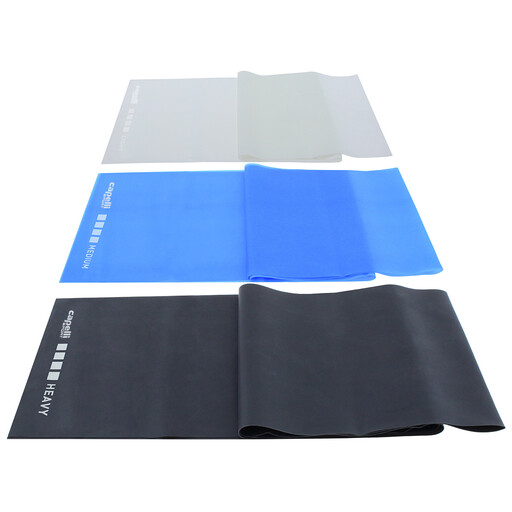
Why This Fits Their Persona: Users who want a soft-touch flat design for regular yoga, Pilates or mobility sessions may value the three clearly separated resistance options.
The 15cm × 120cm dimensions and light, medium and heavy set are specified, making it easier to judge whether the format matches your routine.
Three latex bands; soft-touch finish; storage bag included; suitable for Pilates and physiotherapy exercises.
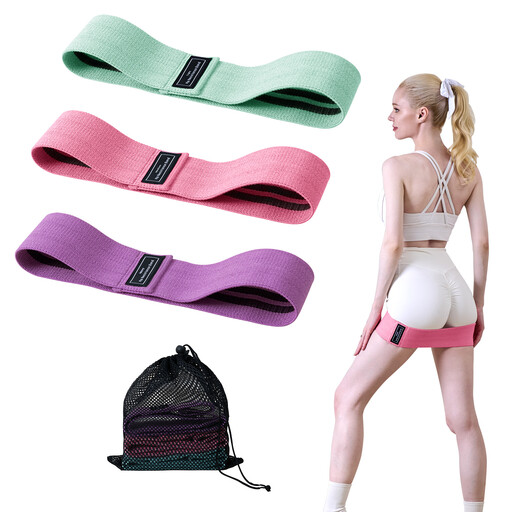
Why This Fits Their Persona: These fabric loop bands are aimed at people focusing on squats, hip activation and leg sessions at home, in a gym or during Pilates practice.
The cotton fabric construction and non-slip design address the common problem of narrow elastic loops rolling during lower-body movements.
Three resistance levels; fabric loops with stated non-slip construction; storage bag included.
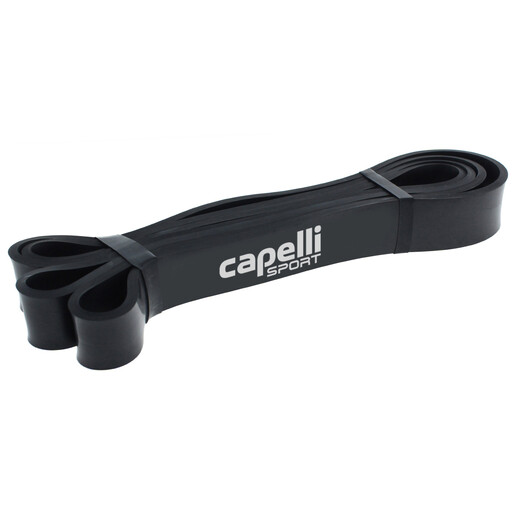
Why This Fits Their Persona: A long power band is suited to users who need a larger range of movement for pull-up assistance, stretching, muscle training or selected rehabilitation exercises.
Its stated 208cm circumference and 40–50lb resistance indicate a different use case from short mini loops. Buyers can assess the size before ordering.
Long loop format; natural latex construction; suitable for pull-up assistance, stretching and strength training.
We have compiled a complete, real-time list of products that fully satisfy these strict selection criteria and UK safety regulations.
Lifespan depends on material, frequency of use, storage and stretching range. Inspect bands before every session and replace them when you notice cracks, tears, thinning, fraying or weakened handles. Keeping latex away from sunlight, heat, oils and sharp surfaces can help maintain its condition.
Yes, provided the resistance level and exercise are appropriate. Start with controlled movements, avoid excessive stretching and choose a lighter band when learning technique. A set containing light, medium and heavy levels can support gradual progression.
They can be a practical option for people who want to avoid natural latex. TPE bands are commonly described as latex-free and may also be suitable for yoga, Pilates, rehabilitation and general home workouts. Always check the specific product materials and stop using any band that causes skin irritation or discomfort.