
24/7 Customer Support

Free returns

Same-day & Next-day Delivery

Quality Guaranteed

Unlock Your Welcome Offers: FREE Delivery | Up to 80% OFF | Free 30-day JoyPlus trial
Download the APP
Resistance bands can support strength training, mobility work, Pilates, yoga and targeted leg exercises without taking up much storage space. However, choosing the right product is not simply a matter of picking the brightest colour or the highest resistance rating.
As the Joybuy Product Recommendation Officer, I focus on practical specifications rather than promotional wording. The following guide explains the common buying traps, the measurements that matter and which resistance bands may suit different routines.
There is no universal colour system for resistance bands. One brand’s red band may be light, while another’s may be heavy. Some listings provide a resistance range in pounds, but others only use labels such as light, medium or heavy.
Check the stated resistance level, width, length and intended exercise. A heavy resistance band may be useful for rows or assisted pull-ups but unsuitable for gentle mobility work.
A product title may contain the words “resistance band set” even when the listing includes only one tube. Resistance bands with handles are often sold individually, with other resistance levels available separately.
Before ordering, confirm:
This prevents paying for a single exercise band when a progressive set was the intended purchase.
Latex resistance bands provide elasticity but may not suit people with a natural latex sensitivity. They also need protection from direct sunlight, sharp objects and excessive heat. TPE resistance bands are a synthetic alternative and can be suitable for people looking to avoid natural latex, although you should still check the full product information.
Fabric glute and leg bands may feel more stable around the thighs, but they are not a direct replacement for long pull-up resistance bands or resistance bands with handles. Each design is intended for a different movement pattern.
For a general home routine, a set containing light, medium and heavy levels offers more flexibility than one fixed band. Beginners may need lighter exercise bands for controlled movement, while stronger users may require heavy resistance bands for squats, rows or assisted pull-ups.
Resistance also changes as the band stretches. The stated level should therefore be treated as a guide rather than an exact weight equivalent. Maintaining controlled movement is more useful than selecting the highest label.
Latex resistance bands are flexible and commonly used for flat bands, power bands and mini loop resistance bands. Check for cracking, tears and changes in elasticity before every session. Avoid latex if you have a known sensitivity.
TPE resistance bands are made from thermoplastic elastomer rather than natural latex. They are used in several tube-style products and can offer a comfortable, flexible feel. Check the product description for the precise material, as “synthetic rubber” and TPE are not interchangeable descriptions.
Fabric bands are often chosen for glute and leg bands because they can feel less prone to rolling during lateral steps, squats and hip exercises. They are generally more specialised than long flat bands.
Length affects your range of motion. A 120 cm tube with handles may suit curls, presses and rows, while a 208 cm power band is more appropriate for stretching, full-body movements and pull-up assistance.
For loop bands, check both width and circumference. A 5 cm-wide, 60 cm-circumference mini loop resistance band is designed for close-to-body leg and hip exercises, rather than overhead pulling.
Inspect handles, stitching, straps and connection points. Foam handles can make repeated movements more comfortable, but they do not remove the need to hold the band securely.
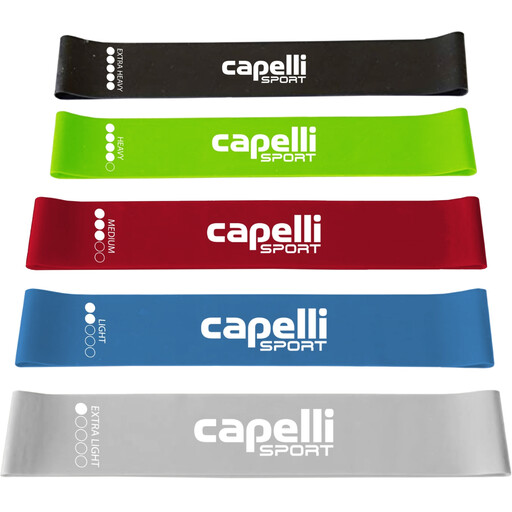
Why This Fits Their Persona: Five resistance levels give new users room to adjust their routine at home, while the carry bag is practical for small UK flats or travel.
The listing specifies a five-pack, 5 cm width and 60 cm circumference, reducing confusion over quantity and sizing.
Five colour-coded levels; carry bag included; suitable for leg, glute, yoga and Pilates exercises.
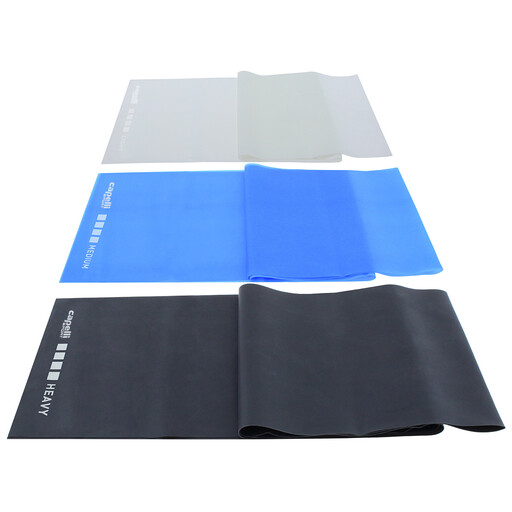
Why This Fits Their Persona: A three-level flat-band format suits users who want one organised option for Pilates, yoga, mobility and general home workouts.
It clearly states that three bands are included, with light, medium and heavy resistance and consistent 15 cm x 120 cm dimensions.
Natural latex construction; three resistance levels; storage bag included.
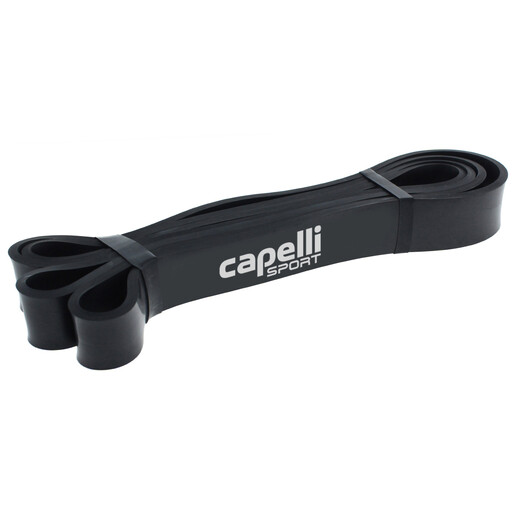
Why This Fits Their Persona: The long continuous design is aimed at users practising assisted pull-ups, stretching, full-body strength movements or gym-based training.
The listing provides the 208 cm circumference, 2.8 cm width and stated 40–50 lb resistance range instead of relying only on a colour label.
Natural latex; long-loop format; suitable for pull-up assistance, muscle training and stretching.
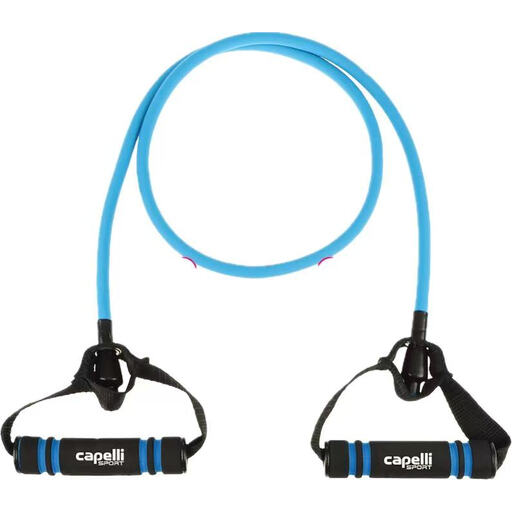
Why This Fits Their Persona: Foam handles offer a familiar grip for curls, rows and presses in a home or gym routine, with a 120 cm tube length.
The product page identifies it as one medium band, includes natural-latex information and provides inspection and storage guidance.
Foam sure-grip handles; 120 cm tube; suitable for resistance training, Pilates and home workouts.
Inspect resistance bands before each session for cracks, tears, fraying or weakened connection points. Do not use a damaged band, overstretch it beyond its stated range or allow it to snap towards your face.
Wipe bands and handles with a damp cloth and mild soap where appropriate, then allow them to dry fully. Store latex products in a cool, dry place away from sunlight and sharp edges. People with latex sensitivity should check the material before purchase.
We have compiled a complete, real-time list of products that fully satisfy these strict selection criteria and UK safety regulations.
Lifespan depends on material, frequency of use, stretching range and storage. Regularly inspect them and replace a band if you notice cracks, tears, stickiness, fraying or permanent deformation. Keeping latex away from sunlight and heat can help protect its condition.
Yes, provided the resistance level is appropriate and movements are performed slowly with control. A light or medium band, or a set with several levels, allows users to start gradually. Read the supplied instructions and seek suitable professional advice if exercising around an injury.
They do not require batteries, electricity or subscription fees. The main ongoing consideration is replacement if a band becomes damaged or loses its elasticity. Buying the correct material, resistance and design initially can reduce the likelihood of purchasing unsuitable replacements.