
24/7 Customer Support

Free returns

Same-day & Next-day Delivery

Quality Guaranteed

Unlock Your Welcome Offers: FREE Delivery | Up to 80% OFF | Free 30-day JoyPlus trial
Download the APP
Resistance bands can support home workouts, Pilates, yoga, mobility routines, glute training and pull-up assistance without taking up much storage space. However, product listings often make it difficult to compare resistance levels, materials and construction.
The wrong choice can leave you with a band that rolls up, handles that feel insecure or a resistance level that does not match your routine. This guide from the Joybuy Product Recommendation Officer focuses on practical specifications rather than inflated marketing language, helping you choose resistance bands that suit your training habits and budget.
A longer band is not automatically stronger. Resistance depends on several factors, including material, thickness, width, stretch distance and the stated resistance level. A product described as “heavy” may feel different from another heavy band because manufacturers do not always use identical measurement methods.
For loop resistance bands and pull-up bands, check the dimensions and stated load range where available. For example, a 208 cm circumference power band is designed for a different type of movement from a 60 cm mini loop.
Latex resistance bands usually offer noticeable elasticity, but natural latex may cause allergic reactions in sensitive users. TPE resistance bands are a useful latex-free option when the product description specifically confirms TPE or another synthetic material.
Fabric hip bands can feel comfortable against clothing and are often designed to reduce rolling during leg and glute exercises. They are not necessarily interchangeable with long exercise bands for upper-body or pull-up work.
A resistance band set may include handles, clips, a door anchor, a carry bag or an exercise guide. These additions are only useful if they match how you plan to train. A mini loop set may be more practical for travel than a long tube set, while resistance bands with handles can provide a familiar grip for curls, rows and presses.
Before buying, check exactly what is included. A single band with handles is not the same as a complete resistance band set with several interchangeable levels.
Beginners may benefit from light or medium exercise bands for controlled movement and technique practice. Users working on strength training may prefer medium-to-heavy options, while pull-up assistance typically requires a long, robust power band.
A set containing light, medium and heavy bands allows you to adjust training intensity as your routine changes. For rehabilitation or physical therapy bands, select a level recommended by your qualified healthcare or rehabilitation professional rather than choosing solely by colour.
No material should be treated as indestructible. Inspect the band before every session for cuts, cracks, fraying or signs of stretching damage.
Long power bands are suitable for assisted pull-ups, stretching and compound strength movements. Flat Pilates bands are useful for controlled arm, leg and mobility exercises. Mini loop resistance bands are compact and suited to glute and leg exercises, warm-ups and lower-body activation routines.
For bands with handles, consider the tube length and handle construction. Foam grips may improve comfort, but users should still hold both handles securely and avoid directing a stretched band towards the face or eyes.
The following options cover different usage profiles, from compact beginner equipment to heavier pull-up and muscle-training bands.
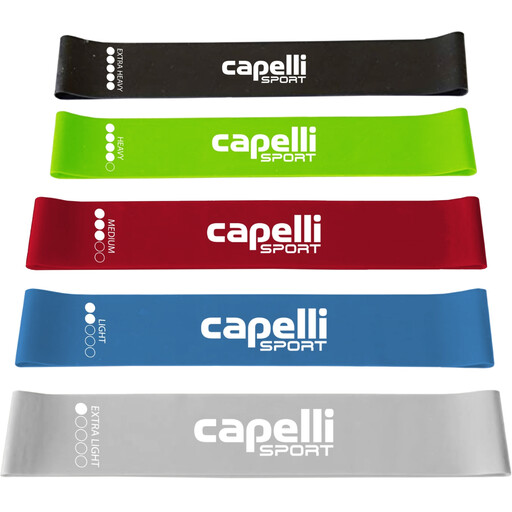
Why This Fits Their Persona: A five-level set gives new users room to adjust their routine at home, in a flat or while travelling around the UK. The compact format suits lower-body workouts, yoga, Pilates and general fitness.
The five colour-coded resistance levels make progression clearer than buying one band based only on a vague “heavy” label. The 60 cm circumference also identifies it as a mini loop rather than a full-length pull-up band.
Includes five varying resistance levels and a portable travel bag. Made from latex; inspect before use and follow the allergy warning.
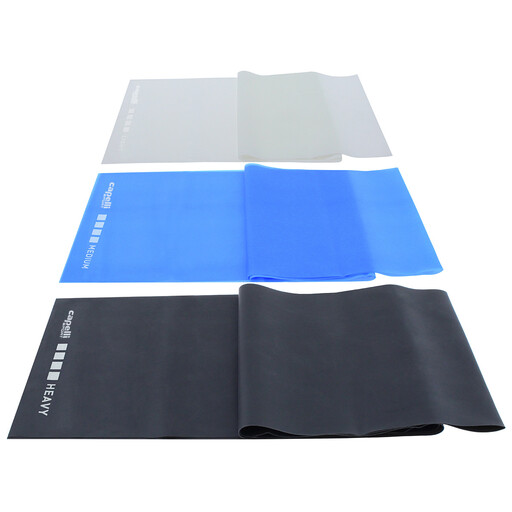
Why This Fits Their Persona: This latex-free set suits people who want one portable option for Pilates, yoga, rehabilitation-style routines and general strength training, without selecting natural latex.
The material is specified as TPE and latex-free, addressing a common compatibility concern. Three clearly listed levels also reduce the risk of outgrowing a single band quickly.
Each band measures 15 x 120 cm and the set includes light, medium and heavy levels. The bands are described as odourless, soft-touch and portable.
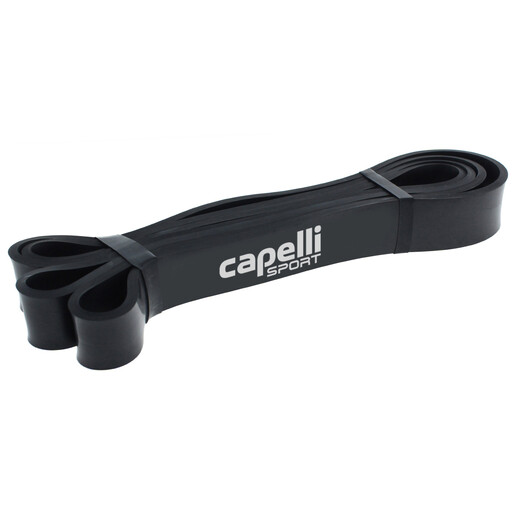
Why This Fits Their Persona: The long circumference and stated 40–50 lb range are suited to users specifically seeking pull-up assistance, stretching or heavier muscle-training movements at home or in the gym.
The listing provides a specific circumference, width, thickness and resistance range, so buyers can compare it with their intended pull-up or strength-training set-up.
Made from natural latex with a 208 cm circumference and stated 40–50 lb resistance. Suitable for pull-up assistance, stretching and physical therapy-style exercises, subject to appropriate professional guidance.
Resistance bands need little maintenance, but a few habits can reduce avoidable damage:
We have compiled a complete, real-time list of products that fully satisfy these strict selection criteria and UK safety regulations.
Yes, they can be used for beginner routines when the resistance level allows controlled movement and stable form. A set with light, medium and heavy options can help you start gently and progress gradually. Avoid selecting a heavy band simply because the label sounds more substantial.
Lifespan depends on material, frequency of use, stretch intensity, storage and exposure to heat or sunlight. Inspect bands before each session and replace them if you see cracks, tears, fraying or weakened areas. There is no reliable universal replacement timetable for every material and design.
They can provide resistance for many exercises, including rows, presses, curls, squats and leg work, but they do not feel identical to free weights. Bands are particularly portable and useful for home workouts, travel and warm-ups. For a broader routine, select bands that complement rather than duplicate your existing home workout equipment.