
24/7 Customer Support

Free returns

Same-day & Next-day Delivery

Quality Guaranteed

Unlock Your Welcome Offers: FREE Delivery | Up to 80% OFF | Free 30-day JoyPlus trial
Download the APP
Resistance bands can support strength training, mobility work, glute exercises and home fitness without taking up much space. However, the wrong band can quickly become uncomfortable, difficult to control or unsuitable for your intended exercises.
Before buying, look beyond colour coding and phrases such as “heavy duty”. The band shape, material, dimensions and resistance level have a greater impact on everyday use. This guide explains the main buying pitfalls and matches different types of resistance bands to practical user profiles in the UK.
A red band from one manufacturer may not offer the same tension as a red band from another. Colour coding is useful within a particular set but it is not a universal measurement.
Check whether the listing provides:
For beginners, a set with several levels can be more practical than a single heavy band. It allows you to adjust the challenge for different exercises and progress gradually.
Latex resistance bands generally offer flexible stretch and are available in many loop, flat and power-band designs. However, natural latex may cause allergic reactions in sensitive users. Store latex products away from direct sunlight, excessive heat and sharp objects.
TPE resistance bands are latex-free and can be a useful option for people who prefer to avoid natural latex. They are often available as flat bands or tubes with handles. Always check the individual product description rather than assuming every synthetic band has identical stretch characteristics.
Fabric bands can offer a different feel against the skin and may be less prone to rolling during hip and glute exercises. They are commonly used as glute and leg bands, although their shorter loop format is less suitable for pull-up assistance or full-body pulling movements.
A mini loop band is convenient for squats, side steps and hip activation but its short circumference is not designed for pull-ups. Conversely, a long pull-up resistance band may be awkward for small Pilates movements.
Think about your primary use:
A resistance band should provide enough tension to make an exercise challenging while allowing controlled movement. A five-level set can suit households with different users or routines that vary from mobility work to strength training.
For rehabilitation or physiotherapy use, choose a light or medium level initially and follow guidance from a qualified healthcare professional. Do not treat a printed resistance label as a substitute for individual assessment.
Dimensions affect both comfort and exercise suitability. A 60 cm circumference mini loop is compact and appropriate for many lower-body movements. A 208 cm circumference power band provides a longer stretch path for pull-up assistance, body stretching and larger compound exercises.
Flat bands measuring around 15 cm by 120 cm can be wrapped, held or used with Pilates equipment. A 120 cm tube with handles offers a familiar range of motion for arm curls, triceps kickbacks, rows and front raises.
Handles can make tube bands easier to hold during upper-body training, particularly where repeated gripping is involved. Look for foam grips, secure attachment straps and a tube length that allows a comfortable range of movement.
For all resistance bands, inspect the material before each session. Stop using a band if you notice cracks, tears, fraying or unusual thinning. Avoid overstretching, snapping the band towards your body and storing it near sharp edges.
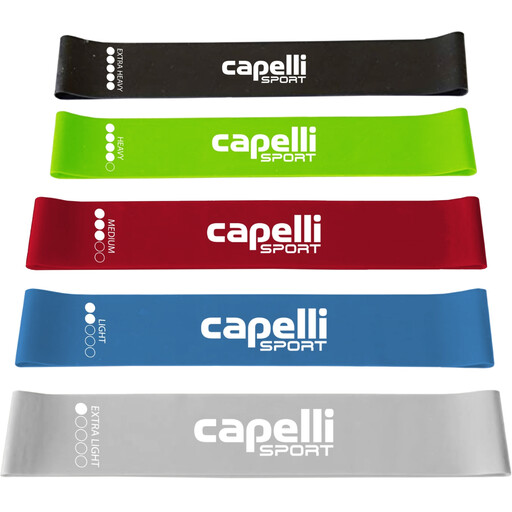
Why This Fits Their Persona: Five levels make this set suitable for people starting home workouts or sharing equipment with other household members. Its compact format is easy to store in a flat or take in a gym bag.
The resistance levels are supplied as a set rather than relying on one ambiguous colour or tension description. The listing also states the 5 cm width and 60 cm circumference.
Five colour-coded levels; carry bag included; suitable for yoga, Pilates, leg and glute training.
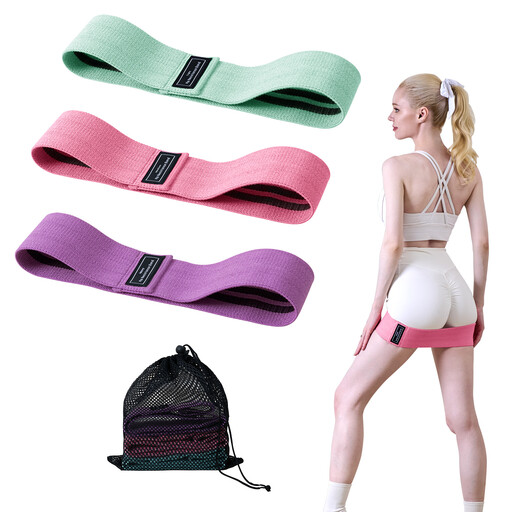
Why This Fits Their Persona: Fabric construction and a non-slip design suit users who prioritise comfort and stability during repeated squats, side steps and Pilates routines at home.
The loop format is designed for hip and lower-body work, avoiding the mismatch of buying a long band for exercises that need a short, stable loop.
Cotton fabric; three resistance levels; storage bag included; dimensions of 38 x 8 cm.
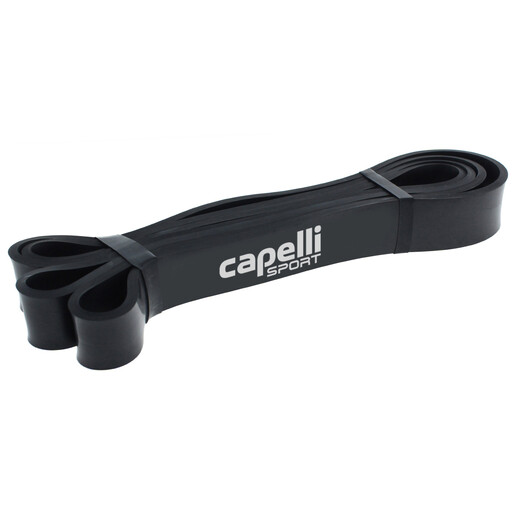
Why This Fits Their Persona: This long power band is intended for users who need substantial stretch for pull-up assistance, body stretching, muscle training or larger full-body movements.
Its 208 cm circumference clearly identifies it as a power or pull-up band rather than a mini loop intended only for lower-body exercises.
Natural latex; 208 cm circumference; listed 40–50 lb resistance; suitable for pull-up assistance and stretching.
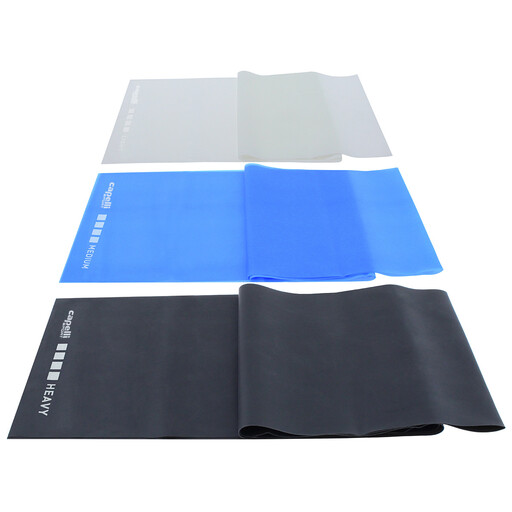
Why This Fits Their Persona: The latex-free material suits users seeking TPE resistance bands for yoga, Pilates, rehabilitation-style routines or general home workouts.
The listing identifies TPE as the material and describes the bands as latex-free, helping shoppers check compatibility before purchasing.
Three bands in light, medium and heavy levels; each measures 15 x 120 cm; suitable for storage and travel.
Wipe bands with a damp cloth after use and allow them to dry fully before storage. Avoid oils, solvents, radiators and direct sunlight, which may affect some materials over time. Keep bands away from pets and children, particularly when they are stretched or stored loosely.
Use a stable anchor only when the product instructions permit it. Maintain control throughout each repetition and avoid placing the band near your face. Users returning from injury, surgery or childbirth should seek appropriate professional advice before beginning a new exercise programme.
Yes, provided you select a manageable level and use controlled movements. A multi-level set allows beginners to start with light resistance and change bands as their routine develops. Begin with a small number of repetitions and prioritise form rather than maximum tension.
Lifespan depends on frequency of use, stretching range, storage and material. Inspect bands before every session and replace them if they show cracks, tears, fraying or permanent deformation. Correct storage away from heat, sunlight and sharp objects can help maintain their condition.
Neither material is universally suitable for every user. Latex offers a familiar elastic feel but may not suit people with latex sensitivity. TPE is latex-free and available in flat and handled designs. Choose based on material preference, intended exercise, grip requirements and the manufacturer’s care instructions.