
24/7 Customer Support

Free returns

Same-day & Next-day Delivery

Quality Guaranteed

Unlock Your Welcome Offers: FREE Delivery | Up to 80% OFF | Free 30-day JoyPlus trial
Download the APP
Resistance bands can support strength training, Pilates, mobility work and rehabilitation without taking up much space. However, choosing the right set is not simply a matter of picking the brightest colours or the highest resistance level. Product descriptions often leave out details that affect comfort, safety and suitability.
Before buying resistance bands, UK shoppers should check the material, dimensions, resistance progression and handle design. The right choice depends on whether you want portable equipment for a flat, a more structured alternative to weights, or a gentle aid for physiotherapy exercises.
Colour-coding is useful, but colours are not consistent between manufacturers. One brand’s red band may be another brand’s light or heavy option. Look for a clearly stated resistance level, such as extra light, medium or heavy, and consider whether the product offers enough progression for your routine.
For beginners, mini loop resistance bands with several levels can be more practical than a single heavy band. For strength training, a set or multiple individual bands allows you to increase tension gradually.
Latex resistance bands are known for their elastic feel and are common in loop and tube designs. They may provide smooth tension, but latex can cause allergic reactions for some users. TPE resistance bands use thermoplastic elastomer and may be a suitable alternative for shoppers seeking a latex-free material, although you should always check the product specification rather than assume.
Avoid bands with vague material descriptions. “Elastic” alone does not tell you whether the band is latex, TPE or another synthetic material.
A short loop band is designed differently from a 120 cm tube with handles. Loop bands are useful around the thighs or legs, while bands with handles are more convenient for curls, presses and upper-body movements.
A band that is too short for your exercise may encourage over-stretching. One that is too long may provide insufficient tension during certain movements. Check the stated length, width and circumference before ordering.
Check whether the band is made from latex, TPE or another synthetic rubber. If you have a known latex sensitivity, do not use a latex product. Foam handles can improve comfort, but they do not change the material of the band itself.
For maintenance, wipe bands with a damp cloth, allow them to dry fully and store them away from direct sunlight, excessive heat and sharp objects. Do not use oils or harsh cleaning chemicals unless the manufacturer specifically permits them.
A practical home workout setup should match your current ability while leaving room for progression. Extra-light and light bands can suit movement practice, warm-ups and some rehabilitation exercises. Medium and heavy resistance bands may be more appropriate for stronger lower-body movements, but only when you can maintain controlled form.
Do not judge suitability by the word “heavy” in a product title alone. Check whether it refers to one band, a complete set or one option within a range.
For loop bands, width and circumference affect how the band sits against the body. A 5 cm-wide loop, for example, may feel more stable around the legs than a narrow strip.
For resistance bands with handles, inspect the grip material and strap connection. Foam handles can provide a more comfortable hold for repeated curls, rows and presses. Always check that the handles and straps are secure before applying tension, and inspect the band for splitting, fraying or other damage before every session.
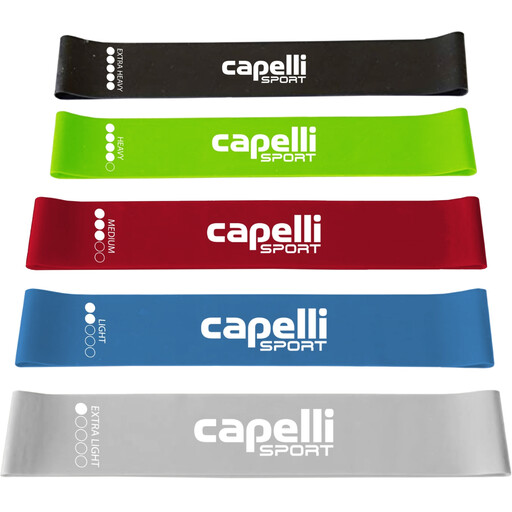
Why This Fits Their Persona: Five resistance levels offer a straightforward starting point for home workouts, leg exercises, Pilates and gradual progression without buying separate bands immediately. The included carry bag is useful for travel or storage in a small UK home.
The resistance levels are identified as extra light, light, medium, heavy and extra heavy, rather than relying only on colour. Its 5 cm width and 60 cm circumference are also clearly stated.
Five latex loop bands; portable travel carry bag; suitable for leg, glute, yoga and Pilates exercises.
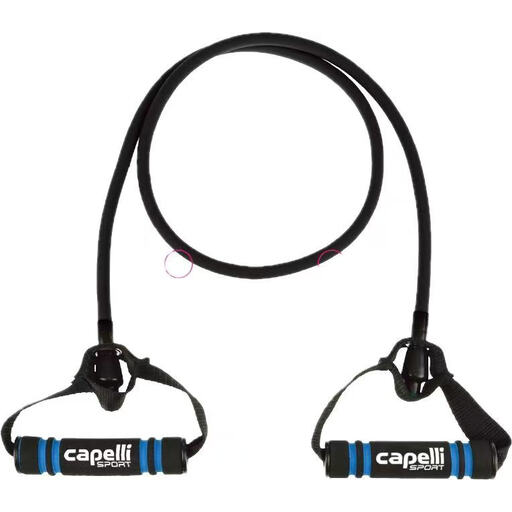
Why This Fits Their Persona: A 120 cm latex band with foam handles suits users who prefer a familiar grip for upper-body exercises at home, in a gym or during a fitness class.
The product specifies its 120 cm length, latex construction, foam grip and secure straps, helping shoppers assess fit and handling before purchase.
Foam handles for grip comfort; suitable for curls, triceps kickbacks, front raises and general resistance training.
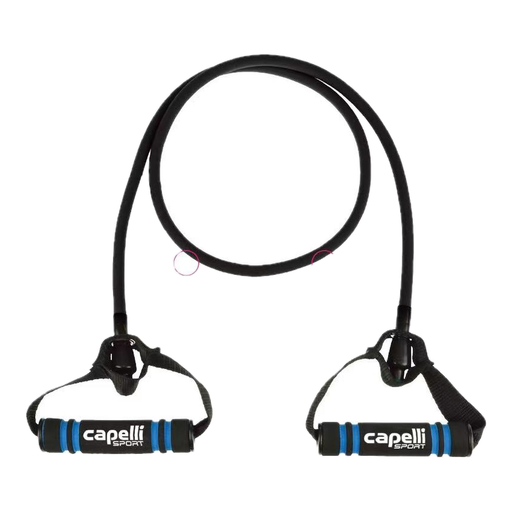
Why This Fits Their Persona: This single TPE band with handles is aimed at users wanting a more substantial band for strength training, muscle toning, Pilates or rehabilitation routines without adding bulky equipment.
The product clearly identifies TPE as the tube material and lists the foam handles and secure straps. This gives latex-sensitive shoppers information to consider before ordering.
TPE tube construction; padded foam handles; portable format for rows, curls, shoulder presses and lower-body training.
Use these steps whether you choose loop bands, exercise bands or a handled tube:
Resistance bands can complement physiotherapy bands and rehabilitation exercise bands, but the correct tension and movement should come from your prescribed programme where applicable.
Yes, provided the resistance matches your current ability and you use controlled movements. A multi-level loop set can make progression easier, while a light or medium handled band may suit basic upper-body exercises. Start with manageable tension rather than selecting a heavy band immediately.
Lifespan depends on frequency of use, stretching intensity, storage and exposure to heat or sunlight. There is no universal replacement period. Inspect the band regularly and replace it at the first sign of cracking, tearing, fraying or unusual loss of elasticity.
They may be included in some rehabilitation, Pilates or postnatal routines, but suitability depends on the individual and the exercise plan. Use only the resistance and movements recommended by your healthcare professional or qualified instructor, particularly after injury, surgery or childbirth.