
24/7 Customer Support

Free returns

Same-day & Next-day Delivery

Quality Guaranteed

Unlock Your Welcome Offers: FREE Delivery | Up to 80% OFF | Free 30-day JoyPlus trial
Download the APP
Resistance bands can support strength training, stretching, Pilates, yoga, glute exercises and pull-up assistance without taking up much space. However, choosing the right set is not simply a matter of picking the largest pack or the brightest colour.
Marketing descriptions often leave out important details, such as the actual band dimensions, resistance range and material limitations. Before buying exercise resistance bands, check the following common pitfalls.
A large resistance band set may contain several pieces but offer little variety if the bands are all similar in length or tension. A useful set should provide a meaningful progression, such as light, medium and heavy resistance, or clearly different loop sizes for specific movements.
Also check whether the product is a complete kit or a single band. Some resistance bands with handles are sold individually, while others include multiple tubes and interchangeable handles.
Latex and natural rubber bands are flexible and widely used, but they may not suit people with latex sensitivity. Product descriptions should state the material clearly. Latex-free resistance bands, commonly made from TPE, can be a more suitable option for shoppers wishing to avoid natural latex.
Material also affects care. Latex and rubber should generally be kept away from direct sunlight, excessive heat and sharp objects. TPE flat resistance bands are also vulnerable to cuts and should be wiped clean rather than exposed to harsh cleaning products.
A heavy band is not automatically more useful. Excessive tension can reduce control and make it difficult to complete an exercise with a steady range of motion. For beginners, Pilates, yoga or mobility work, a light or medium band may be more practical. Heavy resistance is more relevant for progressive strength work and pull-up assistance, provided the band is used correctly.
Resistance ratings are not always directly comparable between brands. Treat labels such as “light” or “heavy” as a guide, then compare the band’s design, length, width and intended use.
Natural latex offers substantial stretch and is common in loop bands, power bands and handled tubes. It may degrade if stored in heat or sunlight and can cause allergic reactions in sensitive users.
TPE is a synthetic, latex-free alternative. The 3PK Flat Resistance Band uses TPE and is described as odourless, soft to the touch and suitable for yoga, Pilates, physiotherapy and rehabilitation-related exercise. Anyone recovering from injury should follow guidance from an appropriately qualified healthcare professional.
Fabric-covered bands, such as cotton hip bands, can offer a different feel and may be less likely to roll during glute and leg exercises. They are usually more specialised than long flat bands.
A resistance band set with several levels can help users adjust training gradually. Look for clear resistance categories, secure handles and a design that does not show premature fraying, cracking or tearing.
Before each session, inspect the band, handles and connection points. Do not stretch a band beyond its stated or sensible range, and avoid letting it snap back towards the body or face.
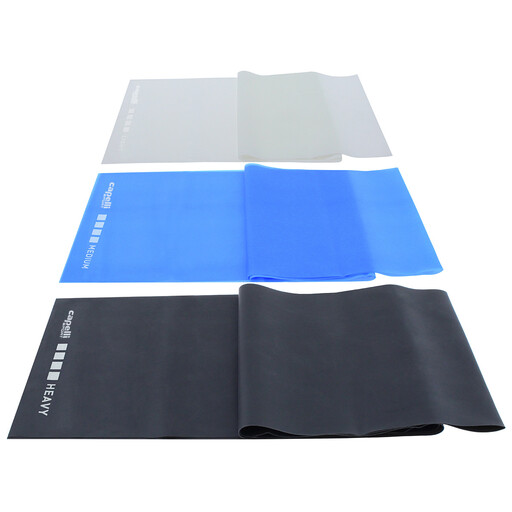
Why This Fits Their Persona: Three flat bands provide a simple starting point for home workouts, office exercise, yoga or Pilates without requiring handles or additional equipment.
The light, medium and heavy options make the resistance range clearer than a pack containing several near-identical bands. TPE construction also avoids natural latex.
Three stated resistance levels; 15 cm x 120 cm dimensions; lightweight and portable design.
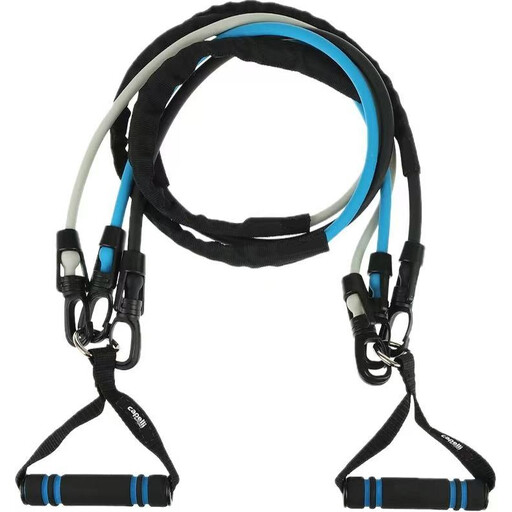
Why This Fits Their Persona: This interchangeable handled system suits shoppers who want one compact setup for upper- and lower-body strength training at home or in the gym.
The light, medium and heavy tubes can be added or removed using clips, so the resistance arrangement is defined rather than implied by colour alone.
Includes three 120 cm tubes and two foam handles; adjustable configuration for progressive training.
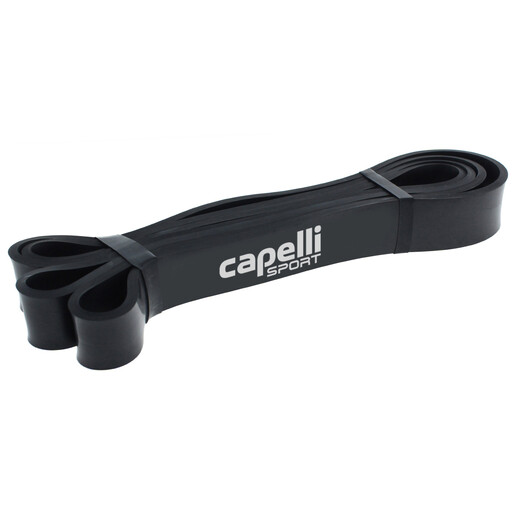
Why This Fits Their Persona: The long power-band format is suited to pull-up assistance, body stretching and larger compound movements where a short mini loop would be restrictive.
Its stated 208 cm circumference and 2.8 cm width make it easier to distinguish from shorter mobility or glute bands. The 40–50 lb rating is also specified in the product details.
Long natural-latex loop; designed for pull-up assistance, strength training and stretching.
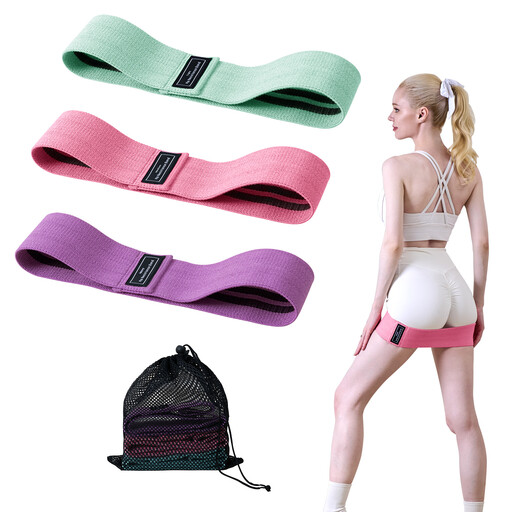
Why This Fits Their Persona: These fabric loop bands are designed for leg and glute movements, making them practical for compact home workouts, Pilates and lower-body sessions.
The fabric construction and non-slip design address the common problem of loops rolling or moving during lower-body exercises.
Three fabric loop bands in light, medium and heavy levels; storage bag included; 38 cm x 8 cm dimensions.
We have compiled a complete, real-time list of products that fully satisfy these strict selection criteria and UK safety regulations.
Follow the instructions supplied with the product and begin with controlled movements. Anchor a band only to a stable point designed for that purpose. For handled tubes, check that clips and straps are secure before applying tension.
After use, wipe bands with a damp cloth and mild soap if required, then allow them to air dry. Store them in a cool, dry place away from direct sunlight, radiators, pets and sharp objects. Replace a band if you notice cracks, cuts, fraying, sticky patches or permanent deformation.
People undertaking rehabilitation or physiotherapy should select resistance and exercises according to guidance from a qualified professional rather than relying solely on a product listing.
Yes, provided the resistance is manageable and the exercises are performed with control. A resistance band set containing light, medium and heavy options allows beginners to start gently and adjust over time. Avoid choosing a heavy band simply because it appears more substantial.
There is no fixed lifespan. Frequency of use, stretching range, storage conditions and material all affect durability. Inspect bands before every use, especially if they are used outdoors or around abrasive surfaces. Correct storage away from heat and sunlight can help maintain latex and rubber products.
They do not require batteries, electricity or subscription fees, so ongoing costs are generally limited to replacement when a band becomes damaged or worn. Buying a set with several levels may also reduce the need to purchase separate bands as your routine develops.