
24/7 Customer Support

Free returns

Same-day & Next-day Delivery

Quality Guaranteed

Unlock Your Welcome Offers: FREE Delivery | Up to 80% OFF | Free 30-day JoyPlus trial
Download the APP
Resistance bands can support strength training, mobility work, Pilates, yoga and targeted glute exercises without taking up much space. However, choosing a suitable set is not simply a matter of picking the brightest colours or the highest resistance label.
Marketing language can hide important differences in material, dimensions, resistance measurement and intended use. A band designed for hip exercises may be unsuitable for assisted pull-ups, while a heavy power band can feel excessive for a beginner or someone following a rehabilitation programme.
This guide explains the practical details to check before buying resistance bands in the UK, followed by product recommendations matched to different users.
A red, blue or black band does not have a universal resistance level across different brands. “Heavy” is also not a standard measurement. One set’s heavy loop may feel very different from another’s.
Look for a clearly stated resistance level, width, circumference or approximate load range. A set containing light, medium and heavy bands can be more useful than a single band if you plan to progress gradually.
Mini loop resistance bands are compact and suited to movements such as lateral walks, glute bridges and leg work. Long loop bands are more appropriate for stretching, assisted pull-ups and larger ranges of movement. Bands with handles provide a grip similar to some cable exercises, including rows, curls and shoulder presses.
Buying a narrow mini loop for pull-up assistance, or a long power band for small hip exercises, can lead to poor control and limited use.
Latex resistance bands offer elasticity and are widely used for exercise resistance bands, but latex can be affected by sunlight, heat, sharp objects and excessive stretching. TPE resistance bands are latex-free, which may be relevant for shoppers with a latex allergy, although all product information and warnings should be checked before purchase.
No material should be stretched beyond its intended range. Inspect a band before every use and stop using it if you notice cracks, thinning, tears or other damage.
Latex resistance bands generally provide a flexible, spring-like feel and are available in mini loops, flat bands and long power bands. The product details should identify latex clearly, as latex may cause an allergic reaction in sensitive users.
TPE resistance bands are a latex-free alternative. They are available as flat bands and resistance bands with handles, making them suitable for home workouts, Pilates and general resistance training. Check whether the handles, straps and tubing are made from different materials.
For either material, storage matters. Keep bands in a cool, dry place away from direct sunlight, radiators and sharp objects. Wipe them with a damp cloth after use and allow them to dry fully before storing.
Dimensions affect how a band behaves:
For beginners, a light or medium band can make it easier to learn controlled movement. More experienced gym users may prefer heavy strength training bands or long power bands. A multi-level pack also allows you to alter training intensity between upper-body and lower-body exercises.
Resistance changes with stretch length, anchor position and exercise technique. Treat the printed level as a guide rather than an exact weight equivalent. Use slow, controlled movements and avoid snapping the band towards your body or face.
The following options are organised by practical use rather than broad claims. Check the listing for current availability, price, delivery information and full safety guidance before ordering.
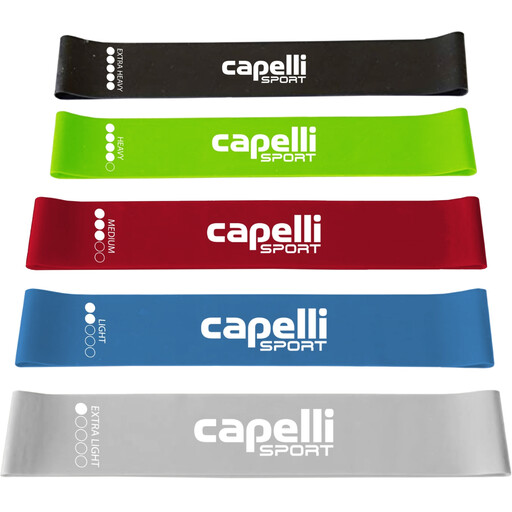
Why This Fits Their Persona: Five resistance levels give newcomers room to start gently and progress, while the 60cm circumference is easy to use in a flat, home-workout space.
The colour-coded levels are specified as extra light through extra heavy, rather than relying on colour alone. The mini-loop format also makes its intended lower-body use clear.
Five latex bands, a 5cm width and a carry bag; suitable for legs, glutes, yoga, Pilates and home workouts.
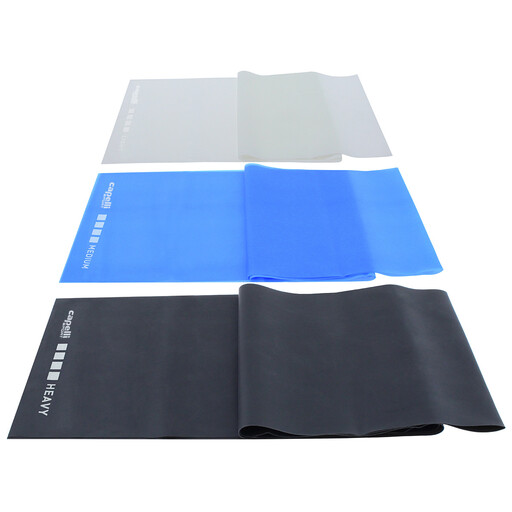
Why This Fits Their Persona: The flat profile and 15cm x 120cm dimensions suit controlled stretching and floor-based routines at home, in a studio or while travelling.
The material is identified as TPE and latex-free, while light, medium and heavy options are included in one set.
Three TPE bands, soft-touch construction and a portable format for yoga, Pilates and rehabilitation-style exercise.
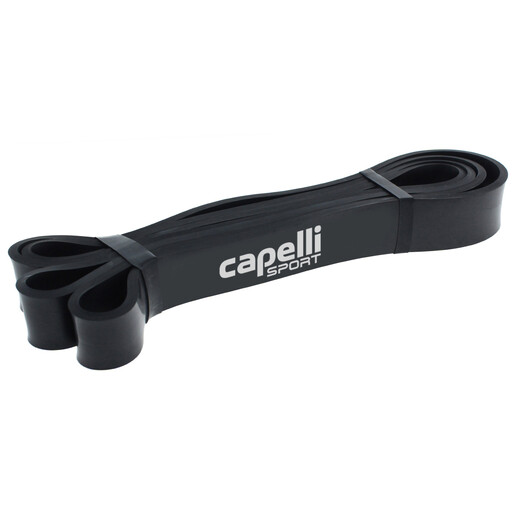
Why This Fits Their Persona: The 208cm circumference and stated 40–50lb level make this long loop suitable for users comparing pull-up resistance bands, stretching and higher-load strength work.
Its circumference, width and approximate load range are stated, helping buyers distinguish it from short mini loops with different purposes.
Natural latex construction, 2.8cm width and long-loop design for pull-up assistance, body stretching and muscle training.
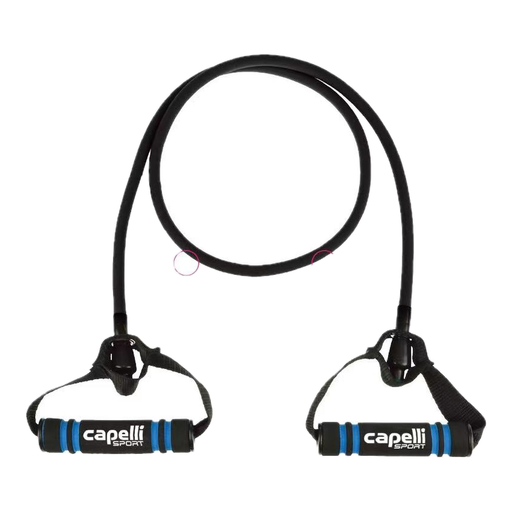
Why This Fits Their Persona: Foam handles provide a defined grip for home resistance training, including curls, triceps kickbacks and front arm raises.
The listing identifies TPE tubing, foam handles and secure straps, so the grip and construction are clearer than with an unlabelled tube.
120cm tube length, foam grip handles and a heavy resistance option for strength training and home workouts.
We have compiled a complete, real-time list of products that fully satisfy these strict selection criteria and UK safety regulations.
Before each session, check the band along its full length and examine handles, seams and attachment points. Use it on a clear surface away from furniture edges, doors and sharp objects. Keep the band away from your face and eyes, and do not allow it to recoil against bare skin.
Latex products should be kept away from direct sunlight and excessive heat. TPE products also benefit from cool, dry storage. Follow the manufacturer’s instructions, particularly for anchor points and pull-up assistance. If you are recovering from an injury, surgery or a medical condition, seek advice from an appropriately qualified healthcare professional before beginning a new routine.
There is no fixed lifespan. Frequency of use, stretch intensity, storage conditions and material all affect wear. Regular inspection is more useful than relying on a stated number of months. Replace a band when it shows cracking, fraying, thinning, sticky patches or permanent deformation.
Yes, the correct format can support many home workouts. Mini loops suit glute and leg resistance band exercises, flat bands work well for Pilates and mobility routines, and long loops can support stretching or pull-up assistance. Handles may be preferable for users who want a more familiar grip for upper-body exercises.
They do not require batteries, charging or paid gym access, so ongoing running costs are limited to cleaning and eventual replacement. The main purchase decision is selecting a band that matches your exercises and resistance level, rather than buying several products that cannot be used comfortably or safely.