
24/7 Customer Support

Free returns

Same-day & Next-day Delivery

Quality Guaranteed

Unlock Your Welcome Offers: FREE Delivery | Up to 80% OFF | Free 30-day JoyPlus trial
Download the APP
Resistance bands can support strength training, mobility work, Pilates and home workouts without taking up much space. However, choosing the wrong type can make exercise uncomfortable, limit progression or create avoidable safety concerns.
As the Joybuy Product Recommendation Officer, I focus on practical specifications rather than promotional wording. Before buying resistance bands, watch for these common traps.
“Light”, “medium” and “heavy” are useful starting points, but these labels are not standardised across every manufacturer. A heavy band from one range may feel different from another because of its width, material, thickness and stretch length.
Check the available resistance level, band dimensions and intended exercise rather than relying on the colour alone. For pull-up resistance bands, a stated resistance range or weight category is particularly helpful.
A resistance band set may contain several levels, but not every band will suit your routine. Long loop bands are suitable for assisted pull-ups, stretching and compound movements. Tubes with handles are more convenient for rows, curls and shoulder presses. Short elastic hip bands are designed mainly for lower-body movements.
A large set is not automatically more useful if you only need one band for Pilates or rehabilitation exercises.
Natural latex offers elasticity, but it may cause allergic reactions in sensitive individuals. TPE and synthetic rubber alternatives can be preferable for shoppers who want to avoid natural latex, although the product material should always be checked before purchase.
Sunlight, heat, sharp edges and excessive stretching can shorten the usable life of exercise bands. A band that shows cracking, tears, fraying or permanent deformation should not be used.
Choose resistance according to the exercise, not simply your general fitness level. Lower resistance can be more manageable for warm-ups, controlled Pilates movements and beginner routines. Medium resistance suits many general home exercises, while heavier strength training bands may be more appropriate for lower-body work or pull-up assistance.
A set with light, medium and heavy options allows you to progress gradually or use different levels for upper- and lower-body movements.
Common materials include:
Look for secure stitching, smooth surfaces and handles or loops that remain firmly attached. No resistance band should be stretched beyond its recommended elasticity range.
A 120 cm handled tube provides room for movements such as curls, kickbacks and front raises. Long loop bands with a circumference of around 208 cm can be used for assisted pull-ups, stretching and full-body movements. Shorter hip bands are easier to position around the thighs or ankles.
If you are considering resistance bands with handles, check whether the handles have foam padding and whether the connection straps are secure. For pull-up resistance bands, confirm the width and resistance rating before selecting one for assistance work.
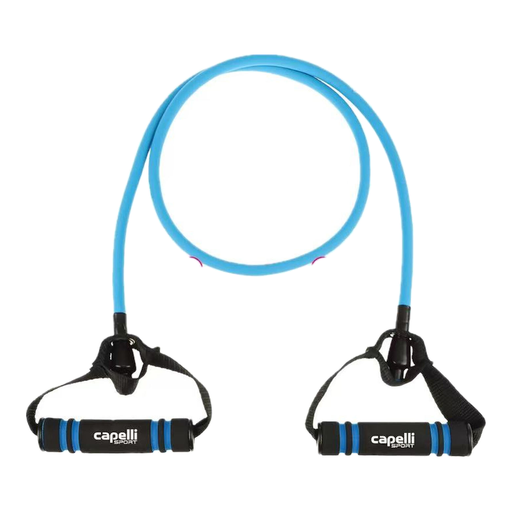
Why This Fits Their Persona: A single medium tube is a straightforward choice for home users who want to begin with curls, rows, presses and lower-body exercises without buying a large set.
Its TPE construction avoids assuming that every shopper wants natural latex, while the medium rating is clearer than an unspecified “all-purpose” band.
120 cm tube length; padded foam handles; lightweight and portable design.
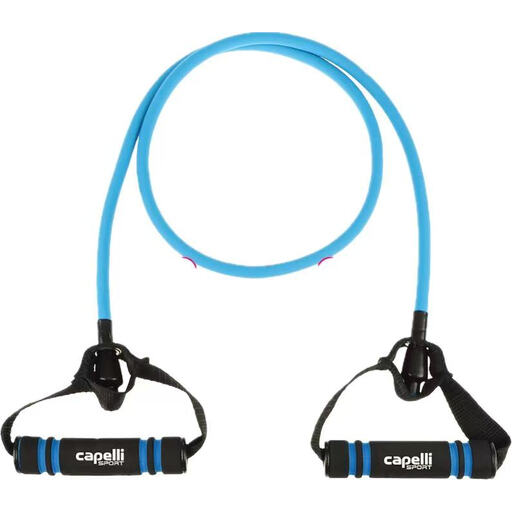
Why This Fits Their Persona: This option suits users who prefer the familiar stretch of natural latex and want handled resistance bands for regular gym, home or Pilates sessions.
The material and length are specified, and the product warning clearly identifies natural latex as a possible allergy concern.
Foam sure-grip handles; 120 cm tube; suitable for resistance training, Pilates and mobility routines.
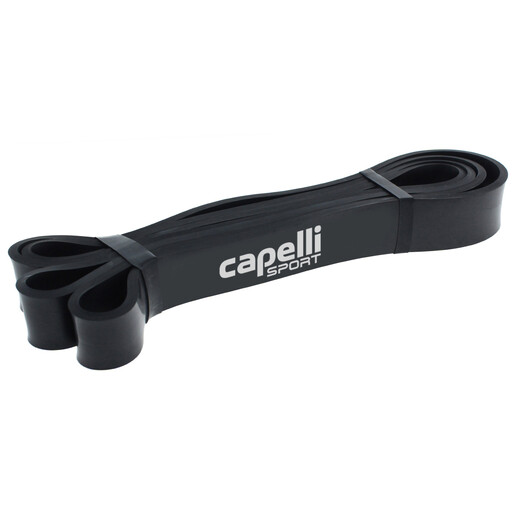
Why This Fits Their Persona: The long loop format is suited to experienced users who need a heavier band for pull-up assistance, stretching, strength work or full-body training.
The listing states a 208 cm circumference, 2.8 cm width and 40–50 lb resistance, giving more useful information than a colour-only rating.
100% natural rubber latex; long loop design; suitable for pull-up assistance and muscle training.
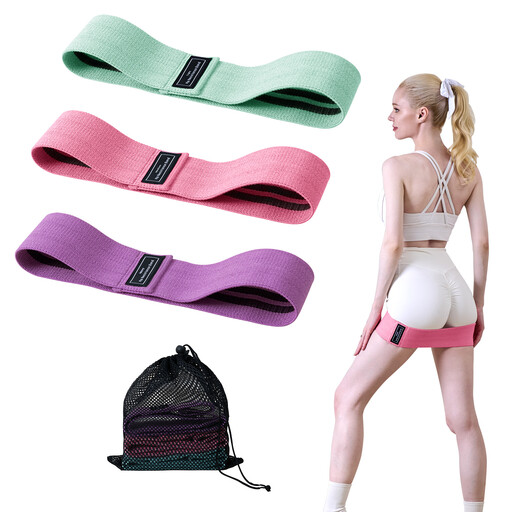
Why This Fits Their Persona: These short fabric loops are practical for squats, side steps, glute routines, yoga and Pilates at home, particularly where a tube with handles would be unnecessary.
The three levels make progression easier to plan, while the stated non-slip fabric construction addresses the common problem of bands rolling during leg exercises.
Set of three fabric loop bands; light, medium and heavy levels; storage bag included.
We have compiled a complete, real-time list of products that fully satisfy these strict selection criteria and UK safety regulations.
A doorway pull-up bar can complement pull-up resistance bands, but it should be checked carefully before use. The adjustable bar listed above fits doorways measuring 62–91 cm, uses a locking system and has a stated load capacity of up to 300 pounds. Check the door frame strength and stability each time; do not exceed the listed limit.
Yes, provided the resistance level matches the exercise and movements are performed with control. Beginners may prefer a light or medium band, particularly for learning technique. A resistance band set with multiple levels can provide options as strength and confidence develop.
There is no fixed lifespan. Longevity depends on material, frequency of use, stretching distance, storage and exposure to heat or sunlight. Inspect the band regularly and replace it at the first sign of damage rather than relying on a specific time period.
They do not require batteries, electricity or subscriptions, so routine running costs are minimal. The main ongoing consideration is replacement after normal wear. Keeping bands clean, dry and protected from heat can help maintain their condition.
Whether you need strength training bands, physical therapy bands, glute resistance bands or compact home workout equipment, compare the material, resistance, length and construction before ordering. This approach helps you select equipment that fits your actual routine rather than paying for features you will not use.