
24/7 Customer Support

Free returns

Same-day & Next-day Delivery

Quality Guaranteed

Unlock Your Welcome Offers: FREE Delivery | Up to 80% OFF | Free 30-day JoyPlus trial
Download the APP
Resistance bands can support home workouts, Pilates, yoga, strength training and mobility routines without taking up much space. However, choosing the wrong set can lead to poor grip, uncomfortable rolling, unsuitable resistance or premature wear.
The product description alone does not always tell you whether a band suits your routine. Marketing may focus on colour-coded levels or “heavy-duty” wording while leaving out useful details such as material, dimensions, handles and safe stretching limits. Before buying resistance bands, check the following points.
Colours are not standard across manufacturers. A red band may be light in one range and heavy in another. Look for the stated resistance level, intended use and dimensions rather than relying on colour alone.
For progressive training, a set with light, medium and heavy options is generally more adaptable than a single band. Beginners may need lighter tension for controlled movements, while experienced users may prefer higher resistance for rows, squats or assisted pull-ups.
Latex, natural rubber, TPE and cotton fabric each have different handling characteristics. Latex resistance bands can provide strong elasticity, but users with a latex allergy should avoid them. TPE resistance bands are latex-free according to the supplied product information, while fabric bands can offer a different feel and may be useful for glute and leg exercises.
Regardless of material, inspect bands before every session. Tears, cracks, fraying, damaged stitching or weakened connection points are reasons to stop using the product.
Resistance bands with handles are convenient for curls, presses, rows and triceps movements. They can also make gripping easier during longer sessions. However, handles may be less practical for Pilates, yoga, hip activation or exercises requiring a loop around the thighs.
For pull-up assistance, full-body stretching or longer-range movements, a continuous power band is usually more suitable than a short tube with handles.
Store elastic equipment away from direct sunlight, sharp objects and excessive heat. Wipe bands with a damp cloth and mild soap where appropriate, then allow them to dry fully before storage.
The shape should match your intended movement:
For example, a 120 cm tube with handles provides a different training experience from a 208 cm circumference power band. Neither specification is universally suitable; the correct choice depends on your exercise plan and available anchoring points.
A set containing several levels can make it easier to progress gradually. Do not assume that a higher resistance automatically produces a more suitable workout. If the band prevents controlled movement or changes your form, choose a lighter option.
Follow the product’s safety instructions, keep the band away from your face and do not exceed its recommended stretch. If using a door anchor, ensure it is attached as instructed and that the door is closed and secure. Users undertaking physical therapy or returning from an injury should follow guidance from an appropriately qualified healthcare professional.
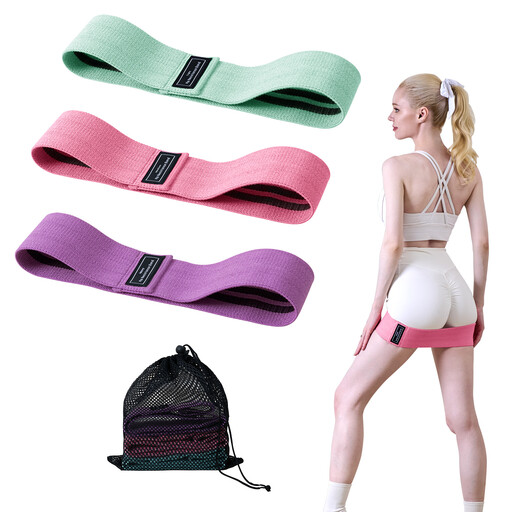
Why This Fits Their Persona: The three-band fabric loop set gives beginners light, medium and heavy options for home fitness, Pilates, yoga and lower-body routines.
The resistance levels are stated clearly, rather than relying only on colours, and the fabric construction is designed to reduce sliding or rolling.
Set of three cotton fabric loops; supplied with a storage bag; 38 x 8 cm stated dimensions.
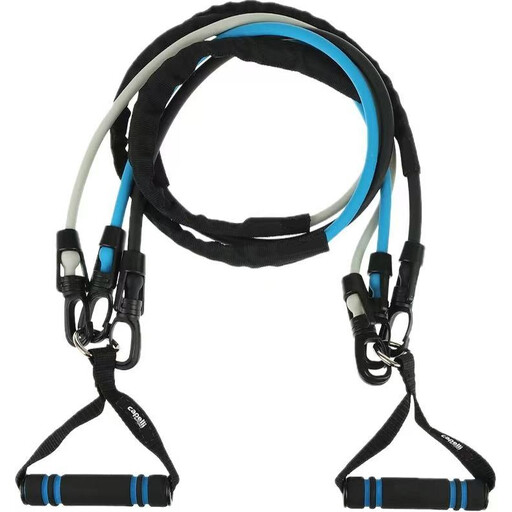
Why This Fits Their Persona: Users wanting adaptable resistance can attach one, two or three tubes to the foam handles for different exercises at home, in a gym or during fitness classes.
Its adjustable clip system makes the resistance configuration visible and practical, rather than presenting one unspecified “heavy” level.
Includes light, medium and heavy natural latex tubes; 120 cm tube length; foam handles.
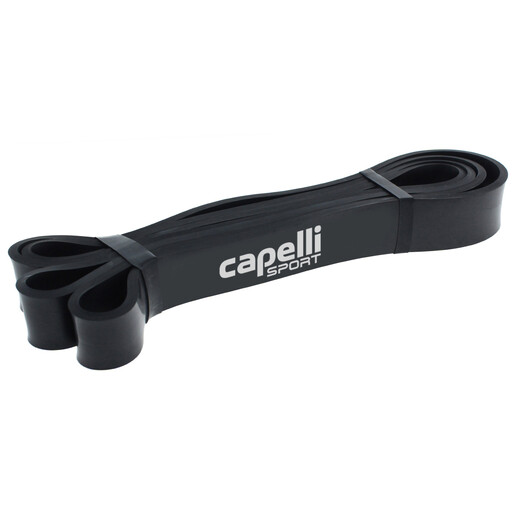
Why This Fits Their Persona: Suitable for users comparing pull-up assist bands, stretching equipment and higher-resistance strength training bands.
The product lists its 208 cm circumference, 2.8 cm width and 40–50 lb stated resistance, giving buyers measurable information.
Continuous natural latex design; suitable for pull-up assistance, stretching and muscle training.
We have compiled a complete, real-time list of products that fully satisfy these strict selection criteria and UK safety regulations.
There is no fixed lifespan. Frequency of use, stretch intensity, storage conditions and exposure to sunlight or heat all affect wear. Inspect the band before each use and replace it at the first sign of cracking, fraying, tears or weakened handles.
Yes. They are portable and can support arm, leg, glute and core exercises in a small footprint. Choose loop bands for lower-body movements, handled tubes for pulling and pressing or long power bands for stretching and assisted pull-ups.
Latex products may cause an allergic reaction in sensitive users. Check the material information before purchase and consider TPE resistance bands if you require a latex-free option. Always follow the product safety instructions and use controlled movements rather than forcing the band beyond its stated limits.