
24/7 Customer Support

Free returns

Same-day & Next-day Delivery

Quality Guaranteed

Unlock Your Welcome Offers: FREE Delivery | Up to 80% OFF | Free 30-day JoyPlus trial
Download the APP
Resistance bands for legs and glutes can make squats, side steps, bridges and Pilates movements more challenging without taking up much space. However, choosing the wrong type can lead to rolling fabric, inconsistent resistance or a set that does not suit your fitness level.
Before buying glute bands, booty bands or mini loop resistance bands, check the details behind the marketing claims. A colourful set is not automatically suitable for strength training, and a higher resistance level is not always more useful for beginners.
Some sets include several bands, but the difference between light, medium and heavy resistance may not be clearly explained. A single band can also become unsuitable as your strength or exercise selection changes.
For flexible home fitness equipment, look for clearly stated resistance levels or a useful progression from light to heavy. This allows you to begin with controlled movement and increase the challenge gradually.
A band that moves during lateral walks or glute bridges can interrupt your technique. Narrow elastic exercise bands may also roll when placed around the thighs, particularly during repeated movements.
Fabric resistance bands with a non-slip construction can provide a more stable feel. However, fabric is not automatically more comfortable for everyone, so consider the band width, stitching and intended placement before purchasing.
Latex and cotton fabric bands have different characteristics. Latex generally offers strong elasticity and compact portability, while cotton fabric can feel more substantial against clothing and skin. Neither material should be overstretched or used when showing cracks, fraying or other damage.
Always check the care instructions and inspect bands before each session. Keep them away from sharp edges, direct heat and unsuitable storage conditions.
For leg workout bands, a set with multiple resistance levels is often more adaptable than a single loop. Light resistance can suit warm-ups, mobility work or beginners, while heavier options may be more suitable for controlled squats, hip thrusts and standing abduction exercises.
A colour-coded set can make it easier to identify the intended resistance, but colour meanings are not universal. Read the product description rather than assuming that a particular colour represents a specific level.
Check both the width and circumference. A 5cm-wide loop with a 60cm circumference may sit differently from a narrower band, particularly when used around the thighs rather than the ankles.
A loop should feel secure without cutting into the skin. It should also allow you to maintain alignment during movements such as clamshells, side steps and Pilates leg exercises.
For latex bands, check whether the listing identifies latex clearly, especially if you or another household member may have a latex allergy. The five-band set below includes a latex warning and advises users to avoid overstretching.
For fabric bands, look for washable or wipe-clean care guidance where provided. Regardless of material, inspect seams and surfaces regularly, and stop using a band if it shows damage. People returning to exercise after childbirth, managing an injury or following advice from a healthcare professional should use suitable movements and seek individual guidance where needed.
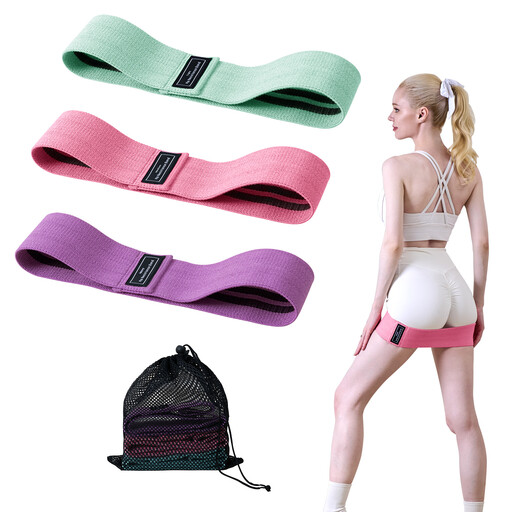
Why This Fits Their Persona: This three-band fabric set offers light, medium and heavy options for people starting a home routine and wanting progression without buying separate bands. The storage bag is practical for small flats or taking equipment to a class.
The three resistance levels are stated clearly, while the fabric construction is described as non-slip to help reduce sliding or rolling during use.
Set of three cotton fabric loops; suitable for home fitness, yoga, Pilates and general strength training.
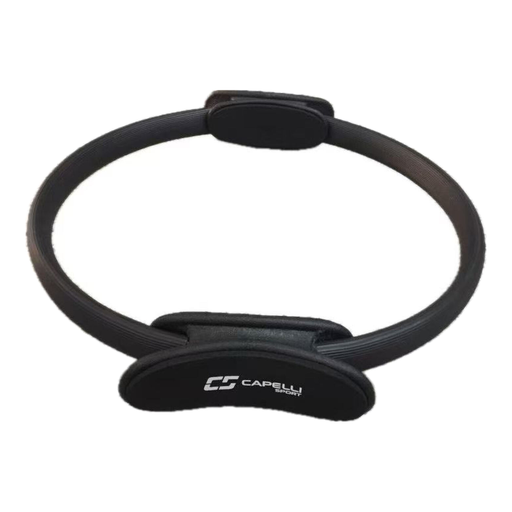
Why This Fits Their Persona: This lightweight Pilates ring suits users who want more than lower-body loops, including yoga and Pilates practitioners working on the inner thighs, arms and core at home or while travelling.
The 40–42cm class of ring and lightweight PP and PE construction are specified, making its size and portability easier to judge before purchase.
Compact ring format; adds resistance to leg, arm and core exercises without requiring a full-sized machine.
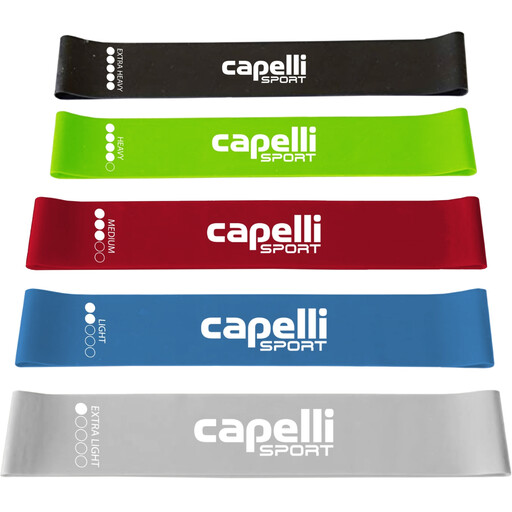
Why This Fits Their Persona: Users who want a broad resistance range for repeated home workouts, travel sessions or structured exercise programmes may prefer five colour-coded loops from extra light to extra heavy.
Its 5cm width, 60cm circumference and five stated levels make the fit and progression easier to compare with other leg workout bands.
Five latex loops with a travel carry bag; intended for workouts, yoga, Pilates and physical therapy-related routines.
Start with a light resistance that allows smooth, controlled repetitions. Keep knees aligned with toes during squats and side steps, and avoid allowing the band to pull the legs inward. Do not jerk or rapidly release a stretched band.
Use a clear area free from furniture edges and check that the floor is not slippery. With latex products, follow the allergy warning and keep bands away from children and pets. Wipe bands according to the manufacturer’s care guidance and store them in a cool, dry place.
For postnatal exercise, rehabilitation or persistent discomfort, select movements appropriate to your circumstances and follow advice from a qualified healthcare professional. Resistance bands can support a routine, but they are not a substitute for personalised medical guidance.
We have compiled a complete, real-time list of products that fully satisfy these strict selection criteria and UK safety regulations.
Yes, provided the resistance allows controlled movement and does not compromise technique. Beginners can start with lighter mini loop resistance bands and progress when exercises become manageable. The correct level depends on the exercise, body position and individual strength.
There is no fixed lifespan. Longevity depends on material, frequency of use, stretching range, storage and exposure to sharp surfaces or heat. Inspect bands before use and replace any item showing cracking, thinning, fraying or a loss of elasticity.
They offer a portable alternative for many exercises, including squats, bridges, abductions and lateral walks. They do not provide exactly the same loading pattern as dumbbells or gym machines, so users focused on progressive strength training may combine bands with other equipment. For travel, small-footprint workouts and Pilates, their compact format can be particularly practical.