
24/7 全天候客户支持

免费退货

当日/次日达

品质保障

开启新人专享福利: 全场免邮 | 低至 2 折 | 免费试用 30 天 JoyPlus 会员
下载 Joybuy
Finding effective and space-saving home workout equipment can be a challenge. Gym memberships are a recurring cost and traditional weights take up significant room. A quality resistance bands set offers a versatile and affordable solution, allowing you to perform a full-body workout from the comfort of your home.
Whether you are just starting your fitness journey, supplementing your gym routine or need tools for physiotherapy, the variety of bands on the market can be confusing. This guide is designed to help you understand the key differences and select a set that aligns with your personal fitness goals.
Before you buy, consider these practical points. Choosing the correct type and material will have a significant impact on the quality and effectiveness of your workouts.
Not all exercise bands are created equal. They come in three main styles, each suited for different types of training.
Most fitness bands are colour-coded to indicate their resistance level—typically ranging from light to extra heavy. A set that includes multiple levels is highly practical as it allows you to apply the principle of progressive overload. As you get stronger, you can move to a heavier band. This makes a single set suitable for a wide range of exercises and for both beginners and experienced users. These are versatile workout bands for women and men alike, as the varied resistance can be tailored to any strength level.
The most common material for resistance bands is natural latex, valued for its elasticity and strength. Some are also made from fabric, which can offer a different feel and prevent rolling. Regardless of the material, it is crucial to choose a set made from durable components to prevent snapping during use. Always inspect your bands for any signs of wear, such as small tears or cracks, before starting your workout.
Here are a few options that cater to different fitness needs, selected for their features and versatility.
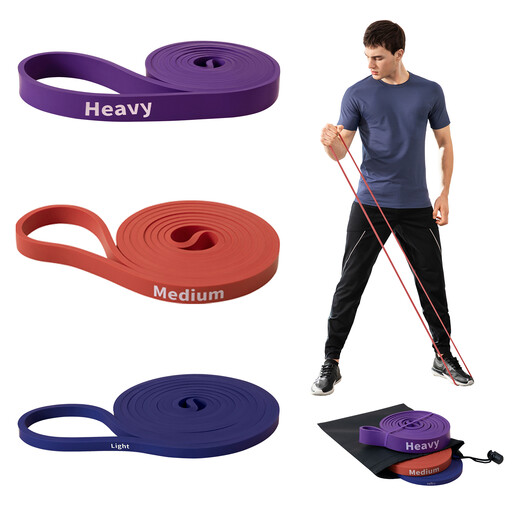
Why It Stands Out: This set of three resistance loops is crafted from durable natural rubber latex, designed for demanding workouts. With three distinct resistance levels (light, medium and heavy), it provides a clear path for progression in strength training, powerlifting and assisted bodyweight exercises.
Pros:
Who is it for?: This set is well-suited for individuals focused on building strength, mastering assisted pull-ups or adding significant variable resistance to their powerlifting routines.
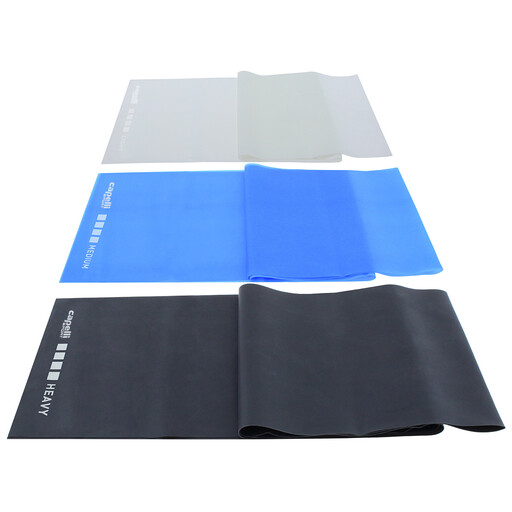
Why It Stands Out: These flat gym bands are made from a soft-touch latex material with excellent stretchability. At 120 cm long, they offer great versatility for a wide range of movements. The set includes light, medium and heavy options, making it a good choice for dynamic stretching, Pilates and rehabilitation.
Pros:
Who is it for?: A great starting point for beginners, individuals undergoing physiotherapy or anyone looking to add light resistance and assistance to their yoga or Pilates practice.
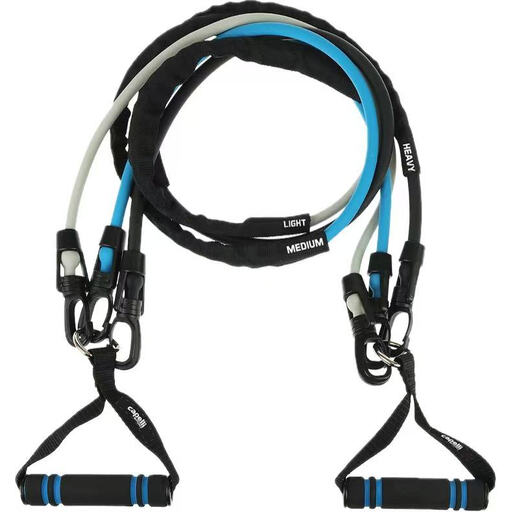
Why It Stands Out: This 3-in-1 set of strength training bands brings the versatility of a gym's cable machine into your home. It features three interchangeable resistance tubes that can be combined using easy-adjust clips to customise the intensity. The included foam handles provide a comfortable and secure grip for isolating specific muscle groups.
Pros:
Who is it for?: Anyone wanting to perform targeted strength exercises like bicep curls, chest presses and shoulder raises at home without the need for bulky dumbbells.
These recommendations cover some of the most popular styles of resistance bands, but the world of home fitness is vast. If you're building a complete home gym or exploring other types of gear, you may find more suitable options in our broader collection.
Browse our full range of Sports Equipment Kits to discover more choices.
Yes, you can. Muscle growth occurs when muscles are worked against a force and exercise bands provide that force. The key is progressive overload—as an exercise becomes easier, you must increase the challenge. With a resistance bands set, you can do this by moving to a thicker band, combining bands or increasing the number of repetitions.
If you are new to resistance training, it is always advisable to start with the lightest band in the set. This allows you to focus on mastering the correct form for each exercise, which is crucial for preventing injury and achieving results. Once you can comfortably complete your target number of repetitions with good form, you can progress to the next resistance level.
To prolong the life of your bands, store them in a cool, dry place away from direct sunlight, as UV exposure can degrade the material over time. After a workout, you can wipe them down with a damp cloth. Most importantly, get into the habit of inspecting your bands for any nicks, tears or cracks before each use. If you spot any damage, it is safest to replace the band.