
24/7 Customer Support

Free returns

Same-day & Next-day Delivery

Quality Guaranteed

Unlock Your Welcome Offers: FREE Delivery | Up to 80% OFF | Free 30-day JoyPlus trial
Download the APP
A quality resistance bands set can be one of the most versatile and cost-effective pieces of home workout equipment you can own. Yet, many of us have bought a set only to find it gathering dust. Either the bands are too flimsy for a real workout, too aggressive for rehabilitation or worse, one snaps mid-stretch. The market is flooded with options, and it's easy to fall into common purchasing traps.
As a Joybuy Product Recommendation Officer, my role is to help you navigate these choices. This guide cuts through the marketing clutter to focus on what truly matters, helping you find a set that supports your fitness goals, whether that's strength training, physiotherapy or simply staying active at home.
Before you add a set to your basket, be aware of these common issues that lead to disappointment and wasted money:
To ensure you get a durable and effective resistance bands set, focus on these core parameters instead of just the marketing claims.
The material dictates the band's feel, durability and suitability for different exercises.
Not all exercise bands are created equal. The type you need depends entirely on your workout routine.
Based on a practical assessment of materials, versatility and user suitability, here are some recommendations matched to different user needs.
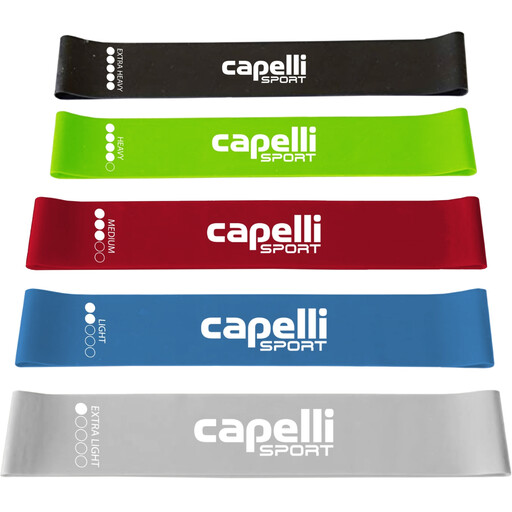
Why This Fits Their Persona: Ideal for someone starting their home fitness journey. This set provides a full spectrum of resistance for progressing from warm-ups and rehabilitation exercises to more challenging leg and glute workouts. The included carry bag makes it easy to keep organised and take anywhere.
This set directly counters the "all-in-one" trap by providing five distinct, usable levels (Extra Light to Extra Heavy). This ensures a genuine progression, making the entire set useful rather than just one or two bands.
Made from heavy-duty latex for good elasticity and durability. The colour-coded system makes it simple to switch between intensities during a workout.
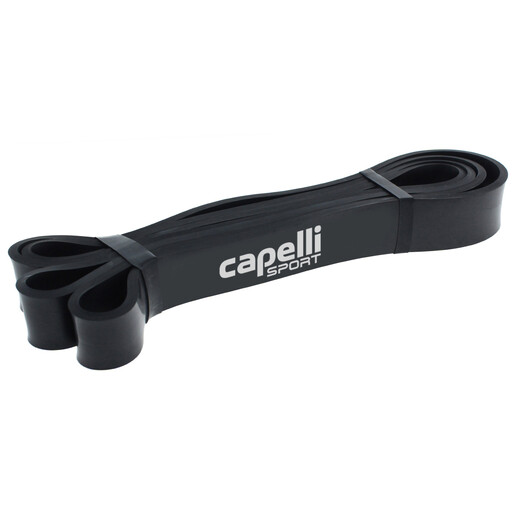
Why This Fits Their Persona: This is not a beginner's band. It is a single, robust pull up assist band designed for serious strength training. It's perfect for those working on calisthenics or looking to add significant resistance to compound lifts without bulky weights.
It avoids the trap of vague resistance by being a specialised tool. Its purpose is clear: provide heavy, reliable assistance or resistance. The 100% natural latex construction is specified for durability under high tension, addressing the material degradation issue.
The 208cm circumference is standard for pull-up assistance and stretching. Its durable, single-piece construction is designed for longevity in high-stress exercises.
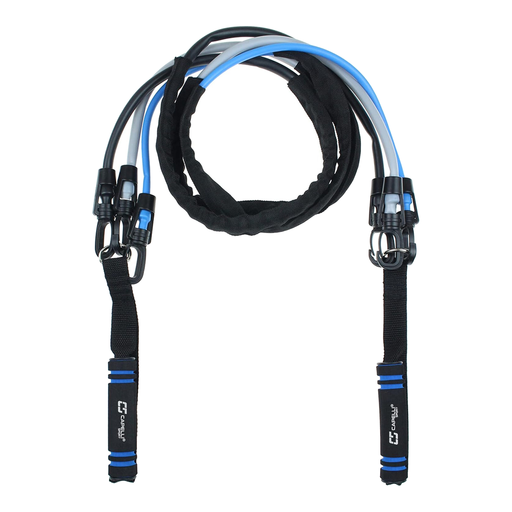
Why This Fits Their Persona: This set is designed for users who want to replicate traditional gym exercises at home. The foam handles offer a comfortable grip for arm curls and presses, while the adjustable clip system allows you to combine bands for progressive resistance, making it suitable for both rehabilitation and muscle toning.
This system's modularity is its strength. Instead of having five separate, unwieldy bands, you have three interchangeable cords (Light, Medium and Heavy) that can be combined. This provides a clear, customisable path for increasing resistance without the clutter.
The TPE material makes it a latex-free option. The easy-adjust clips and comfortable foam handles are key features for performing controlled upper-body movements safely.
We have compiled a complete, real-time list of products that fully satisfy these strict selection criteria and UK safety regulations.
The lifespan of a resistance band depends on its material, frequency of use and how it is stored. A high-quality natural latex band, when stored away from direct sunlight and sharp objects, can typically last one to two years with regular use. Fabric bands often have a longer lifespan due to their robust, woven construction. Always inspect your bands for small nicks, tears or thinning spots before each workout and replace them if any damage is found.
Yes, you can. The principle of building muscle, known as progressive overload, involves continually challenging your muscles with increasing resistance. With a good resistance bands set, you can achieve this by moving to a stronger band, combining bands or increasing the number of repetitions. While they may not replace very heavy barbell training for powerlifters, they are highly effective for building functional strength, toning muscles and improving muscular endurance.
It depends on the exercise. For lower-body movements like squats, glute bridges and hip thrusts, many people prefer fabric glute bands. They are wider, more comfortable on bare skin and their non-slip design prevents them from rolling up the leg. However, latex mini-loop bands offer a greater range of stretch and are more versatile for a wider variety of exercises, including upper-body and rehabilitation movements where the non-roll feature is less critical.