
24/7 全天候客户支持

免费退货

当日/次日达

品质保障

开启新人专享福利: 全场免邮 | 低至 2 折 | 免费试用 30 天 JoyPlus 会员
下载 Joybuy
Finding the right home workout equipment can feel like a challenge. You need something effective, versatile and that doesn't take over your living room. This is where resistance bands come in. These simple, portable tools can provide a full-body workout, whether you're just starting your fitness journey or looking to add a new dimension to your existing routine.
As the Joybuy Product Recommendation Officer, my role is to help you understand your options. This guide will walk you through the different types of resistance bands available, what to look for when buying and highlight a few standout options to help you make an informed choice for your fitness goals.
With so many options on the market, from pull up bands to booty bands, it's important to match the equipment to your specific needs. Here are a few key points to consider.
Not all exercise bands are created equal. The type you choose will heavily influence the exercises you can perform.
Resistance is typically indicated by the band's colour, thickness or a printed weight equivalent. For those new to strength training, a resistance bands set that includes several levels (e.g., light, medium, heavy) is a practical starting point. This allows you to use lighter bands for warm-ups and smaller muscle groups, and heavier bands for larger muscle groups, with the option to progress as you get stronger.
Material is also a key factor. Most large loop bands are made from natural latex, which offers excellent elasticity and durability. Fabric hip bands use a blend of cotton and elastic for a comfortable, non-slip feel against the skin.
One of the main advantages of fitness bands is their portability. Many sets come with a carrying bag, making them easy to store or take with you to the park, the gym or on holiday. Some sets with handles also include a door anchor, which significantly expands the range of exercises you can perform, turning any doorway into a home gym station.
Based on their features, materials and suitability for specific workout styles, here are our recommendations for those looking to add versatile home workout equipment to their collection.
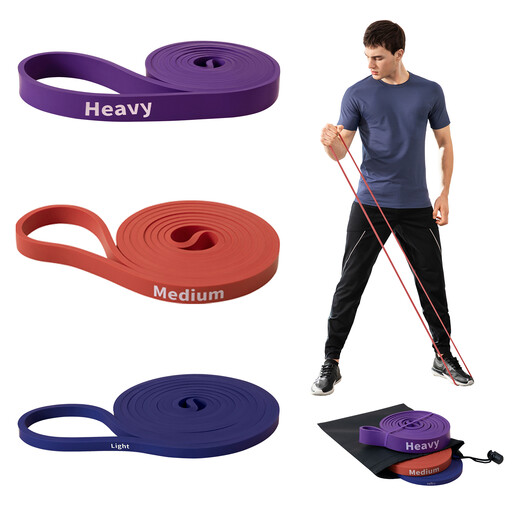
Why It Stands Out: This set offers a complete solution for progressive strength training. The three distinct levels of resistance are suitable for a wide range of applications, from assisting with pull-ups to adding a challenge to powerlifting movements.
Pros:
Who is it for?: Individuals focused on calisthenics, powerlifting or anyone needing a versatile tool for both assistance and resistance in their full-body workouts.
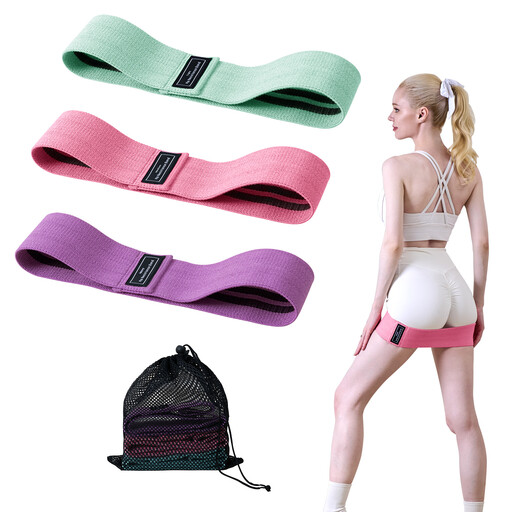
Why It Stands Out: These fabric glute bands are specifically engineered for lower-body workouts. The high-quality cotton fabric and non-slip inner grip ensure the bands stay in place, allowing you to focus on form and muscle activation without interruption.
Pros:
Who is it for?: Anyone looking to specifically target, tone and strengthen their glutes and legs with a comfortable, stable and effective tool.
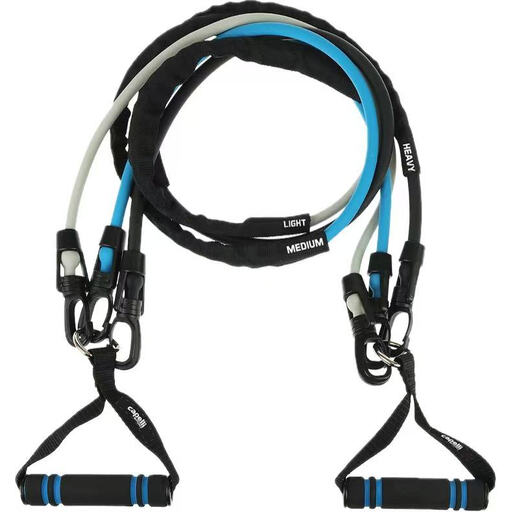
Why It Stands Out: This set of resistance bands with handles offers a modular approach to training. The easy-adjust clips allow you to combine the three latex tubes, customising the resistance level to perfectly match the exercise and your strength level.
Pros:
Who is it for?: Users who want to replicate traditional gym exercises like arm curls, shoulder presses and rows at home, and who prefer the feel and control of handles.
The products highlighted here cover some of the most popular uses for resistance bands. However, every fitness journey is unique. If you're looking for more specialised options, such as lighter bands for rehabilitation or stretching, we invite you to explore our full collection of fitness and yoga bands.
Yes, resistance bands can be very effective for building muscle. They work through the principle of progressive overload. By creating constant tension on the muscles throughout an exercise's range of motion, they stimulate muscle fibres to adapt and grow. To continue building muscle, you can progress to a band with higher resistance or increase the number of repetitions.
A beginner should typically start with a light to medium resistance band. This allows you to focus on mastering the correct form for each exercise without excessive strain. A resistance bands set is often a practical choice for beginners, as it provides a range of tensions to accommodate different exercises and allows you to increase the challenge as you become stronger.