
24/7 Customer Support

Free returns

Same-day & Next-day Delivery

Quality Guaranteed
Download the APP
Categories
Finding effective, versatile and space-saving home workout equipment can be a challenge. Whether you're aiming to build strength, tone your glutes or support your physical therapy journey, the sheer number of options can feel overwhelming. Resistance bands, also known as exercise bands, offer a practical solution for a wide range of fitness goals.
As a Joybuy Product Recommendation Officer, my role is to help you navigate the market. This guide is designed to provide clear, objective information to help you select the right resistance bands for your specific needs, from home workouts and yoga to targeted leg and butt exercises.
Before looking at specific products, it's helpful to understand the key features that differentiate one set of workout bands from another. Considering these points will help you make a more informed choice.
The material of a resistance band directly impacts its feel, durability and ideal use case.
Most exercise bands come in sets with colour-coded resistance levels, typically ranging from light to heavy. A set is often more practical than a single band for several reasons:
A set of workout bands for legs and butt ensures you have the right tool for every part of your fitness routine.
Here are a few standout options that cater to different fitness goals and preferences, selected for their features and user-friendliness.
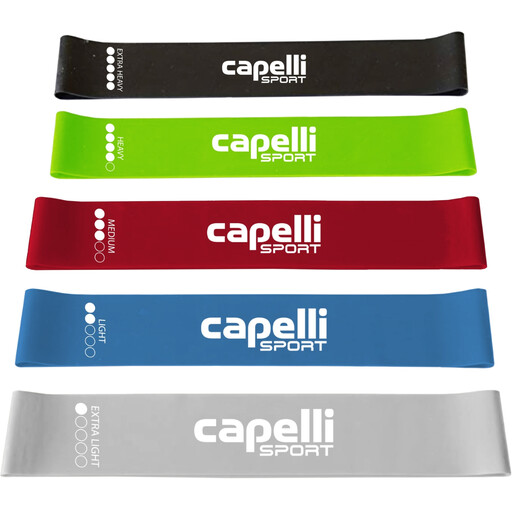
Why It Stands Out: This set’s primary strength is its versatility. With five distinct, colour-coded resistance levels (from Extra Light to Extra Heavy), it provides a complete progression system in one compact package. Made from durable latex, these bands are designed to accommodate a full spectrum of exercises.
Pros:
Who is it for? This set is an excellent starting point for beginners and a valuable tool for advanced users. It's particularly well-suited for those undergoing physical therapy, practising yoga or pilates or anyone needing a flexible home workout equipment solution for full-body conditioning. Note that it contains latex.
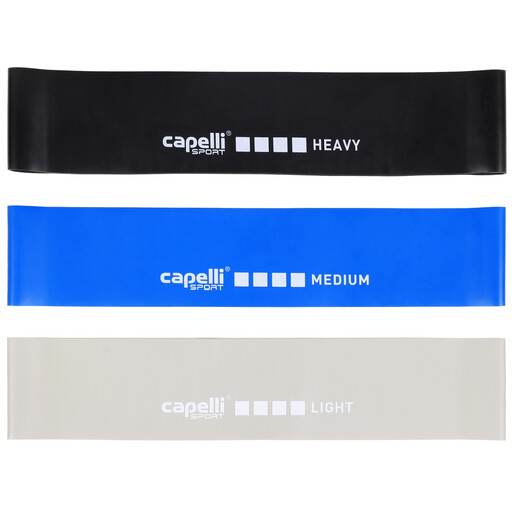
Why It Stands Out: The Capelli Sport bands are crafted from TPE, making them a prime choice for anyone with a latex sensitivity. They are promoted as being odour-free with a soft touch, focusing on user comfort during workouts. The set includes three core resistance levels suitable for a variety of exercises.
Pros:
Who is it for? Ideal for individuals seeking a latex-free alternative without compromising on performance. Their soft feel and odourless quality make them a great fit for yoga, pilates and general muscle conditioning at home or in the gym.
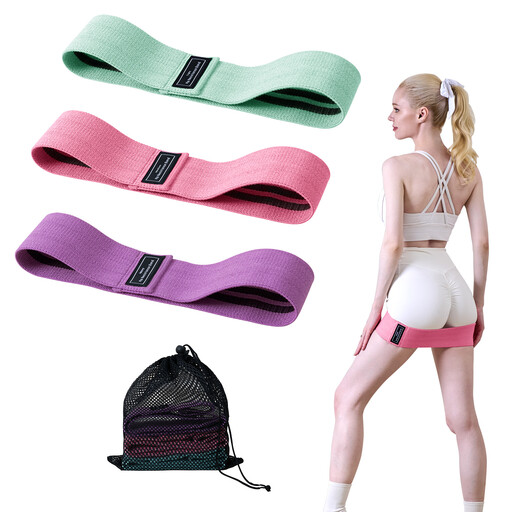
Why It Stands Out: These fabric resistance bands directly address a common complaint: bands that roll, slip or pinch. Made from a high-quality cotton fabric, their non-slip construction ensures they stay firmly in place during the most intense leg and glute workouts.
Pros:
Who is it for? Anyone serious about lower-body training. If your primary goal is to strengthen and shape your glutes and legs using booty bands that won't budge, this fabric set is a fantastic choice.
While these recommendations cover some of the most popular needs, the world of resistance training is vast. If you're looking for different styles, lengths or resistance types for specific routines, there are many other choices available.
To see a wider selection, feel free to browse our full collection of Pilates Resistance Bands for more options.
1. Are fabric or latex resistance bands better? Neither is inherently "better"; they simply serve different purposes. Fabric bands excel for lower-body exercises due to their non-slip grip and higher resistance. Latex bands offer more versatility for full-body workouts, stretching and physical therapy because of their wider range of resistance levels and greater elasticity.
2. Can you build muscle with just resistance bands? Yes, you can. Muscle growth is stimulated by progressive overload, which means continually challenging your muscles. By moving up to bands with higher resistance as you get stronger, you can effectively build and tone muscle. They are a highly effective piece of home workout equipment for strength training.
3. How should I clean my exercise bands? For latex or TPE bands, simply wipe them down with a damp cloth after use and let them air dry. Avoid harsh cleaning chemicals. For fabric resistance bands, you can typically hand wash them in cool water with mild soap, but always check the manufacturer's care instructions first. To prolong their life, store all bands in a cool, dry place away from direct sunlight and sharp objects.