
24/7 全天候客户支持

免费退货

当日/次日达

品质保障

开启新人专享福利: 全场免邮 | 低至 2 折 | 免费试用 30 天 JoyPlus 会员
下载 Joybuy
Resistance bands have become a staple in home gyms and kit bags across the UK, and for good reason. These simple, portable tools offer a surprisingly effective workout, whether you're building strength, improving flexibility or rehabilitating an injury. However, with a market full of different types, colours and strengths, choosing the right one can feel overwhelming.
This guide is designed to cut through the clutter. We'll walk you through the key differences between the main types of resistance bands, helping you identify which ones are suited to your fitness goals. From light stretch bands for exercise to heavy-duty sets for strength training, we'll provide the practical information you need to make a confident choice.
Before adding a set to your basket, it's helpful to understand a few key factors. Considering the type, resistance level and material will ensure you get the most out of your home workout bands.
Not all exercise bands are created equal. The three main types are designed for very different purposes.
Most resistance bands sets come with multiple bands, often colour-coded to indicate their strength level (e.g., light, medium, heavy, extra-heavy). While the specific colour-to-strength ratio can vary between brands, the principle remains the same: lighter bands offer less resistance and are suitable for beginners, smaller muscle groups (like shoulders) and rehabilitation. Heavier bands provide more of a challenge and are better for advanced users and large muscle groups (like legs and back).
A set with a range of levels is often a practical starting point, as it allows you to apply progressive overload—the key to building strength—and use the appropriate resistance for different exercises.
The majority of resistance bands are made from natural latex, which offers excellent elasticity and durability. It's important to inspect your bands regularly for any nicks, tears or signs of wear, as a snapping band can cause injury. For those with a latex allergy, fabric-covered or thermoplastic elastomer (TPE) bands are available alternatives. Proper storage is also important; keep your bands out of direct sunlight and away from sharp objects to prolong their lifespan.
Based on their features, versatility and user applications, here are some standout options to consider for your fitness routine.
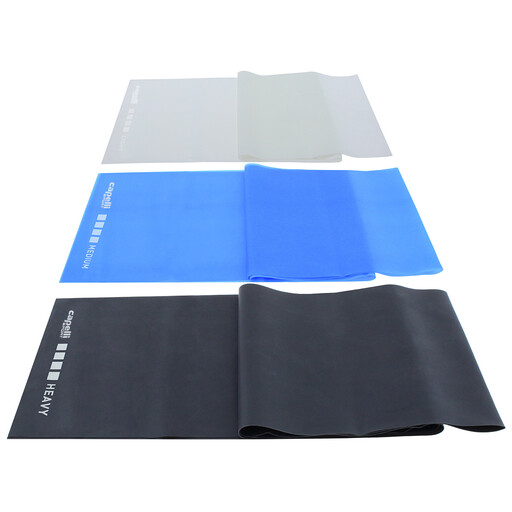
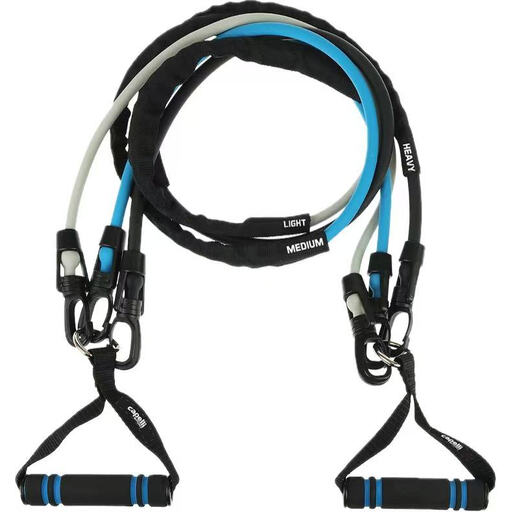
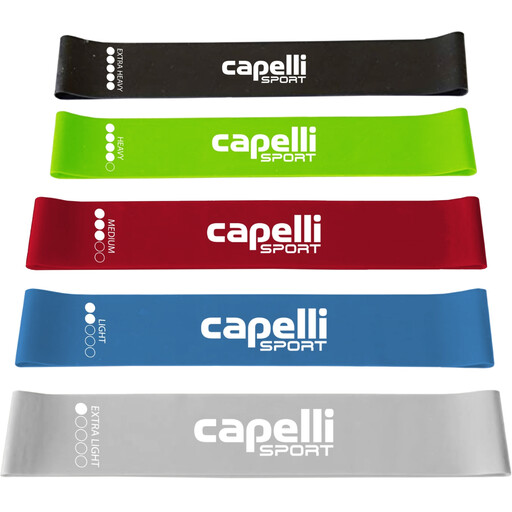
The products highlighted here are just a starting point. Every fitness journey is unique, and the right equipment can make all the difference. If you're looking for different materials, resistance levels or band types, there are many other choices available.
For a wider selection, feel free to explore our full range of rubber resistance bands.
1. Can you actually build muscle with resistance bands? Yes. Muscle growth occurs when muscles are challenged to work against a force, a principle known as progressive overload. Fitness bands provide this force through elastic resistance. By gradually moving to bands with higher resistance levels as you get stronger, you can effectively stimulate muscle growth and improve strength.
2. What resistance band should a beginner use? A beginner should start with a light to medium resistance band. The best approach is to purchase a resistance bands set that includes multiple levels. This allows you to use a lighter band for upper-body exercises and a heavier one for your legs, and it gives you room to progress as you build strength.
3. How do I care for my latex resistance bands? To maintain your bands, wipe them clean with a damp cloth after use and allow them to air dry completely. Store them in a cool, dry place away from direct sunlight, heat sources and sharp objects, as these can degrade the latex over time. Proper care will help ensure their longevity and safety.