
24/7 Customer Support

Free returns

Same-day & Next-day Delivery

Quality Guaranteed

Unlock Your Welcome Offers: FREE Delivery | Up to 80% OFF | Free 30-day JoyPlus trial
Download the APP
Resistance bands have become a cornerstone of effective home workouts, offering a versatile, space-saving and affordable way to build strength and tone muscle. But with so many options available—from fabric loops to long bands for pull-ups—choosing the right one can feel overwhelming. This guide is designed to help you understand the key differences and select the perfect resistance bands for your fitness goals, whether you're just starting out or looking to enhance an already established routine.
Before you add a set to your basket, consider these practical points to ensure you get the most out of your purchase.
The type of band you choose should directly align with the exercises you plan to do.
Resistance bands use colour-coding or labels (Light, Medium, Heavy) to indicate their tension level. For beginners, a set that includes multiple resistance levels is a practical starting point. This allows you to use lighter bands for smaller muscle groups (like shoulders) and heavier ones for larger muscles (like legs and back). It also enables progressive overload—the key to building strength—by moving to a higher resistance as you get stronger. Some bands are also suitable for rehabilitation and are sometimes used as physical therapy bands under professional guidance.
The material affects the band's feel, durability and performance.
Here are our recommendations, selected to suit a variety of fitness needs for your home workout bands collection.
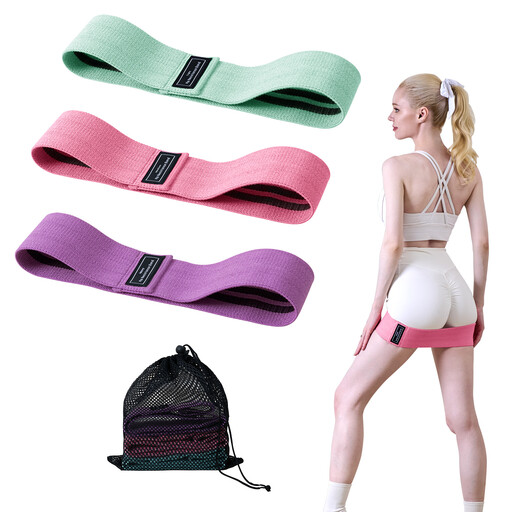
Why It Stands Out: These bands are specifically engineered for lower-body workouts. The high-quality cotton fabric and non-slip inner lining ensure they stay firmly in place, allowing you to focus on your form without the frustration of a rolling or slipping band.
Pros:
Who is it for?: Individuals focusing on targeted leg and glute workouts at home or in the gym. They are also a great addition to Yoga and Pilates routines for added resistance.
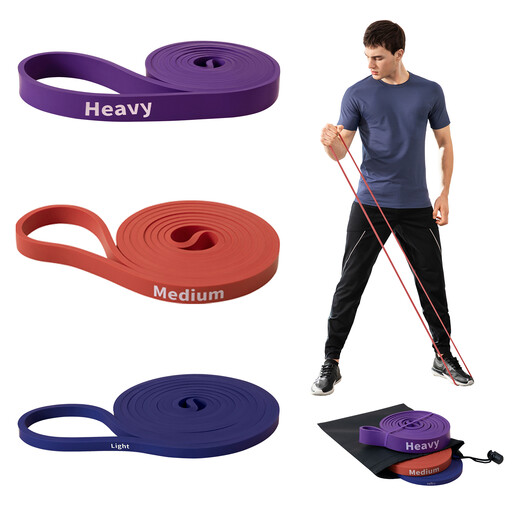
Why It Stands Out: This set is a complete solution for progressive strength training. Made from durable natural rubber latex, these long loop bands are built to withstand the demands of powerlifting, assisted pull-ups and full-body conditioning.
Pros:
Who is it for?: Fitness enthusiasts who need a reliable tool for building strength, improving balance and mastering bodyweight exercises like pull-ups.
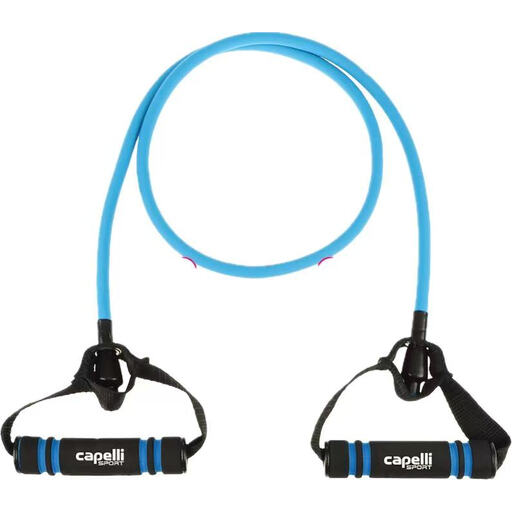
Why It Stands Out: This single tube band effectively mimics the function of cable machines and dumbbells. The ergonomic foam handles provide a secure, comfortable grip, reducing hand fatigue and allowing for a wide range of upper and lower body exercises.
Pros:
Who is it for?: Anyone looking for a single, versatile tool to perform classic strength exercises like rows, shoulder presses and bicep curls without needing bulky equipment.
Our recommendations cover some of the most popular and effective types of resistance bands, but the world of fitness accessories is vast. If you're looking for different resistance levels, materials or styles, there are many more choices available.
Explore our full collection of Yoga Exercise Bands to find the perfect match for your fitness routine.
Yes, you can. Building muscle relies on the principle of progressive overload, which means continually challenging your muscles. By gradually moving to bands with higher resistance levels as you get stronger, you create the necessary stimulus for muscle growth and toning. They are an effective tool for building strength, particularly for home workout bands.
A good rule of thumb is to choose a resistance level that allows you to complete your target number of repetitions (e.g., 10-15) with proper form, where the last few reps feel challenging. If you can easily complete the set, the resistance is too light. If you can't maintain good form, it's too heavy. This is why sets with multiple levels are often a practical choice.
Neither is inherently "better"—they simply serve different purposes. Fabric booty bands are superior for lower-body exercises as their width and non-slip material prevent them from rolling up. Latex exercise bands offer greater stretch and versatility, making them ideal for full-body movements, stretching and as pull up bands for assistance. The best choice depends entirely on your primary workout goals.