
24/7 Customer Support

Free returns

Same-day & Next-day Delivery

Quality Guaranteed

Unlock Your Welcome Offers: FREE Delivery | Up to 80% OFF | Free 30-day JoyPlus trial
Download the APP
Resistance bands can support strength training, stretching, Pilates, yoga, glute work and home workouts without taking up much space. However, choosing the right set is not simply a matter of picking the brightest colours or the highest resistance level.
The wrong design can make an otherwise useful workout uncomfortable or unsafe. Before buying resistance bands, look beyond promotional claims and check the material, dimensions, resistance range and intended use.
Colour coding is useful, but it is not universal. A “heavy” band from one manufacturer may not feel the same as a heavy band from another. Look for a stated resistance level, band thickness or intended application where available.
A set with light, medium and heavy options is generally more adaptable than a single band, particularly if more than one person will use it or if your training intensity changes over time.
Narrow elastic loops can move during squats, side steps and hip exercises. This is especially frustrating when using glute and leg bands for repeated sets. Fabric loop bands may provide a different feel and grip from smooth latex, while wider mini loop resistance bands can offer more surface contact.
The best design for you depends on the exercise. A hip band needs to stay positioned around the thighs, whereas a long flat band needs enough length for upper-body movements and stretching.
Natural latex and rubber offer elasticity, but they may not suit people with a latex allergy. TPE resistance bands are a latex-free alternative when the product description specifically identifies TPE as the material.
No band should be treated as indestructible. Heat, sunlight, sharp objects, excessive stretching and poor storage can accelerate wear. Inspect the band before each session and discontinue use if you see cracks, tears, fraying or permanent thinning.
Latex resistance bands are widely used for strength work, stretching and pull-up assistance. They are flexible and available in many resistance levels, but products containing natural latex should carry an appropriate warning for sensitive users.
TPE resistance bands are useful for shoppers looking for latex-free resistance bands. The feel and elasticity can differ from latex, so compare the stated use and dimensions rather than assuming the materials perform identically.
Fabric loop bands can feel softer against clothing and skin. Their construction may be particularly suitable for hip and glute exercises, although they are not a direct replacement for long flat bands or pull-up power bands.
For example, a 15 cm × 120 cm flat band provides a different movement range from a 60 cm circumference mini loop. Neither dimension is automatically suitable for every routine.
A resistance band set with several levels can be more practical than one heavy band. Beginners may need a lighter option for learning control, while strength-training users may combine bands or progress to heavier levels.
For physiotherapy or rehabilitation, resistance bands should be used according to guidance from a qualified healthcare professional. Product descriptions may list physiotherapy as a recommended use, but that does not make a band a medical device or substitute for personalised advice.
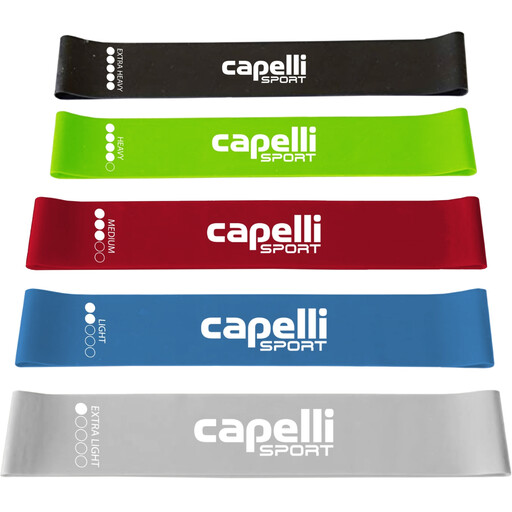
Why This Fits Their Persona: Five resistance levels allow a new user to start with a lighter band and adjust intensity for home workouts, Pilates, yoga or leg training.
The set identifies five levels rather than relying on a single resistance, and each loop is 5 cm wide with a 60 cm circumference.
Five-pack, colour-coded resistance levels and a portable carry bag. Note that it contains latex.
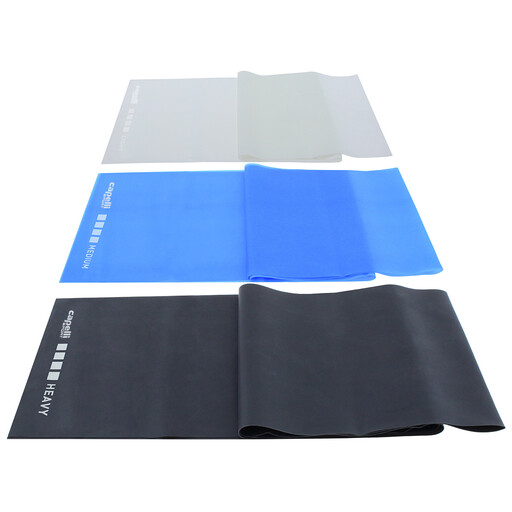
Why This Fits Their Persona: This three-band format suits shoppers who want one compact kit for Pilates, yoga, physiotherapy-style movements and general strength training.
The product gives measurable dimensions of 15 cm × 120 cm and includes light, medium and heavy levels, helping you compare it with other flat bands.
Natural latex construction, soft-touch description, three resistance levels and a storage bag.
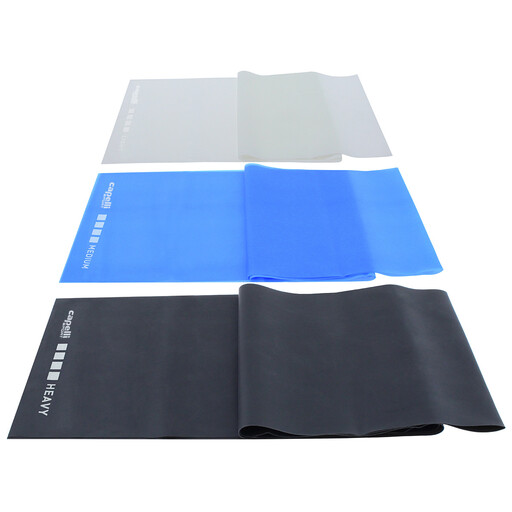
Why This Fits Their Persona: Shoppers specifically seeking latex-free resistance bands can consider this TPE set for home, office, gym, yoga or Pilates use.
The material is identified as TPE and latex-free, rather than leaving users to infer the composition from vague wording.
Three 15 cm × 120 cm bands, light/medium/heavy levels and a soft-touch, odourless description.
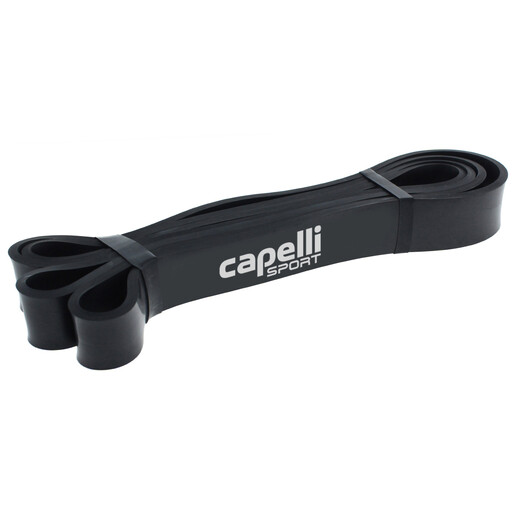
Why This Fits Their Persona: Its long-loop format is designed for users comparing pull-up resistance bands, body stretching equipment and heavier resistance for strength routines.
The listing states a 208 cm circumference, 2.8 cm width and a 40–50 lb resistance range, giving more useful comparison points than colour alone.
Long closed-loop format and natural latex construction. Users with latex sensitivity should choose a different material.
We have compiled a complete, real-time list of products that fully satisfy these strict selection criteria and UK safety regulations.
Yes, provided the resistance level matches your current ability and you can perform each movement with controlled form. A resistance band set containing light, medium and heavy options makes it easier to begin gradually. Avoid selecting a heavy band simply because it appears more substantial.
Lifespan depends on frequency of use, stretching, storage and material. Regular inspections matter more than a fixed calendar estimate. Replace a band if it develops tears, cracks, fraying, sticky areas or noticeable loss of elasticity.
They do not require batteries, electricity or replacement parts for normal use, so ongoing running costs are limited. Your main consideration is replacement when the material becomes damaged or no longer returns to its original shape. A carry bag can also help protect bands between workouts.