
24/7 Customer Support

Free returns

Same-day & Next-day Delivery

Quality Guaranteed

Unlock Your Welcome Offers: FREE Delivery | Up to 80% OFF | Free 30-day JoyPlus trial
Download the APP
Resistance bands can support home workouts, stretching, Pilates, yoga, rehabilitation and strength training without taking up much space. However, choosing the wrong band can lead to disappointing resistance, poor grip or premature damage.
Before buying exercise bands, look beyond colour and promotional phrases. The useful questions are: what movement will the band support, how much resistance is suitable and which material and shape match your routine?
A red or purple band does not have the same resistance level across every manufacturer. Colour coding is only meaningful when the product listing explains what each colour represents. Check the stated level, dimensions and, where supplied, resistance range rather than comparing colours alone.
A beginner may need a light band for mobility or controlled movements, while strength training and pull-up assistance often require a wider, heavier band. Buying a single heavy band can also limit exercise choice if it is difficult to stretch through a full range of motion.
Long power bands, flat resistance bands, mini resistance bands and tubes with handles are designed for different styles of exercise.
A band that works well around the legs may be awkward for a standing row, while a tube with handles may not provide the positioning needed for hip activation.
Latex and TPE resistance bands are flexible materials, but all bands can be affected by sharp objects, heat, sunlight, excessive stretching and repeated friction. Inspect the band before each session for cracks, tears, thinning or fraying. Do not use a damaged band, and avoid releasing a stretched band towards your face or another person.
For latex resistance bands, check the allergy information before purchasing. If latex is unsuitable, consider TPE resistance bands, which are latex-free in the product specifications supplied for some models.
A useful set should match your current ability while allowing progression. Light resistance can suit warm-ups, mobility, Pilates or controlled rehabilitation exercises. Medium and heavy levels may be more suitable for strength training, larger muscle groups or experienced users.
Sets containing light, medium and heavy bands can offer more flexibility than a single band. For example, you can increase difficulty by moving to a heavier band, shortening the working length or combining bands, provided the manufacturer’s instructions allow it.
Dimensions affect both tension and usability. A long loop measuring around 208 cm in circumference can support pull-up assistance and full-body movements. Flat bands measuring 120 cm long and 15 cm wide can be useful for stretching and Pilates-style exercises.
For targeted leg work, a compact loop is easier to position around the thighs. A 60 cm circumference and 5 cm width, for example, is intended for a different purpose from a full-length power band. Always compare the listed measurements with the exercises you plan to perform.
Natural latex generally offers a flexible, elastic feel but may not suit people with latex allergies. TPE is a latex-free alternative in the relevant product listings and can offer a soft-touch surface. Fabric or cotton hip bands can provide a non-slip feel around the legs, particularly during squats, glute bridges and lateral steps.
Handles are another practical consideration. Foam grips can make repeated pulling exercises more comfortable, while handle-free bands are easier to wrap, anchor or use around the legs. Whichever type you choose, keep the band away from sharp edges and store it in a cool, dry place.
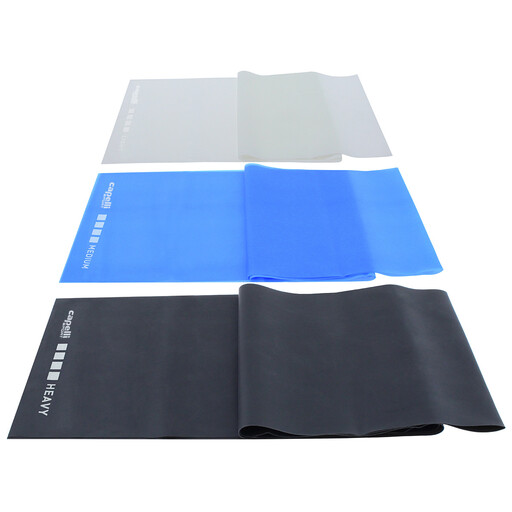
Why This Fits Their Persona: Three resistance levels give new users room to adjust their routine at home, in the office or outdoors without buying separate bands immediately.
The listing states light, medium and heavy levels, plus clear 15 cm by 120 cm dimensions, rather than relying only on colour.
Latex-free TPE construction; suitable for yoga, Pilates, physiotherapy and general exercise.
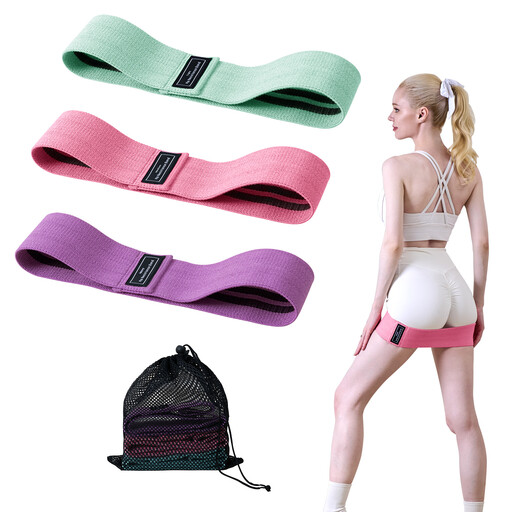
Why This Fits Their Persona: Users who value a stable feel during lower-body sessions may prefer fabric construction and a non-slip design for squats, bridges and lateral movements.
Its three stated levels—light, medium and heavy—make progression clearer than buying one unspecified hip band.
Set of three cotton fabric loop bands; storage bag included.
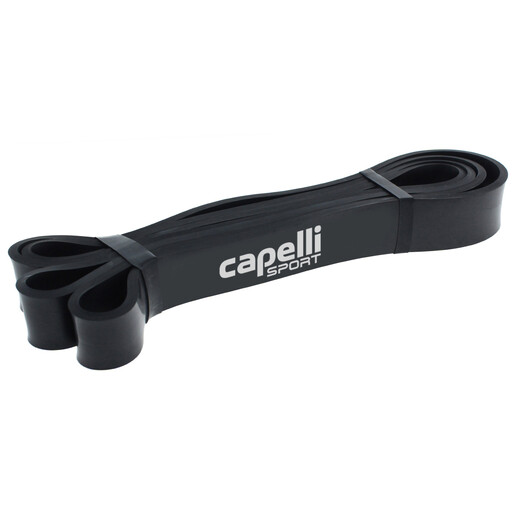
Why This Fits Their Persona: Longer, heavier training sessions and pull-up assistance call for a full-length loop with a stated 40–50 lb resistance range.
The listing provides width, circumference, thickness and a resistance range, helping buyers assess suitability before ordering.
100% natural latex; designed for pull-up assistance, stretching, muscle training and physiotherapy use.
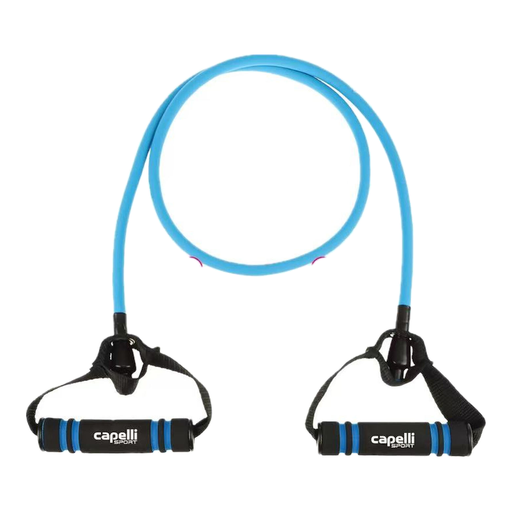
Why This Fits Their Persona: A single medium tube with foam handles suits people who want familiar grip positions for rows, curls, presses and compact home workouts.
The product specifies medium resistance, 120 cm tube length and foam handles, so the format is clear before purchase.
Lightweight design; padded foam grips intended to reduce hand fatigue during repeated exercises.
We have compiled a complete, real-time list of products that fully satisfy these strict selection criteria and UK safety regulations.
Place the band on a stable, non-abrasive surface and keep your feet secure during standing exercises. Follow the product’s stated stretch limits, maintain control when returning to the starting position and keep children and pets away during storage. Wipe bands with a damp cloth where the instructions permit, allow them to dry fully and keep them away from direct sunlight, radiators and sharp edges.
If you are returning from an injury, surgery or a medical condition, seek appropriate professional advice before beginning a new exercise routine. Resistance bands for physiotherapy should be used according to the instructions provided by a qualified practitioner.
Yes, provided the resistance level and movement are appropriate. Start with light or medium exercise bands, practise controlled technique and avoid forcing a stretch. A multi-level set can make it easier to adjust intensity gradually.
Lifespan depends on frequency of use, storage, stretching and material. Inspect latex, TPE and fabric bands before every session. Replace any band showing cracks, tears, fraying, thinning or permanent deformation rather than judging its condition by age alone.
They can support many strength and mobility exercises, but they provide a different form of resistance from free weights. Bands are particularly portable and useful for travel, warm-ups, Pilates, yoga and home workouts. Users seeking heavier progressive strength training may choose to combine them with other equipment while following safe anchoring and handling practices.