
24/7 Customer Support

Free returns

Same-day & Next-day Delivery

Quality Guaranteed

Unlock Your Welcome Offers: FREE Delivery | Up to 80% OFF | Free 30-day JoyPlus trial
Download the APP
Resistance bands can support strength training, Pilates, yoga, mobility work and home workouts without taking up much space. However, the product that looks suitable in a listing may not match your routine, available space or comfort requirements.
Before choosing resistance bands, watch for three common buying traps:
A suitable choice depends less on marketing language and more on the band’s construction, dimensions and intended application.
Different designs suit different movements:
Latex resistance bands generally provide a smooth stretch and are available in loop, flat and handled formats. Natural latex is not suitable for everyone, so always read the material details and warnings before purchase.
TPE resistance bands are made from thermoplastic elastomer and are commonly selected by shoppers looking for a latex-free option. They can be supplied as flat strips or handled tubes.
Fabric bands, including cotton fabric hip bands, may offer a textured grip and can be less prone to rolling during leg and glute exercises. They are not a replacement for every band style, though: a fabric hip band is not designed for the same range of movement as a long pull-up band.
A three-level resistance-band set containing light, medium and heavy options gives you more flexibility than a single band. It can also help beginners progress gradually, although the resistance should still feel controlled rather than forcing poor form.
Look at practical measurements:
Inspect the band before every session for cracks, cuts, thinning or damaged clips. Avoid overstretching, contact with sharp edges and exposure to excessive heat or direct sunlight. If you are using bands as part of physiotherapy or rehabilitation, follow the instructions provided by your qualified healthcare professional.
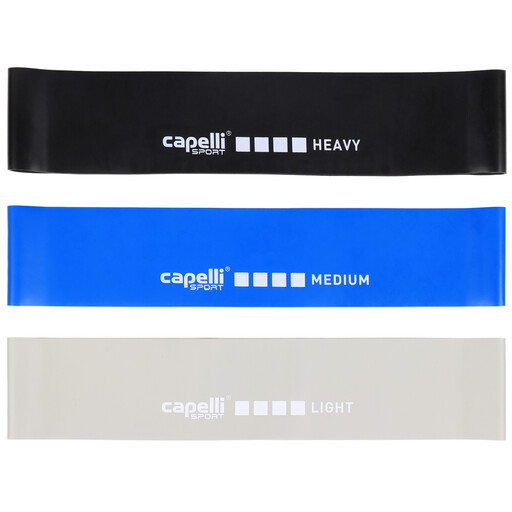
Why This Fits Their Persona: A compact three-band set is practical for beginners in UK flats, home gyms or shared spaces, with light, medium and heavy levels for different exercises.
The resistance levels are clearly separated, rather than relying on one vaguely labelled band.
Three latex loops, each 5 cm wide with a 104 cm circumference; storage bag included.
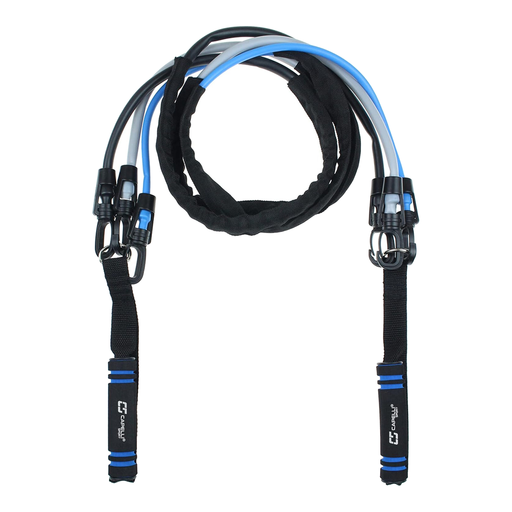
Why This Fits Their Persona: This adjustable format suits users who want a tidier home workout setup and more control over progression.
Clips allow bands to be added or removed, reducing the need to purchase several separate handled tubes.
TPE construction, three interchangeable resistance levels and foam handles.
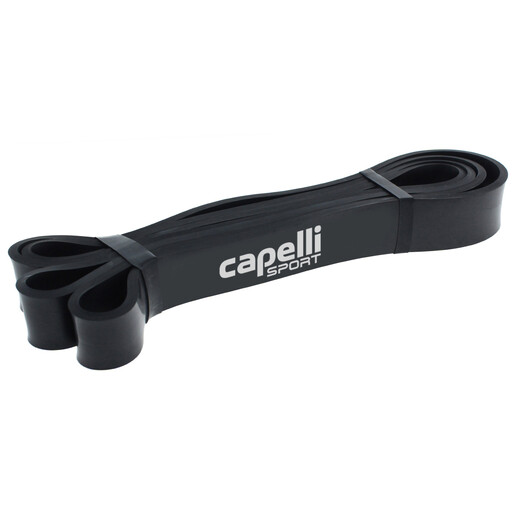
Why This Fits Their Persona: The long format is suited to users focusing on assisted pull-ups, stretching, muscle training or demanding full-body routines.
Its long 208 cm circumference and stated 40–50 lb resistance give more useful sizing information than a simple “heavy” label.
Natural latex band, 2.8 cm width and a format suitable for pull-up assistance and stretching.
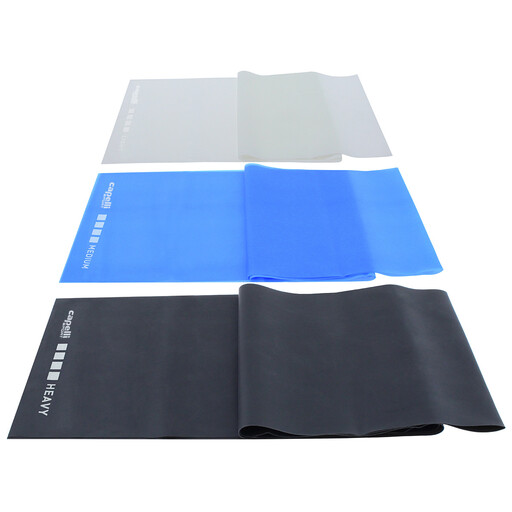
Why This Fits Their Persona: These flat bands suit shoppers seeking latex-free equipment for Pilates, yoga, stretching or light home training.
The material is stated as TPE and latex-free, helping buyers avoid choosing a latex product accidentally.
Three 15 x 120 cm bands with light, medium and heavy resistance levels.
Store bands in a cool, dry place away from direct sunlight, heaters and sharp objects. Wipe them with a damp cloth after use and allow them to dry fully before storage. For handled products, check that clips and straps are secured before each movement.
Do not anchor a band to an unstable item such as a lightweight chair or unsecured door. Use controlled movements, avoid snapping the band against skin and stop using it if you notice visible damage. Latex products should be kept away from anyone who may react to natural latex.
We have compiled a complete, real-time list of products that fully satisfy these strict selection criteria and UK safety regulations.
Lifespan depends on material, frequency of use, storage and how far the band is stretched. Regularly inspect for small cuts, surface cracking, thinning or loss of elasticity. Replace a damaged band rather than continuing to use it.
Yes, many beginners start with light resistance and controlled movements. A resistance bands set with several levels can provide options as strength and confidence develop. Choose exercises that allow stable posture and a full, comfortable range of motion.
Neither material is right for every shopper. Latex offers natural elasticity but may cause allergic reactions in sensitive users. TPE resistance bands are a practical latex-free alternative. Always check the product specification and safety information before ordering.