
24/7 Customer Support

Free returns

Same-day & Next-day Delivery

Quality Guaranteed

Unlock Your Welcome Offers: FREE Delivery | Up to 80% OFF | Free 30-day JoyPlus trial
Download the APP
Resistance bands can support strength training, mobility work, Pilates, yoga and home workouts without taking up much space. However, the wrong band can quickly become frustrating: it may roll up during glute exercises, feel too light for strength work or snap after repeated stretching.
The product description alone does not always tell you whether a band suits your routine. Before buying, look beyond colour and headline resistance claims. Check the band’s material, dimensions, resistance format and intended use.
There is no universal colour system for resistance bands. One manufacturer’s red band may be light, while another’s may be heavy. A useful product listing should explain the resistance level or intended use rather than relying on colour alone.
For beginners, a multi-level set can make progression easier. More experienced users may prefer a single heavy power band or a band with handles that provides a familiar resistance level.
Different designs suit different exercises:
A long power band is not automatically suitable for a small-footprint lower-body routine, and a short loop may not provide enough length for assisted pull-ups.
Terms such as “durable”, “heavy-duty” and “professional” are marketing descriptions unless supported by useful specifications. A better way to compare products is to check material, thickness or width, circumference or length, resistance level and care instructions.
Latex resistance bands generally offer substantial elasticity but may not suit people with a latex allergy. TPE resistance bands are latex-free in the products described here and may be a practical alternative for users who want to avoid natural latex. Fabric bands can feel comfortable against clothing and are often selected for hip and leg work, but they are not a direct replacement for long bands used for upper-body exercises.
The main materials found in resistance bands include natural latex, synthetic rubber, TPE and cotton fabric.
No material should be stretched beyond its intended range. Store bands away from direct sunlight, sharp objects and excessive heat, and wipe them clean according to the product instructions.
Dimensions affect how a band feels in use. A 60cm circumference mini loop offers a very different range of movement from a 208cm power band. Width also matters: a wider band may feel more substantial, while a narrow tube with handles is easier to position for arm exercises.
Some listings provide approximate resistance in pounds, while others use light, medium and heavy categories. These labels are not perfectly interchangeable between brands, so use them as a guide rather than a precise strength measurement.
For bands with handles, inspect the handle design and the way the band joins each handle. Foam grips can make rows, curls and presses more comfortable, while a security strap helps keep the band aligned.
Avoid attaching a band to a door, radiator or furniture unless the product specifically supports that use and the attachment is secure. During every session, inspect the band and connectors, keep the band away from your face and avoid letting it snap back against the skin.
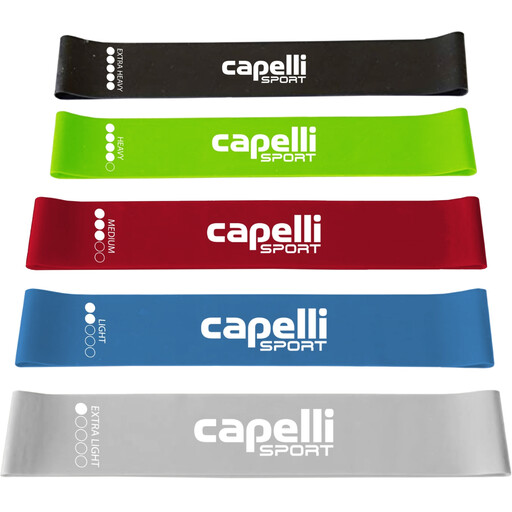
Why This Fits Their Persona: Five resistance levels give beginners room to start gently and progress at home, while the compact carry bag suits flats, travel and small storage spaces.
The listing states five varying levels instead of relying only on colour, and identifies the 5cm width and 60cm circumference for easier size comparison.
Five latex loops; portable travel bag; suitable for yoga, Pilates, home workouts and glute and leg routines.
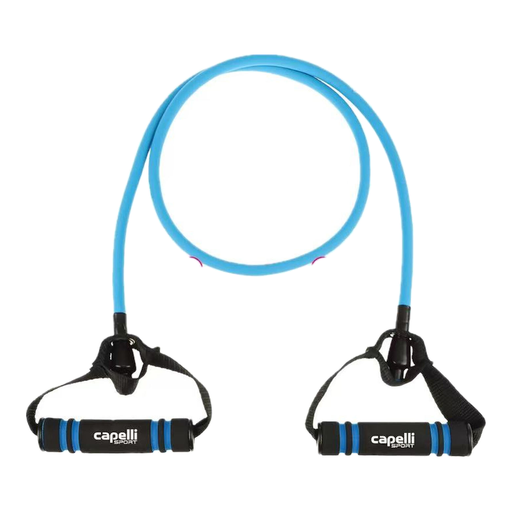
Why This Fits Their Persona: A single, lightweight handled band is convenient for structured home sessions, office breaks or travel when a secure grip matters.
Its TPE construction is identified as latex-free, and the foam handles provide a defined grip rather than requiring the user to hold a bare tube.
120cm tube; ergonomic foam handles; medium resistance; suitable for rows, curls, presses and Pilates.
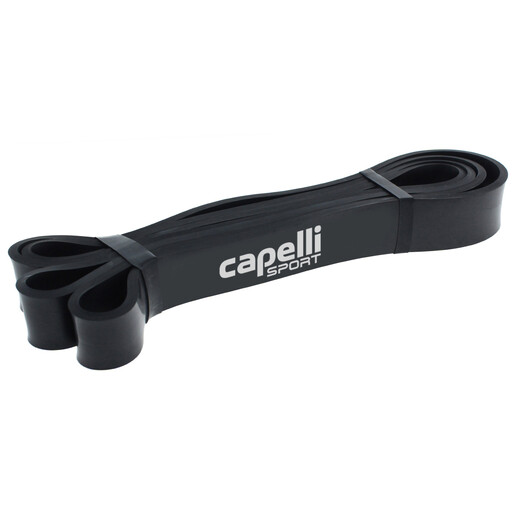
Why This Fits Their Persona: Its long-loop format is more appropriate for pull-up assistance, body stretching and larger strength-training movements than a short mini loop.
The 208cm circumference and stated 40–50lb resistance provide more useful information than a vague “heavy-duty” label.
2.8cm width; 208cm circumference; natural latex construction; suitable for pull-up assistance and muscle training.
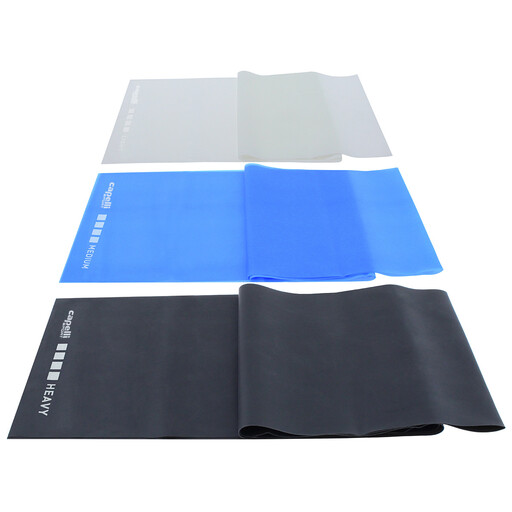
Why This Fits Their Persona: The flat shape and three resistance levels suit users building a gentle routine around yoga, Pilates, stretching or rehabilitation exercises.
The listing specifies TPE material, a 15 x 120cm size and light, medium and heavy options, making it easier to match the band to controlled movements.
Three flat bands; latex-free TPE; soft-touch finish; intended for yoga, Pilates and physiotherapy routines.
We have compiled a complete, real-time list of products that fully satisfy these strict selection criteria and UK safety regulations.
Inspect the band before every session. Look for fraying, cuts, cracks, thinning or damaged handles. Do not use a damaged band, overstretch it beyond its natural elasticity or position it close to your face. Keep latex products away from sharp edges, direct sunlight and high temperatures.
For home workouts, begin with controlled repetitions and a manageable resistance level. If you are returning to exercise after injury or surgery, ask a qualified healthcare professional whether the planned movements are appropriate. Product descriptions may mention physiotherapy or rehabilitation use, but they do not replace individual clinical guidance.
Lifespan depends on material, frequency of use, stretching range, storage and exposure to heat or sunlight. Regular inspection is more useful than relying on a fixed lifespan promise. Replace a band when you notice visible damage, reduced elasticity or permanent deformation.
Yes, provided the resistance and exercise are appropriate. Beginners can start with light or medium bands, learn the movement without jerking and increase resistance gradually. A set with several levels can be more adaptable than a single heavy band.
They do not require batteries, electricity or subscription access, so ongoing running costs are limited to storage and eventual replacement. The main purchase decision is choosing the correct design: mini loops for hips and legs, flat bands for mobility work, handled tubes for strength exercises or long power bands for pull-up assistance.