Sofa-based retro players
If you sit away from a television or large monitor, a manageable controller and a connection that works at that distance matter more than an arcade-panel layout.


Choose a conventional wireless gamepad if compact controls suit the way you play from a sofa; choose an arcade stick if a lever and large buttons are central to the experience. An all-button controller is a different option for players who specifically want button-only directional input. Before choosing a model, match its connection mode and any required accessories to the exact device running your games.
If you sit away from a television or large monitor, a manageable controller and a connection that works at that distance matter more than an arcade-panel layout.
If using a lever and large buttons is part of why you play arcade games, consider where a tabletop stick will sit during play and where you will store it afterwards.
If you move between a PC, consoles or retro hardware, check compatibility separately for each device and connection mode. Some combinations also call for an adapter or another controller.
Start with the device running the game: its supported controllers and input modes determine which formats you can use. Then choose the layout and connection that suit your seating position.
| Concern | What to check | Who this matters to |
|---|---|---|
| Control layout | Decide between a gamepad D-pad, an arcade lever and button-only directional input. Check the controller's size if it needs a place to rest. | If the physical arcade controls are a main reason I play these games, I would rather make room for a stick than use a compact pad; around 42% of consumers put the arcade-style layout first. |
| Connection at a distance | Check which wireless or wired mode works with your host, whether a receiver needs a USB port, and whether a cable reaches safely. | Playing from the sofa, I want to avoid arranging my seat around a short cable. For around 33% of consumers, convenient connection at that distance is the primary need. |
| Host compatibility | Match the exact PC, console or retro device to the model's supported modes; check for any required adapter or wired authentication controller. | When I switch between systems, I need to know what will connect to each one before settling on a layout; around 25% of consumers put multi-system compatibility first. |
8BitDo lists different hosts for its Ultimate 2C Wireless gamepad, Arcade Stick for Xbox and separate Switch-and-Windows Arcade Stick. A familiar brand name does not establish compatibility for another model.
Match the exact model, host and connection method before ordering, particularly if your games run on a console or dedicated retro device.
Mayflash says F500 FLAT use with PS4 and specified Xbox consoles requires a compatible wired controller connected to the arcade controller. An extra component changes how the setup works.
Check the requirements for your particular console combination, including the controller, cable and available USB port.
A required authentication controller or converter adds equipment to buy, connect and keep with the setup.
A tabletop stick demands more playing and storage space than a conventional gamepad. Its lever-and-button layout is worth prioritising only if you want to use that format.
Check the dimensions against your playing position and storage space before choosing the format.
For electrical and electromagnetic compatibility equipment placed on the Great Britain market, Department for Business and Trade guidance dated 31 March 2026 lists UKCA and CE marking routes. A marking does not tell you whether a controller works with your games.
Check the seller's model identification, applicable product information and support details as well as the controller's compatibility.
These brands illustrate different controller formats and model-specific compatibility rules; the name on the controller is not a substitute for checking the exact model.
Its range includes compact gamepads and separate arcade sticks aimed at different hosts.
Its arcade range includes lever-based and all-button controllers for players considering several types of host.
A conventional gamepad route for players whose host and preferred controls suit an Xbox Wireless Controller.
These choices cover one lever-based arcade stick for a wired setup and two conventional gamepads. Choose the control format first, then check the exact host and game or emulator input requirements.
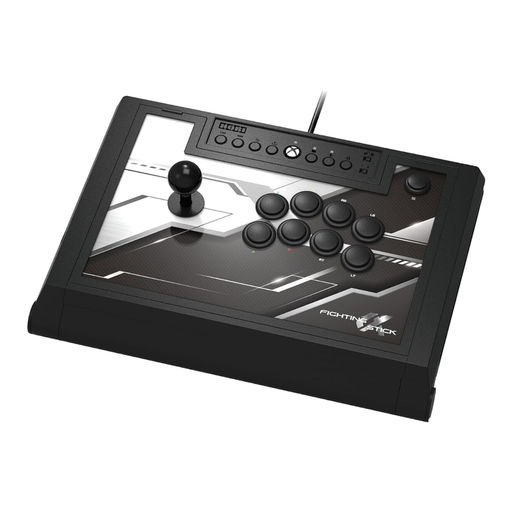 No image available
Consider this arcade-stick format if a physical lever is more important to you than a compact gamepad.
Check that its wired connection can be routed safely from the host to your playing position, and confirm input support for your particular game or emulator.
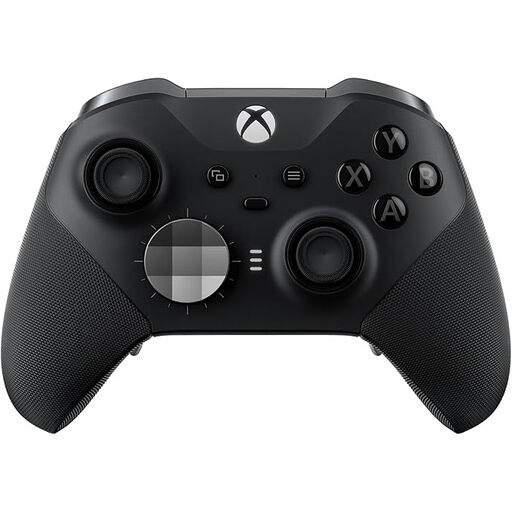 No image available
This conventional gamepad is an option if you prefer handheld controls for play away from the screen rather than an arcade lever.
Confirm the connection method available on your host and whether your retro game or emulator accepts its input.
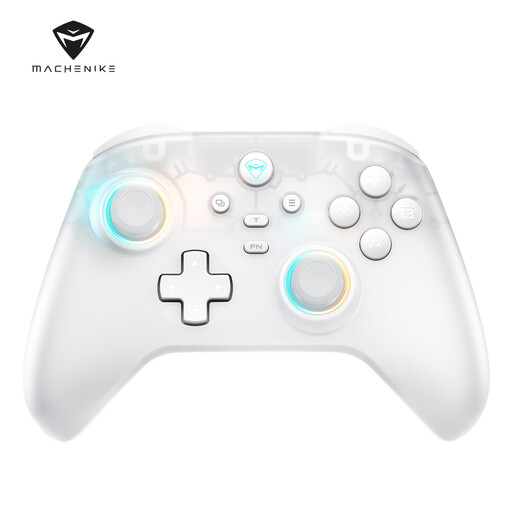 No image available
This conventional controller suits consideration when you want a handheld format rather than a tabletop arcade stick.
Check which of its connection modes works with your exact host, then confirm input support in the game or emulator you intend to use.
No. Wireless connection can suit a seat away from the screen, but the host must support the particular controller and mode. If a lever-and-button layout matters more, compare arcade sticks too; 8BitDo specifies wireless and wired options for its Arcade Stick for Xbox, while the Mayflash F500 Elite is a wired route.
Do not assume it will. Compatibility depends on the exact model, host and connection mode. For example, Mayflash says F500 FLAT use with PS4 and specified Xbox consoles requires a wired controller connected to the arcade controller, so check the complete setup for each device you plan to use.
Check the controller's stated Windows support, its connection mode and the input your emulator or game accepts. 8BitDo lists Windows connection by 2.4G or USB for the Ultimate 2C Wireless; its separate Switch-and-Windows Arcade Stick is a different control format and should be checked as its own model.
No. A product marking does not establish console or emulator compatibility. Department for Business and Trade guidance dated 31 March 2026 lists UKCA and CE marking routes for electrical and electromagnetic compatibility equipment placed on the Great Britain market; check host and game input support separately.