
24/7 Customer Support

Free returns

Same-day & Next-day Delivery

Quality Guaranteed

Unlock Your Welcome Offers: FREE Delivery | Up to 80% OFF | Free 30-day JoyPlus trial
Download the APP
A retro cream kettle can be the perfect finishing touch for a kitchen, adding a splash of vintage charm and warmth. However, the market is flooded with models that prioritise style over substance. Many buyers find their stylish new appliance becomes a source of frustration, plagued by issues that weren't apparent on the shop floor or website.
As a Joybuy Product Recommendation Officer, my role is to help you see past the marketing gloss. Before you invest in a new cream electric kettle, it's crucial to understand the common pitfalls that can lead to disappointment.
To ensure your new kettle is a joy to use every day, focus on these core parameters. They are the true indicators of quality and performance, separating a reliable appliance from a frustrating one.
For a genuine rapid boil kettle, the key specification to look for is its power rating. A 3kW (3000W) heating element is the industry benchmark for high performance in the UK. Kettles with this power can typically boil a full 1.7-litre capacity in under three minutes, saving you time during busy mornings. Models with lower wattage (e.g., 2200W) will still boil water effectively but will take noticeably longer, which can also impact energy efficiency if you're frequently re-boiling.
The most common size for a family kettle is 1.7L, which is enough for about 6-7 cups of tea or coffee. For smaller households or those with limited counter space, a 1.5L model can be a practical alternative.
Pay close attention to the interior material. A stainless steel jug kettle is often preferable as it is durable, easy to clean and ensures that the water does not come into contact with plastic. This helps prevent any "plastic taste" from leaching into your hot drinks. Also, check for a removable and washable limescale filter, which is essential for maintaining water quality, especially in hard water areas.
A traditional kettle design should not come at the expense of modern safety and convenience. Look for these features:
We've identified several models that align with these quality benchmarks, matching them to different user needs and kitchen styles.
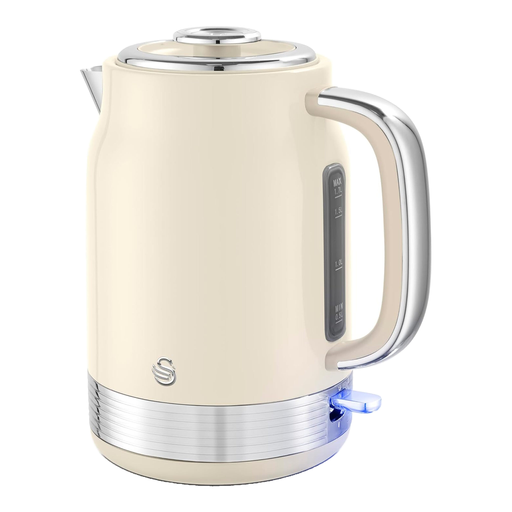
Why This Fits Their Persona: This kettle is ideal for busy households that need both performance and a strong visual statement. Its classic retro design and chrome accents make it a centrepiece, while the large capacity and fast boiling speed cater to the demands of family life.
It directly counters the "slow boil" myth with a powerful 3000W element. The coated stainless steel body provides durability, avoiding the flimsy feel of cheaper, style-focused models.
Features a generous 1.7L capacity and a removable, washable limescale filter for better-tasting water and easier maintenance.
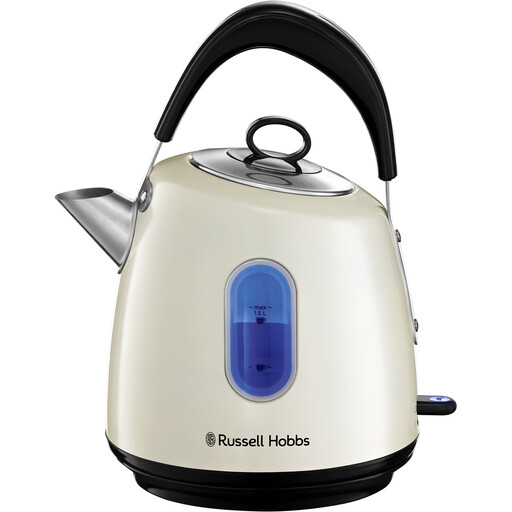
Why This Fits Their Persona: Perfect for someone who appreciates a refined, uncluttered aesthetic. The dome shape and top-handle offer a nod to traditional design, but the clean lines and premium stainless steel body feel thoroughly modern. It's about quiet sophistication, not loud retro.
This model avoids the spillage problem with its 'perfect pour spout', designed to minimise splashes. The full stainless steel body and interior also sidestep the issue of plastic tainting the water's taste.
Combines a 3000W rapid boil feature with a durable, high-quality build. The 1.5L capacity is ideal for smaller households or individuals.
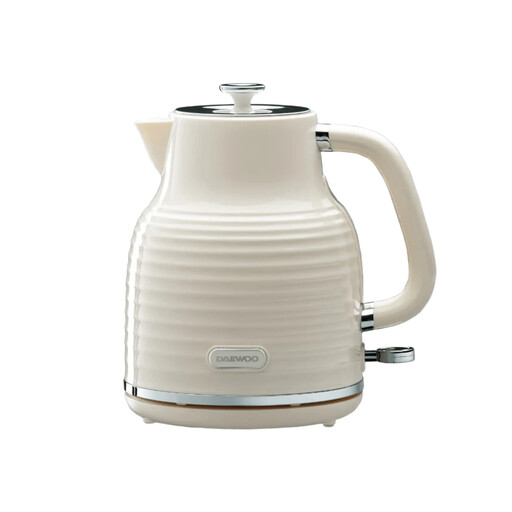
Why This Fits Their Persona: This user prioritises function, reliability and ease of maintenance. The DAEWOO Sienna delivers on all fronts with a powerful rapid-boil system, essential safety features and practical design elements like a concealed element and removable filter for straightforward cleaning.
It tackles the limescale problem head-on with a concealed heating element and a removable limescale filter. This combination makes descaling simple and helps prolong the kettle's performance and lifespan.
Offers a full suite of practical features: rapid-boil technology, a 1.7L capacity, an easy-pour spout and a 360° swivel base for maximum convenience.
We have compiled a complete, real-time list of products that fully satisfy these strict selection criteria and UK safety regulations.
The lifespan of an electric kettle depends on its build quality and how well it is maintained. A model with a stainless steel body and a concealed heating element, when regularly descaled (especially in hard water areas), can reasonably be expected to last for three to five years or more with daily use. Cheaper, plastic-bodied kettles may show wear or fail sooner.
While a 3kW kettle uses more electricity per second than a lower-wattage model, it runs for a much shorter period to boil the same amount of water. The most significant factor in running cost is user habit. To save energy, only boil the amount of water you need. A kettle with a clear water level indicator is very helpful for this.
Most modern cream kitchen accessories have durable, coated finishes. To keep your kettle looking its best, wipe the exterior regularly with a soft, damp cloth to remove splashes and fingerprints. Avoid using abrasive scourers or harsh chemical cleaners, which can damage the finish. For stubborn kitchen stains like tomato or curry splashes, clean them off as soon as possible.