
24/7 全天候客户支持

免费退货

当日/次日达

品质保障

开启新人专享福利: 全场免邮 | 低至 2 折 | 免费试用 30 天 JoyPlus 会员
下载 Joybuy
For UK households, reusable aluminium foil food storage bags can make fridge and freezer organisation easier, particularly when storing meat, seafood, vegetables, cooked food and prepared portions. However, product listings often use broad claims that do not tell you how a bag will perform in everyday use.
The most useful buying decision comes down to construction, closure design, size and cleaning requirements. Before choosing a multi-pack, check the following common pitfalls.
Many aluminium foil freezer bags are made from a multi-layer composite, rather than a single sheet of metal. This is not necessarily a problem: PET, aluminium and PE layers can combine flexibility, moisture resistance and light protection. However, shoppers should check the full material description instead of assuming the bag is puncture-proof or suitable for cooking.
A composite bag can still be damaged by bones, shell fragments, sharp corners or frozen food packed under pressure. Avoid placing protruding items inside, and do not treat a food storage pouch as cookware.
Slider zip food storage bags are convenient, but the seal only works properly when the top edge is clean and fully aligned. Grease, crumbs or moisture around the closure can prevent a complete seal and increase the risk of leaking or odour transfer.
Look for a clearly described sliding zip mechanism, then press or slide it across the entire opening. For soups, marinades and other liquid foods, keep the bag upright during filling and storage. A stand-up format can make this easier, but it does not replace sensible handling.
Washable food storage bags can reduce the need for single-use pouches, but their lifespan depends on how they are used and cleaned. Sharp foods, strongly salted ingredients and high-moisture foods can place extra stress on the material or seal.
The featured Maxcook bags are specified for temperatures from -20°C to 100°C, supporting refrigerator and freezer storage. They are not designed for microwaves, ovens, boiling water, open flames or direct cooking. Always allow food to cool appropriately before packing and dry the bag completely after washing.
For food stored in a freezer, light and odour protection can be useful. A layer containing aluminium may help block light, while the outer and inner plastic layers provide flexibility and moisture resistance. Product descriptions should state the materials clearly; in the featured bags, the composition is PET + aluminium + PE.
This construction may suit frozen meat, seafood, cured food, roasted food and vegetables. It should not be interpreted as a guarantee of extended freshness or food safety for every ingredient. Follow normal UK food-handling practices, including prompt refrigeration and sensible use-by or freezing dates.
A slider zip is practical for repeated opening and closing. For reusable leakproof food bags, check whether the listing explains how the closure works and whether the bag can stand upright. Stand-up food storage bags are particularly useful when portioning sauces, chopped vegetables or cooked meals.
Even with an airtight freezer pouch design, leave some room at the top and avoid overfilling. Frozen contents may expand, while wet foods can create pressure against the seams. Place liquid-filled bags in a tray until frozen if a leak would cause disruption.
A single size rarely suits an entire household. Small bags can hold herbs, seasoning or individual portions, while larger fridge and freezer storage bags are more practical for meat, seafood and batch-cooked meals.
A write-on food label area is useful for recording the contents and date. This can reduce forgotten leftovers and make freezer rotation easier. Check that the writing area is positioned where it remains visible after the bag is stored.
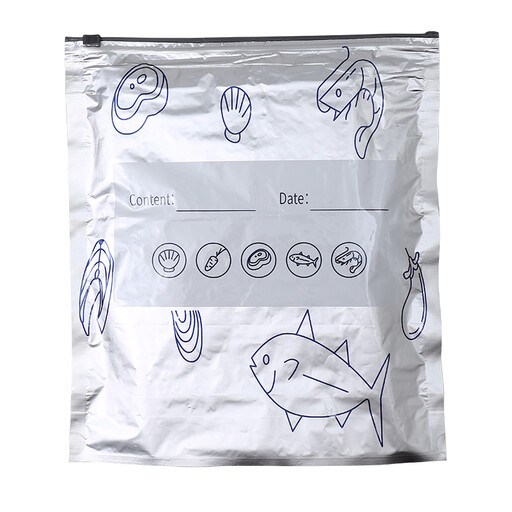
Why This Fits Their Persona: A single-size ten-pack offers a straightforward starting point for households that mainly freeze larger portions of meat, seafood, cooked food or vegetables.
The listing identifies the PET, aluminium and PE construction, slider seal, washable design and temperature range rather than presenting the bag as cooking equipment.
Ten bags in a 26 × 29 × 7 cm format; stand-up design and writable content-and-date label area.
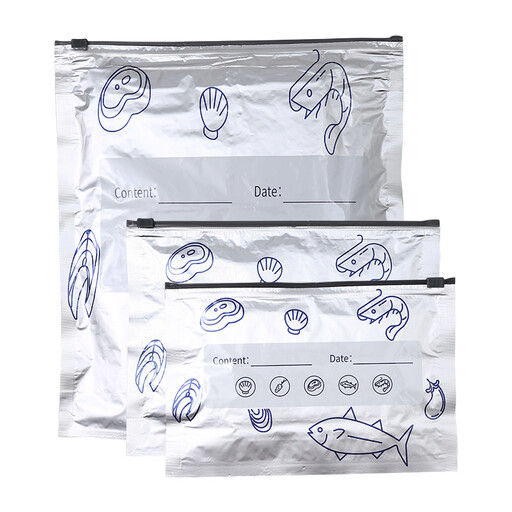
Why This Fits Their Persona: Meal preppers and organised families can separate small ingredients, everyday portions and larger food items without buying several differently sized packs.
The pack provides three stated sizes, helping buyers avoid the common mistake of using oversized bags for small portions or overfilling one universal size.
Thirty pieces split across 20 × 13 × 5 cm, 23 × 17 × 5 cm and 26 × 29 × 7 cm sizes; washable construction with slider closure.
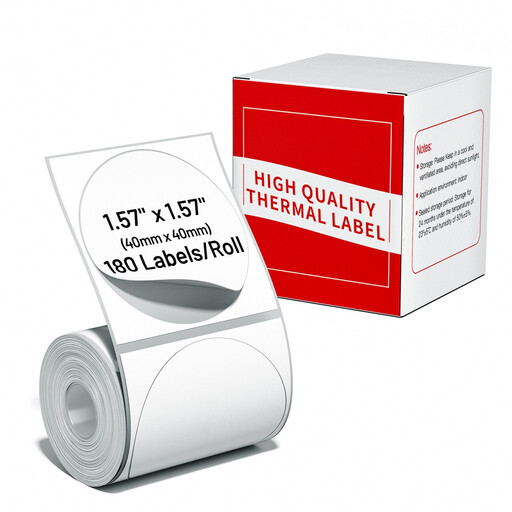
Why This Fits Their Persona: Food organisers who label containers, shelves and cupboard items alongside reusable bags may find a separate label roll useful for a consistent storage system.
It supports clear identification rather than relying on memory or unclear handwritten markings; check printer compatibility before ordering.
50 × 50 mm round format; compatible printer models are specified in the product name.
We have compiled a complete, real-time list of products that fully satisfy these strict selection criteria and UK safety regulations.
For salty foods, pickles and flour, avoid lengthy storage and inspect the bag for pressure, staining or damage. Do not use a pouch if the seal or material has deteriorated.
The featured Maxcook bags are specified for refrigerator and freezer use from -20°C to 100°C. They are intended for storage, not heating. Do not use them in a microwave, oven, boiling water or over an open flame, and follow the product’s handling instructions.
There is no fixed lifespan. Repeated washing, sharp contents, overfilling, heat and heavy staining can shorten usable life. Inspect the seams, surface and slider regularly, and replace the bag if it develops holes, leaks or a faulty closure.
They are described for meat, seafood, vegetables, cooked food and frozen items. Remove sharp bones or shells where possible, avoid overfilling, seal carefully and label each portion with its contents and storage date. For liquids or marinades, keep the bag upright and use a tray during initial freezing.