
24/7 Customer Support

Free returns

Same-day & Next-day Delivery

Quality Guaranteed

Unlock Your Welcome Offers: FREE Delivery | Up to 80% OFF | Free 30-day JoyPlus trial
Download the APP
Packing lunch at home can reduce daily spending, but the wrong container may create new frustrations: sauce leaking into a bag, clips becoming difficult to close or a box that takes longer to clean than the meal itself. When comparing reusable bento lunch boxes and food containers, look beyond attractive colours and large capacity claims.
The right choice depends on how you eat, transport and store food. A divided lunch box may suit sandwiches and snacks, while separate meal prep containers can work better for batch cooking and leftovers.
Compartments help separate food, but they do not automatically prevent liquids from moving between sections. Check whether the product description refers to a sealed lid, silicone gasket, airtight closure or leak-resistant construction. A simple divider may separate dry foods but offer limited protection for soup, yoghurt or dressing.
For transport, keep liquid foods upright where possible and confirm that the lid is properly secured before placing the container in a work or school bag.
A container advertised by volume may still be awkward for your lunch bag, fridge shelf or kitchen cupboard. A 2-litre box can hold a substantial meal, but its dimensions and weight may make it less convenient for cycling, commuting or school use.
Before ordering, compare the stated measurements with your existing bag and consider whether the internal layout suits your usual portions. A portable meal container should be practical to carry, not simply large.
Stainless steel is durable and resistant to odours, but it is generally not suitable for microwave heating. Plastic containers may be lighter and, where specified, microwave-safe, freezer-safe and dishwasher-safe. Neither material is automatically suitable for every use.
Look for clear instructions covering food-contact suitability, temperature limits, dishwasher use and freezer storage. UK shoppers should also follow the manufacturer’s care guidance rather than relying on general assumptions about a material.
A divided lunch box or compartment lunch box can keep fruit, snacks and main dishes separate. Five-compartment designs provide more organisation, while a single large compartment is more flexible for wraps, pasta or leftovers.
Consider the meals you regularly prepare:
304 stainless steel is commonly used for reusable food storage because it is durable and resistant to stains and odours. Some listed containers use 316 or 316L stainless steel, which the product descriptions identify as offering increased corrosion resistance. However, the grade does not remove the need to inspect lids, seals and hinges.
Plastic can be a useful option where low weight, microwave heating or freezer storage is important. For example, the Sistema Nest It containers are described as BPA-free, microwave-safe, dishwasher-safe and freezer-ready. Always check the individual product listing for the exact version and instructions.
A reliable leak-proof lunch container depends on the complete closure system, not just the container body. Check for:
For stainless steel containers, confirm whether the lid contains plastic or silicone components and whether the entire product can go in a dishwasher. Never place a metal container in a microwave unless the manufacturer expressly states that it is suitable, which is uncommon.
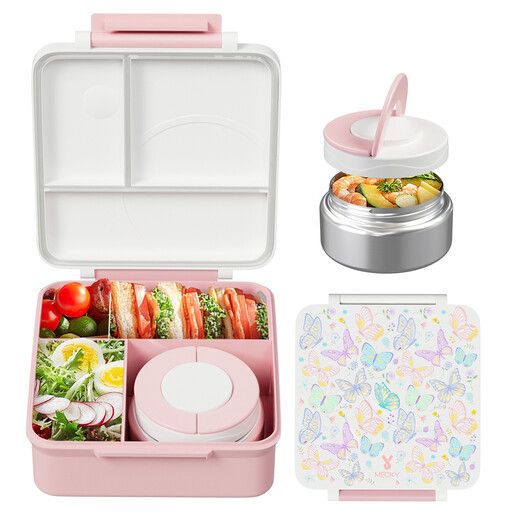
Why This Fits Their Persona: A straightforward option for workers, students or families wanting one divided lunch box for everyday packed meals without buying a larger container set.
The single-latch divided format makes the closure arrangement clear, while the 54oz capacity avoids choosing a box based only on an unusually large volume claim.
Divided layout; single-latch closure; available in a compact lunch-box format.
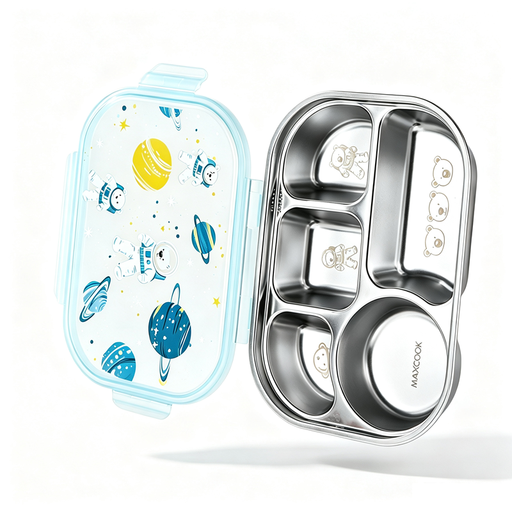
Why This Fits Their Persona: Suitable for shoppers who prefer a metal bento box and want several sections for a varied office lunch, picnic or day out.
Its stated 316 stainless steel construction provides a clearly identified material grade, so buyers need not rely on vague ‘premium metal’ wording.
Five compartments; 316 stainless steel construction; portable format for meals away from home.

Why This Fits Their Persona: A practical match for households preparing different portion sizes, storing leftovers or rotating lunches between home, work and outdoor use.
The three stated capacities—600ml, 1100ml and 2200ml—make it easier to match the container to the portion instead of carrying one oversized box.
Three useful capacities; secure-fitting lids; described as dishwasher-safe and suitable for freezer storage.
We have compiled a complete, real-time list of products that fully satisfy these strict selection criteria and UK safety regulations.
Usually not. Metal containers should not be placed in a microwave unless the product instructions specifically permit it. Transfer food to a microwave-safe dish before reheating. Stainless steel is more suitable for carrying, fridge storage and cold meal preparation.
Lifespan depends on material, washing temperature, impact and seal care. Stainless steel bodies can remain usable for a long time, while lids, clips and silicone seals may wear sooner. Replace any component that becomes cracked, warped or unable to close securely.
They can be useful if you prepare lunches or dinners in batches. A set with different capacities helps avoid using a large container for small portions. For occasional packed lunches, one divided lunch box may take up less cupboard space and offer a simpler routine.