
24/7 Customer Support

Free returns

Same-day & Next-day Delivery

Quality Guaranteed

Unlock Your Welcome Offers: FREE Delivery | Up to 80% OFF | Free 30-day JoyPlus trial
Download the APP
Packing lunch at home can reduce daily spending and make portion planning easier, but choosing the wrong container often creates fresh problems: spilled soup in a work bag, soggy sandwiches, difficult cleaning and cupboards full of mismatched tubs. This guide compares the features that matter when choosing reusable bento lunch boxes and food storage containers for school, work, commuting, meal preparation and travel.
A product description may use terms such as airtight, sealed or leak-resistant, but these descriptions do not always mean a container is suitable for carrying soup or sauces upside down. Check whether the lid has a removable silicone seal, locking clips or a tested liquid-storage design. Even then, the seal must be fitted correctly and the container should remain upright where possible.
A divided lunch box may also keep foods separate without making each compartment individually liquid-tight. This is useful for sandwiches, fruit and snacks, but less suitable for runny curries or dressings.
A five-compartment lunch box sounds versatile, but small sections may not hold a full adult meal. Conversely, a large single compartment may allow foods to touch and become soggy. Look for the stated capacity in millilitres or litres, then compare it with your usual lunch.
For children, smaller sections can help organise snacks and fruit. For office workers or meal-preppers, larger containers may be more practical for pasta, salads, rice dishes or leftovers.
Stainless steel containers should not be placed in a microwave, and some are unsuitable for ovens or direct heat. Plastic containers may be microwave-safe, but only when the product instructions confirm this and the lid is removed or vented as directed. “Food storage” does not automatically mean “cooking container”.
Check the care instructions before buying, especially if you want to reheat meals at work or store portions in the freezer.
Food-grade plastic can be lightweight and convenient for lunch boxes for work and school. Look for clear information about the material, BPA status and temperature limits. Plastic is often practical for microwave reheating, although repeated exposure to high heat can affect its appearance over time.
304 stainless steel is commonly used for reusable lunch containers because it is durable, resistant to stains and does not retain food odours as readily as some plastics. It is suitable for cold food storage and packed lunches, but not microwave use.
316 stainless steel is specified in several food container sets in this selection. It is described by the product listings as having corrosion resistance and suitability for food storage. It remains important to follow the individual care instructions, particularly regarding lids, dishwashers, freezer use and heat.
Capacity is one of the most useful comparison points:
Also measure your lunch bag, fridge shelf and work or school storage space. A wide container can hold a generous meal but may not fit into a narrow insulated bag.
A divided lunch box is convenient when you want to separate a main meal, fruit and snacks. Removable seals are easier to wash thoroughly than permanently enclosed gaskets. For busy households, dishwasher-safe food containers can reduce cleaning time, but check whether the instruction applies to the lid, the container or only the top rack.
If freezer storage matters, confirm that the product is explicitly listed as freezer-safe containers. Leave room for food expansion and allow frozen food to cool before fitting the lid tightly.
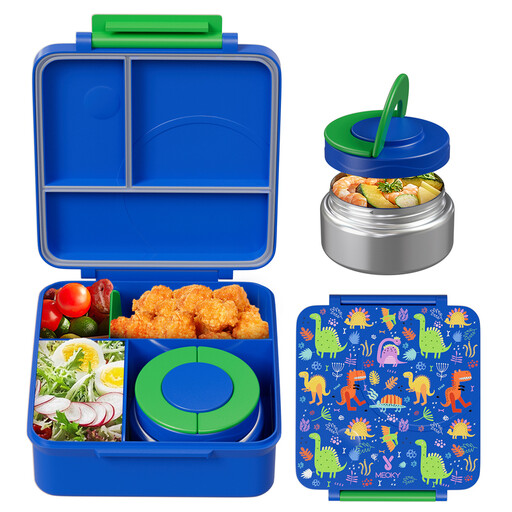
Why This Fits Their Persona: A divided format offers a straightforward way to pack everyday lunches for school or work without buying several separate tubs.
The stated 54oz capacity and divided design make portion planning clearer than relying on an unspecified volume. Check the seller’s care instructions before using it for liquids.
Single-latch opening; divided layout; available in several colours and designs within the range.
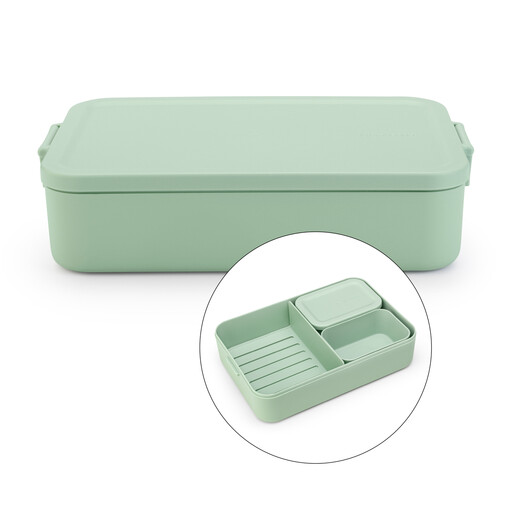
Why This Fits Their Persona: Its large 2L volume and stated dishwasher, microwave and freezer compatibility suit households wanting one reusable system for packing and storing food.
The product information specifies its capacity and compatible uses, helping avoid vague claims about size and heating. Remove or check components before microwaving.
2L capacity; divider doubles as a lifting tray; includes two separate containers; listed with a 5-year guarantee and service.
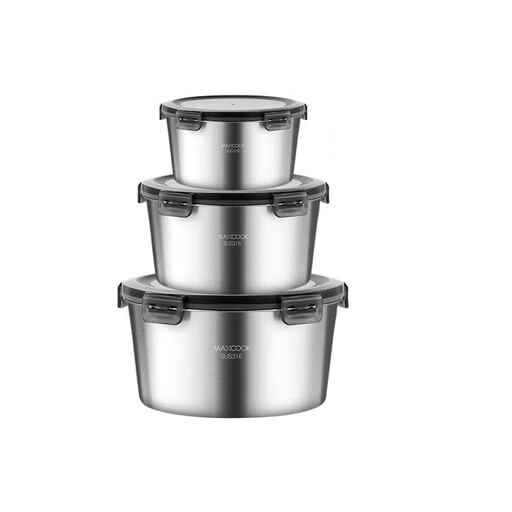
Why This Fits Their Persona: Multiple capacities support batch cooking, leftovers, snacks and packed lunches, making the set suitable for regular meal-prep users.
The set lists two 600ml containers and one 2200ml container, so buyers can match the container to the meal rather than forcing every portion into one size.
316 stainless steel; 600ml and 2200ml capacities; lids described as secure-fitting; listed as dishwasher- and freezer-safe.
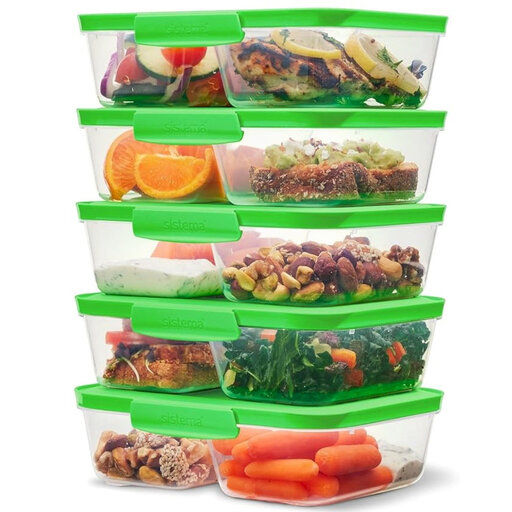
Why This Fits Their Persona: Five matching 870ml containers are convenient for preparing several similar portions for work lunches or planned dinners.
The stated 870ml size and five-piece format make weekly planning more predictable. Follow the supplied microwave, freezer and dishwasher guidance for the relevant components.
Five 870ml containers; multi-compartment design; nesting when empty; listed as freezer-ready, microwave-safe and top-rack dishwasher-safe.
We have compiled a complete, real-time list of products that fully satisfy these strict selection criteria and UK safety regulations.
They can reduce the need for purchased lunches and disposable packaging, but the value depends on how regularly the container is used, its price and the cost of washing it. A durable set with suitable capacities may be more practical than repeatedly replacing low-cost tubs.
For children, a smaller divided lunch box may suit snacks and modest portions. Adults often prefer approximately 800ml to 1,200ml for a standard packed meal, while larger containers are useful for salads, leftovers or batch-cooked dishes. Always compare the dimensions with your lunch bag.
Lifespan depends on material, dishwasher temperature, handling and seal maintenance. Stainless steel bodies can remain usable for a long time, while lids and silicone seals may need replacing sooner if they become brittle or lose their fit. Regular cleaning and following the manufacturer’s temperature guidance can help prevent avoidable damage.