
24/7 Customer Support

Free returns

Same-day & Next-day Delivery

Quality Guaranteed

Unlock Your Welcome Offers: FREE Delivery | Up to 80% OFF | Free 30-day JoyPlus trial
Download the APP
Packing lunch for work, school, commuting or a day outdoors can reduce reliance on takeaway food, but the wrong container may create avoidable problems. A lid that loosens in a bag, compartments that are too shallow or a material that cannot be heated can make an otherwise useful purchase frustrating.
When comparing reusable lunch boxes and food storage containers, look beyond attractive colours and large capacity figures. The most useful choice depends on how you transport food, whether you prepare meals in advance and how much cleaning you are willing to do.
Terms such as leak-resistant, sealed and leakproof are not always interchangeable. A container may help prevent spills when carrying sandwiches or dry food but still require careful positioning when filled with soup, sauces or dressings.
Check the product description for:
For soups and stews, an insulated food jar with a tight-sealing lid is usually more appropriate than a standard bento lunch box.
A large capacity does not automatically mean a practical lunch. A single-compartment container can allow foods to mix, while very small sections may not hold a full sandwich, fruit portion or substantial meal.
A bento lunch box, divided lunch box or lunch box with compartments can make portioning easier. However, fixed dividers may reduce flexibility if you regularly pack different meals. Consider whether you need separate sections for snacks and sides or one open space for a larger meal.
Dishwasher-safe, freezer-safe and microwave-safe describe different functions. Stainless steel containers should not be placed in a microwave unless the product specifically states that they are suitable, and several products in this category are not designed for oven use either.
Before buying, check:
A container that is easy to wash is more likely to remain in regular use, particularly for weekday meal preparation.
304 stainless steel is commonly used for reusable food storage because it is durable and resistant to rust under normal food-storage conditions. 316 stainless steel is another stainless-steel grade with a composition associated with higher corrosion resistance. The grade alone does not confirm the quality of every lid, seal or hinge, so inspect the complete specification.
Food containers may also include plastic lids and silicone seals. Check the product information for the materials used throughout the item rather than focusing only on the metal body.
For a packed lunch, capacity should match both appetite and bag space. Smaller containers may suit snacks, fruit or side dishes, while containers above one litre are more suitable for larger portions or shared meals.
Also measure your lunch bag, work drawer or fridge shelf. A container that fits the stated volume but has a wide or tall shape may be inconvenient for daily transport.
A secure seal helps reduce spills, but it does not remove the need to close every latch correctly. Removable silicone seals can make cleaning more thorough, while permanently fixed seals may be quicker to use but harder to inspect.
For meal prep containers, stackability and a range of sizes may matter more than decorative features. For hot food, look for vacuum insulation, a wide mouth and clear instructions for pre-heating, cleaning and transport.
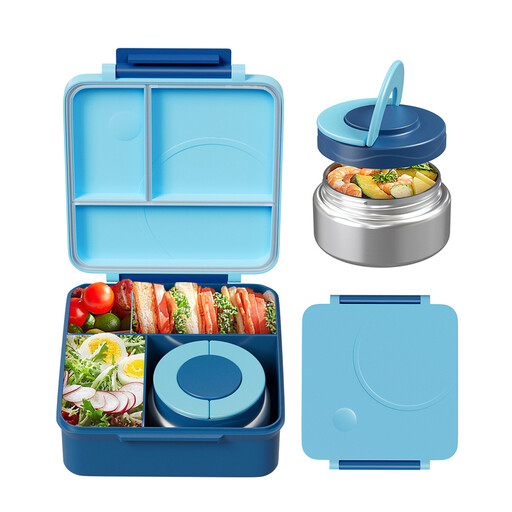
Why This Fits Their Persona: A divided lunch box offers a straightforward format for weekday sandwiches, fruit and snacks without buying a multi-piece set.
The divided design makes the internal layout clear, so capacity is not dependent on a single large cavity.
The product is listed with a 54oz capacity and a single-latch divided format.
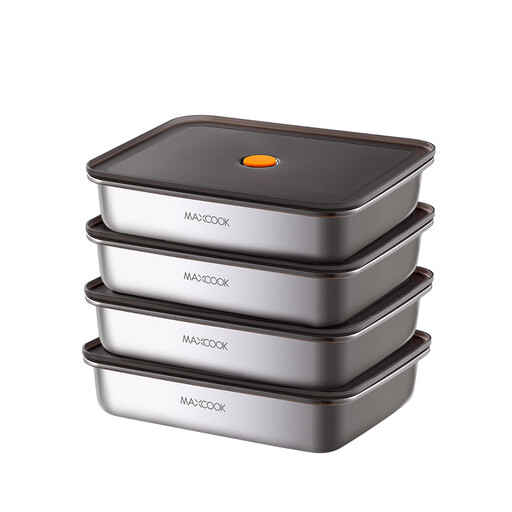
Why This Fits Their Persona: This four-piece set suits shoppers who want reusable containers for lunches, fridge organisation and different meal portions.
The set provides multiple containers rather than relying on one oversized box for every use.
The listing specifies 316L stainless steel, four containers, secure-fitting lids, dishwasher suitability and freezer use.

Why This Fits Their Persona: A wide-mouth insulated jar is suited to commuters, outdoor users and anyone carrying soup or other hot meals.
Its stated vacuum-insulated, leakproof design is more suitable for hot food than a flat lunch box, although the manufacturer advises careful transport.
The product has a 1.4-litre capacity, 304 stainless-steel construction, wide mouth and stated 4–6-hour thermal retention.

Why This Fits Their Persona: The varied sizes work for packed snacks, individual lunches, leftovers and planned meals across the week.
Three capacities reduce the need to use one container that is either too small for a meal or unnecessarily large for a snack.
The set includes 600ml, 1100ml and 2200ml containers with lids and is listed as dishwasher-safe and freezer-safe.
We have compiled a complete, real-time list of products that fully satisfy these strict selection criteria and UK safety regulations.
They can be practical for regular packed lunches because one container can be used repeatedly instead of buying disposable packaging. The value depends on durability, cleaning convenience and whether the capacity suits your normal portions.
A bento lunch box normally combines compartments in one portable unit, helping separate foods during transport. Meal prep containers are often sold in sets with several individual boxes and capacities, making them more adaptable for batch cooking, leftovers and fridge storage.
Some are listed as both dishwasher-safe and freezer-safe, but this varies by model. Always check the product instructions, especially for lids and seals. Stainless steel containers should generally not be placed in a microwave, and the Maxcook 3-piece 316 stainless steel set specifically warns against microwave use.