
24/7 Customer Support

Free returns

Same-day & Next-day Delivery

Quality Guaranteed

Unlock Your Welcome Offers: FREE Delivery | Up to 80% OFF | Free 30-day JoyPlus trial
Download the APP
For work, school, commuting and meal preparation, reusable lunch boxes and food storage containers can reduce disposable packaging and make packed meals easier to manage. However, attractive colours and phrases such as “airtight” or “insulated” do not always tell you whether a container suits your daily routine.
The practical choice depends on capacity, closure design, compartments, cleaning instructions and intended temperature use. A container that works for dry sandwiches may be unsuitable for soup, while a large meal-prep set may be inconvenient for a crowded office fridge.
A lid can fit tightly without being suitable for transporting liquids. Check whether the product includes a silicone seal, locking clips or a screw-fitting lid, and read the usage instructions carefully. Even a leak-resistant container may spill if it is tipped on its side or overfilled.
For soups, stews and porridge, an insulated food jar with a properly threaded lid is generally more appropriate than a standard divided lunch box. Always test the seal at home before placing the container in a work or school bag.
A divided lunch box is useful for keeping fruit, sandwiches, snacks and sides separate. Yet fixed compartments can limit the size of the main portion and may not prevent moisture moving between foods unless each section is independently sealed.
A bento lunch box or divided lunch box suits organised meals, but a single-compartment stainless steel lunch box can be more flexible for pasta, salads, leftovers or larger portions.
Stainless steel containers should not be placed in a microwave unless the product specifically permits it; most do not. Similarly, “dishwasher-safe” and “freezer-safe” claims should be checked against the complete product description, including the lid.
Vacuum-insulated food jars require particular care. Their lids and seals may need hand washing, and the jar itself must not be microwaved. Follow the supplied instructions rather than relying on the material alone.
Think about the meal you normally carry rather than selecting the largest capacity available. A compact lunch for a child or light office meal may need around 500–800ml, while meal prep and leftovers can require 1,100ml or more.
Also check external dimensions. A container measuring 18 × 15 × 6.7cm may fit a work bag, but its rectangular shape could be unsuitable for a narrow lunch bag. For school or commuting, compare the box with the space available in your backpack, desk drawer or fridge shelf.
304 stainless steel is widely used for reusable food containers and is resistant to everyday staining, odours and corrosion. 316 stainless steel is specified in some products as a grade with additional corrosion resistance. The grade alone does not determine the quality of the lid, hinges or seal, so inspect the whole construction.
Plastic lids may be lighter and easier to see through, while metal containers can be durable but are not generally suitable for microwave heating. If you need freezer-safe containers, check the product listing for an explicit freezer-use statement.
For dry or semi-dry lunches, locking clips and a removable silicone seal can make cleaning easier and help reduce spills. For liquids, look for a screw lid and clear instructions about upright transport.
Dishwasher-safe food containers are convenient for frequent use, but removable seals should still be taken out and dried properly. Food residue trapped under a gasket can create odours and affect sealing.
An insulated food jar is designed for temperature retention rather than compartmentalised meals. The supplied product information for selected Maxcook jars states 4–6 hours of thermal retention, with pre-heating or pre-chilling recommended. Actual results depend on starting temperature, fill level and how often the lid is opened.
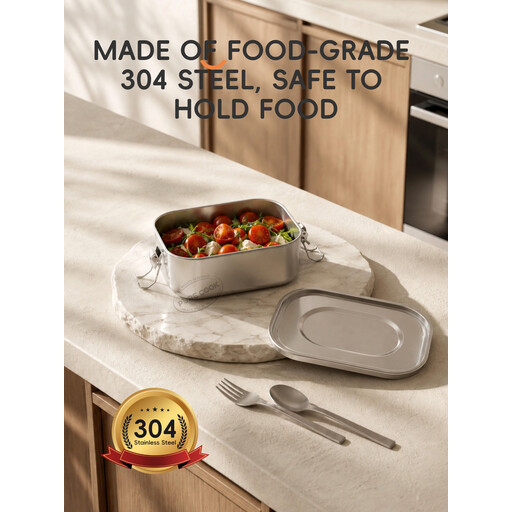
Why This Fits Their Persona: A straightforward single-compartment option for office workers, students or anyone replacing a disposable lunch tub with one reusable lunch container.
It has a removable silicone seal and lockable clips, making the closure components visible and removable for cleaning.
304 stainless steel construction; listed capacity of 61.2 fl oz and dishwasher-safe design.
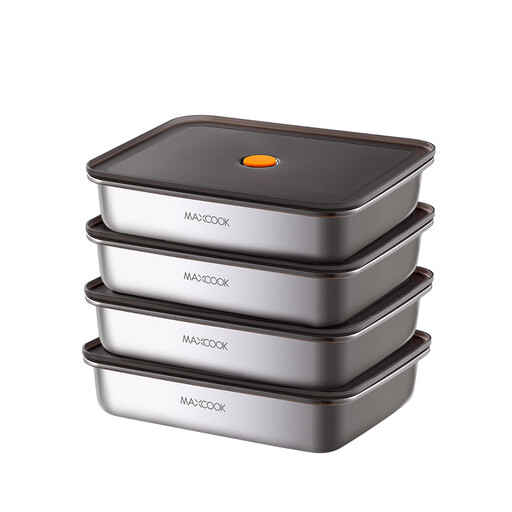
Why This Fits Their Persona: Suitable for shoppers building a coordinated storage system for lunches, leftovers, fridge organisation and regular meal preparation.
The set description clearly identifies the material, lids, dishwasher suitability and freezer suitability, reducing uncertainty around everyday storage.
Four containers provide different storage options; 316L stainless steel and secure-fitting lids are specified.
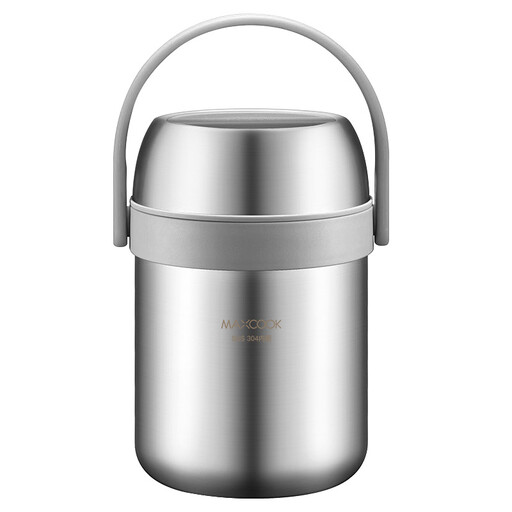
Why This Fits Their Persona: A practical match for commuters, outdoor users and workers carrying soup, stew or another substantial hot meal.
Its wide-mouth format is intended for filling and eating, while the instructions explain pre-heating, hand washing and upright transport.
1.5-litre capacity; vacuum insulation and a leak-resistant lid are specified. It is not suitable for microwave use.
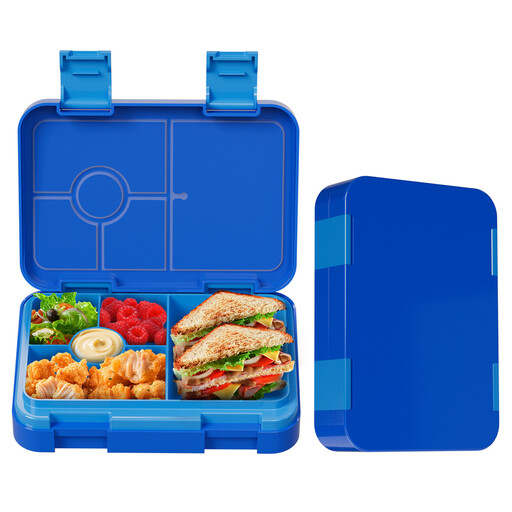
Why This Fits Their Persona: Five sections can help parents, students and office workers separate a varied packed meal without adding several individual tubs.
The double-latch design provides two visible closure points; buyers should still confirm the seal arrangement before carrying liquids.
Five compartments support portion separation; double latches are specified for the lid.
We have compiled a complete, real-time list of products that fully satisfy these strict selection criteria and UK safety regulations.
Yes, they can be suitable for chilled leftovers, packed lunches and meal preparation, provided the lid seals correctly. They are generally not suitable for microwave heating, so transfer food to a microwave-safe dish before reheating.
A lunch box is designed mainly for solid foods and may include compartments. An insulated food jar uses vacuum insulation to help retain temperature and is more suitable for soup, porridge, curry or stew. It normally needs upright transport and hand cleaning.
Lifespan depends on material, frequency of use, cleaning and lid condition. Stainless steel bodies can remain usable for a long time, but silicone seals and plastic lid components may wear sooner. Regularly checking these parts is more useful than relying on a fixed lifespan promise.