
24/7 Customer Support

Free returns

Same-day & Next-day Delivery

Quality Guaranteed

Unlock Your Welcome Offers: FREE Delivery | Up to 80% OFF | Free 30-day JoyPlus trial
Download the APP
Packing food for work, school, commuting or a weekend walk can save money, but the wrong container quickly becomes inconvenient. A lunch box that leaks in a work bag, a seal that traps food smells or a jar that is too large for your daily portion can turn a sensible purchase into wasted spending.
This guide compares reusable lunch boxes and insulated food jars by practical features rather than promotional language. It also highlights common buying traps, key specifications and suitable options for different UK lifestyles.
A product described as a leak-proof lunch container still depends on its seal, clips, lid design and how it is transported. Some containers are suitable for dry foods but less appropriate for soups, sauces or yoghurt. A removable silicone seal can help with cleaning, but it must be seated correctly after washing.
Before buying, check:
A divided lunch box may look versatile, but multiple small sections can limit what you pack. A bento lunch box with five compartments may suit snacks, fruit and sandwiches, while a single-compartment model is often more practical for pasta, salad or a larger meal.
Look at the stated capacity and internal layout, not only the number of sections. A 54oz container, for example, offers considerably different packing flexibility from a compact lunch box intended for a child’s smaller meal.
Stainless steel lunch boxes are reusable and resistant to staining, but they are not automatically suitable for microwaves. Metal containers should not be microwaved. Some are dishwasher-safe, while others require hand washing, particularly where silicone seals or insulated lids are involved.
Material grades also differ. 304 stainless steel is widely used for food storage, while 316 stainless steel is specified in some products for increased corrosion resistance. The grade is only one factor: lid construction, capacity, dimensions and cleaning requirements still affect everyday usability.
For UK work lunches, check whether the container fits inside your existing backpack, tote or office fridge. Large jars can be useful for batch-cooked meals but may be heavy when filled. Smaller lunch boxes are easier for children to carry, although they may not hold a full adult portion.
When comparing meal prep containers, consider:
A divided lunch box helps separate dry foods and can reduce the need for several small containers. However, compartments do not necessarily mean that every section is independently sealed. If you need to carry dressing, soup or a runny food, check for a full lid seal or use a dedicated sealed pot.
Secure latches should close without excessive force. Removable seals are useful because they allow food residue to be cleaned from the groove. Dry all parts fully before reassembly to reduce odours and moisture build-up.
An insulated food jar, soup thermos or vacuum food jar uses a vacuum layer to slow heat transfer. Product performance varies with starting temperature, food quantity, ambient conditions and how often the lid is opened. The listed Maxcook jars specify approximately 4–6 hours of thermal retention, making them suited to a typical commute, school day or short outdoor trip rather than indefinite storage.
For better temperature retention, pre-heat or pre-chill the jar with hot or cold water for a few minutes. Hot food can cause burns, so allow contents to cool to a safe eating temperature before consuming directly from the jar. Never microwave a stainless steel container.
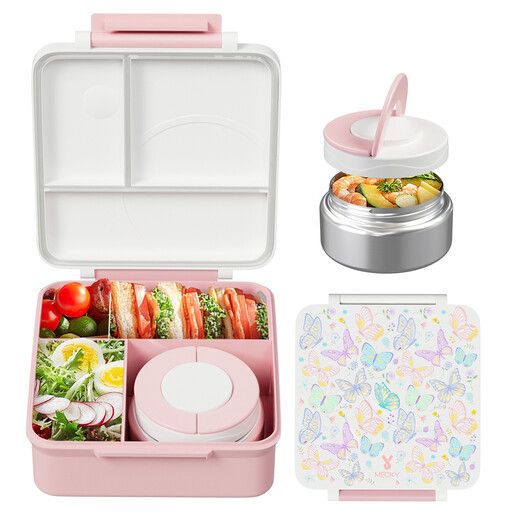
Why This Fits Their Persona: Its 54oz capacity and divided layout suit shoppers moving from disposable bags to a reusable lunch box for work, school or daily travel.
The divided format helps organise foods without needing several separate boxes. Check the lid seal before carrying liquid foods.
54oz stated capacity; divided design; single-latch closure.
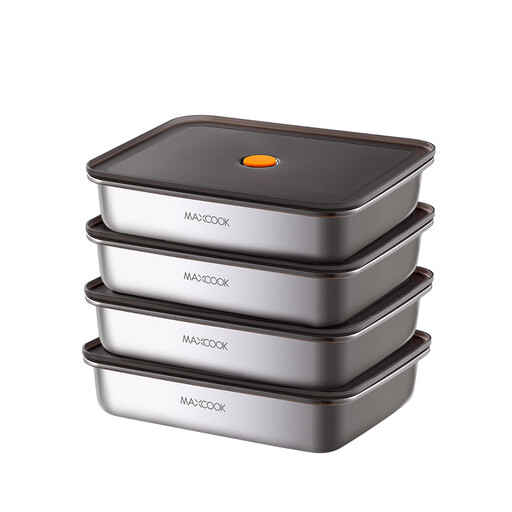
Why This Fits Their Persona: A multi-piece set is practical for shoppers who prepare lunches, leftovers and snacks in advance and want reusable stainless steel food containers in different sizes.
The set avoids relying on one oversized box for every meal. Confirm the individual capacities and lid fit before packing liquid foods.
Four containers; 316L stainless steel; listed as suitable for dishwasher and freezer use.

Why This Fits Their Persona: The large capacity suits commuters, outdoor users and households carrying soup, stew or another substantial hot meal.
Its wide mouth makes filling and cleaning more straightforward than a narrow flask. Keep it upright and follow the hot-food handling warnings.
1.5L stated capacity; 316 stainless steel; vacuum insulation; wide-mouth opening.
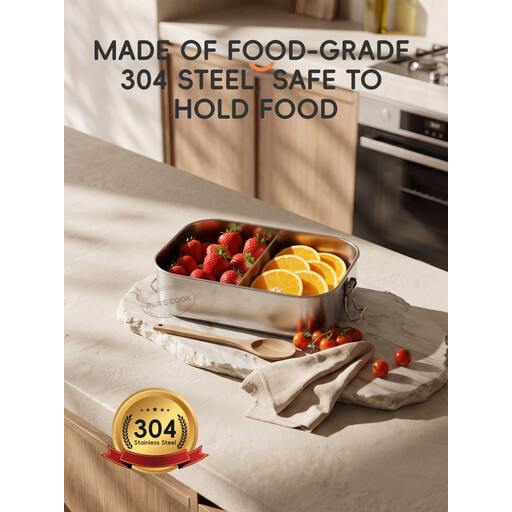
Why This Fits Their Persona: The dual-compartment layout separates a main meal from fruit, snacks or sides, making it suitable for school lunches and portion planning.
The product listing specifies lockable clips, a removable silicone seal and a leak-proof design. Check the seal after cleaning to maintain the closure.
304 stainless steel; two compartments; removable silicone seal; listed as dishwasher-safe.
We have compiled a complete, real-time list of products that fully satisfy these strict selection criteria and UK safety regulations.
They can be suitable for a typical working day, depending on the product, starting temperature and how often the lid is opened. The Maxcook jars listed here specify around 4–6 hours of thermal retention. Pre-heating the jar and filling it appropriately may support more consistent results, but temperature retention is not unlimited.
There is no fixed lifespan. Stainless steel bodies can remain serviceable for a long time when protected from severe dents and corrosive cleaning products, while seals and clips may need earlier replacement. Inspect the lid and gasket rather than judging condition by the outer appearance alone.
Some are listed as dishwasher-safe, including the Maxcook 316L food container set and the PURECOOK lunch box described above. Insulated food jars commonly require hand washing to protect the vacuum structure, lid and seal. Always follow the individual product instructions before placing any part in a dishwasher.