
24/7 Customer Support

Free returns

Same-day & Next-day Delivery

Quality Guaranteed

Unlock Your Welcome Offers: FREE Delivery | Up to 80% OFF | Free 30-day JoyPlus trial
Download the APP
Buying reusable water bottles can seem straightforward until a lid leaks inside your laptop bag, a bottle develops a lingering taste or a supposedly practical design becomes awkward to clean. Marketing often focuses on colours, capacity and temperature claims, while the details that affect everyday use receive less attention.
Before choosing a bottle, watch for three common traps:
The right choice depends on where and how you intend to use it.
For commuting, school and office use, 500ml to 750ml is usually manageable in a backpack or work bag. A 1L water bottle is more suitable for long shifts, gym sessions, training or outdoor activities where refilling may be inconvenient.
Large bottles and insulated tumblers can be physically wider than standard bottles. If you plan to use one in a vehicle, check whether the base is tapered and whether the stated dimensions are compatible with your car cup holder. A handle can improve carrying comfort, but it also adds bulk.
Stainless steel water bottles are commonly selected for durability and resistance to odour or flavour transfer. Double-wall vacuum construction is useful when maintaining the temperature of hot or cold drinks is important. However, many insulated bottles should be hand washed, and they must not be used in a microwave.
Glass water bottles can provide a neutral drinking taste and make it easier to see the contents. Borosilicate glass is used in some models, but it remains glass and can break if dropped or exposed to sudden temperature changes. A silicone sleeve or base offers limited protection rather than a guarantee against breakage.
Plastic and aluminium bottles are often lighter, which can suit school bags, sports kits and matchday use. Check the manufacturer’s instructions before adding hot, carbonated or pressurised drinks. Look for clear information about the cap, seal and cleaning method rather than relying only on the word “reusable”.
For products used with drinks, check the supplied packaging and instructions for relevant food-contact information, care guidance and warnings. UK consumers should also inspect seals and coatings regularly, particularly after dents, cracking or heavy use.
A leakproof water bottle should have a properly fitted gasket or seal and a lid that closes securely. Straw lids are convenient for walking, commuting and gym sessions, but they may contain several removable parts that need cleaning. A screw cap is generally simpler to rinse and inspect.
Dishwasher compatibility can save time, although the lid, silicone sleeve and straw may have separate instructions. Bottles should be emptied and dried fully after use, especially if they have held milk, juice or other perishable drinks.
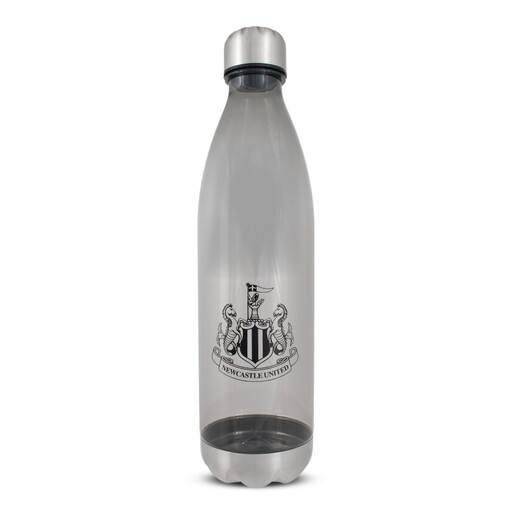
Why This Fits Their Profile: A practical starting point for shoppers wanting a generous capacity, lightweight construction and officially licensed club styling for school, work, the gym or matchday use.
The clear body makes the remaining liquid visible, while the 1L capacity reduces frequent refilling. Check that the screw-top lid is fully closed before placing it in a bag.
1L capacity; clear, durable plastic construction; officially licensed Newcastle United graphics.
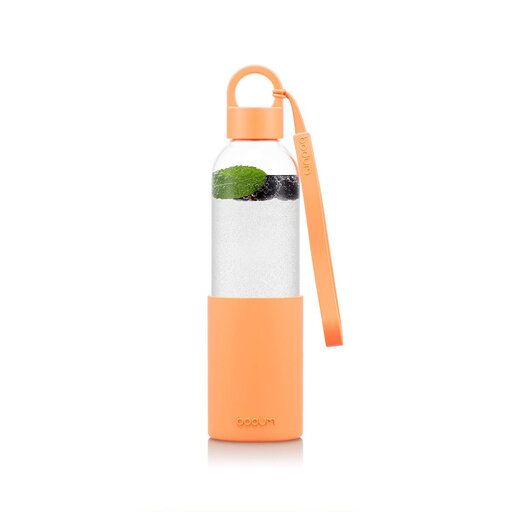
Why This Fits Their Profile: Suitable for commuters and office users who prefer a compact glass bottle with a silicone base, carrying strap and a visible 0.5L capacity.
The product description specifies a leakproof screw cap with silicone gasket and warns that the glass needs careful handling. This makes its limitations clearer than a generic spill-resistance claim.
Borosilicate glass body; dishwasher-safe bottle; removable silicone base and carrying strap.
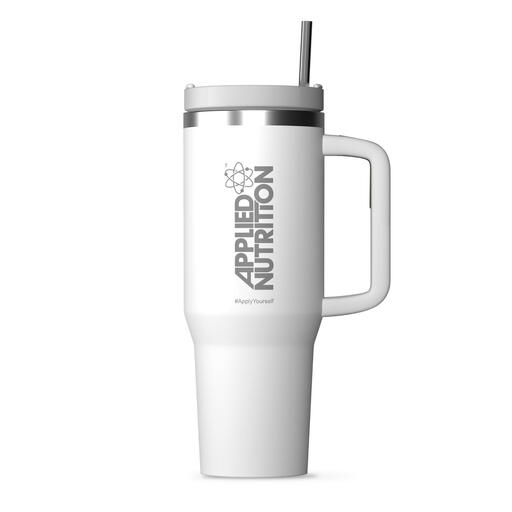
Why This Fits Their Profile: Designed for gym users, outdoor activities and long working days where a large drink volume, handle and straw are useful.
Its 1200ml capacity is clearly stated, but buyers should allow for the larger footprint and hand-wash it as directed. The instructions also advise against carbonated drinks and extremely boiling water.
Double-wall vacuum insulation; built-in straw and handle; large 1200ml capacity.
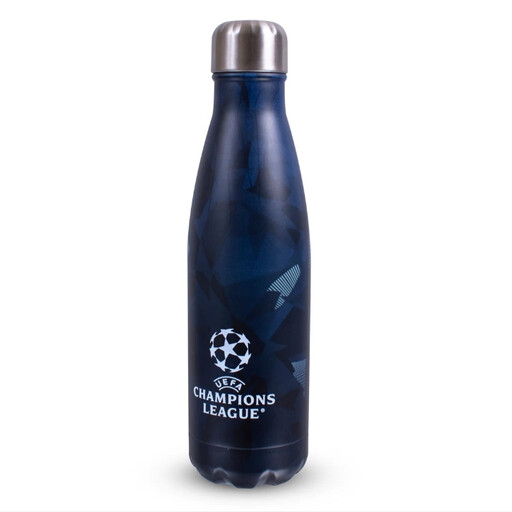
Why This Fits Their Profile: A compact choice for fans who want official Champions League branding alongside insulated stainless steel construction for commuting, sport and everyday use.
The specification identifies 304 stainless steel, double-wall vacuum insulation and a leakproof screw cap. It also clearly advises hand washing and avoiding carbonated drinks.
500ml capacity; 304 stainless steel; stated hot and cold holding times; sweat-resistant exterior.
We have compiled a complete, real-time list of products that fully satisfy these strict selection criteria and UK safety regulations.
Football fans can also compare officially licensed Newcastle United water bottle, Tottenham Hotspur water bottle and Manchester City water bottle designs, alongside UEFA Champions League water bottles. Check the capacity and lid type before selecting one for training or a matchday bag.
For longer journeys, travel mugs and insulated tumblers may be more suitable than a narrow sports bottle. A 1.2L handled tumbler offers fewer refills, while a 500ml insulated mug is easier to carry on public transport. Reusable sports bottles with simple caps may be more convenient during active movement.
They can reduce repeated purchases of single-use drinks, but the running cost depends on the bottle price, cleaning products, replacement seals and how often it is used. A durable bottle used regularly is more likely to offer practical value than one bought for occasional use.
Wash it after each use where possible, particularly after flavoured drinks. Remove the lid, gasket, straw or sleeve according to the instructions, rinse thoroughly and allow every part to dry. Inspect for cracks, odours, damaged seals or worn coatings before continued use.
There is no fixed lifespan. Plastic, glass, aluminium and stainless steel bottles can remain usable for different periods depending on drops, dents, heat exposure, cleaning and seal condition. Replace a bottle if it is cracked, leaking, sharply dented, internally damaged or difficult to clean properly.