
24/7 Customer Support

Free returns

Same-day & Next-day Delivery

Quality Guaranteed

Unlock Your Welcome Offers: FREE Delivery | Up to 80% OFF | Free 30-day JoyPlus trial
Download the APP
Driving a car without modern conveniences can feel like a compromise. While newer vehicles come factory-fitted with large touchscreens and safety aids, owners of cars manufactured before 2018 often miss out. If you're tired of blind spots while parking or wish you had seamless access to navigation and media, a reversing camera kit is a practical upgrade.
However, the market is flooded with options, and it's easy to make a costly mistake. Before you buy, be aware of these common purchasing pitfalls that catch many UK drivers out:
To make a smart purchase, focus on the technical specifications that genuinely impact performance. These core parameters will help you separate the functional from the frustrating.
For a dash cam front and rear system, video clarity is non-negotiable. A true 4K dash cam (3840x2160 pixels) captures number plates and road signs with precision, which can be invaluable. For the rear parking assist camera, a genuine 1080p resolution is sufficient for clear visibility. Look for sensors with WDR (Wide Dynamic Range) technology. This feature balances light and dark areas, preventing the image from being washed out by bright headlights or lost in deep shadows, dramatically improving night-time performance.
A simple reversing camera kit is one thing, but many modern solutions offer a complete infotainment upgrade. A portable car display can serve as a central hub, providing not just a view from your reverse camera but also a wireless Apple CarPlay screen or Android Auto screen. This allows you to use apps like Waze, Google Maps and Spotify directly on a large, clear touchscreen. For these all-in-one systems, a stable, wired connection for the rear camera is generally more reliable than wireless alternatives, ensuring a lag-free video feed when you need it most.
Your choice of form factor depends on your preference for integration and cabin aesthetics.
car screen with reverse camera that sits on the dashboard is easy to install and often features a larger display. These are highly versatile and can be moved between vehicles.Based on these practical criteria, we've matched several products to different driver profiles to help you find the right fit.
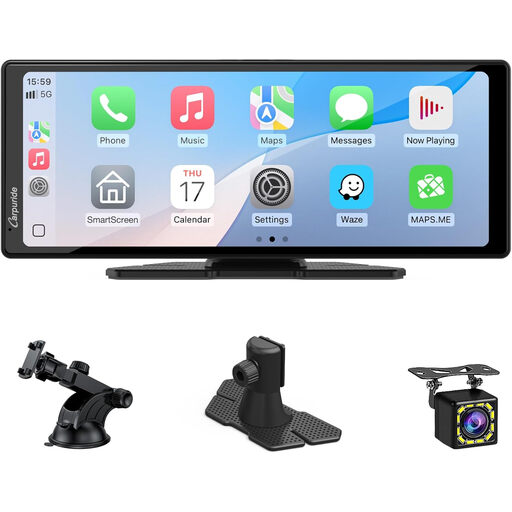
Why This Fits Their Persona: Ideal for drivers who want a single, non-permanent device that provides navigation, media and safety features without modifying the car's original dashboard. The large screen is excellent for viewing maps and the reverse feed simultaneously.
It uses a wired connection for the included 720p reversing camera, completely avoiding the signal lag and dropouts common in cheap wireless systems.
Seamless wireless Apple CarPlay and Android Auto on a large 10.26-inch screen, providing a modern infotainment experience in any car.
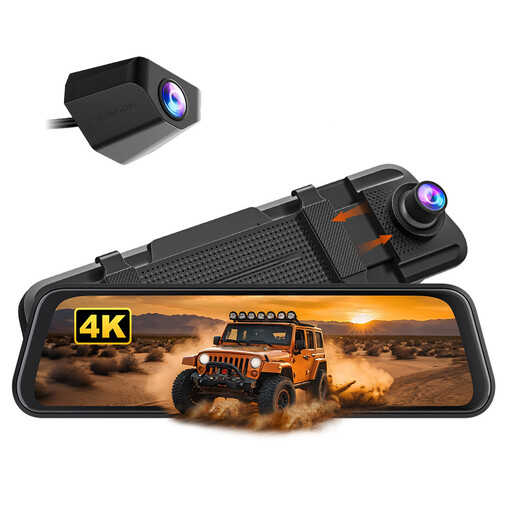
Why This Fits Their Persona: Perfect for the driver who values a clean, uncluttered cabin. This unit straps over the existing mirror, providing advanced features without a bulky screen on the dashboard.
It delivers a genuine 4K front camera and 1080p rear camera, avoiding the misleading resolution claims of cheaper models and ensuring footage is sharp and usable.
Discreet, OEM-style integration. The 10-inch touch screen provides a full-width rear view, eliminating blind spots far more effectively than a standard mirror.
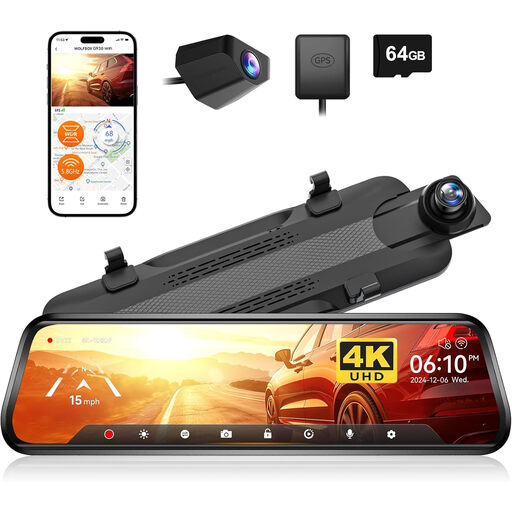
Why This Fits Their Persona: For the driver who wants the highest level of performance and data. This model is packed with features for recording, safety and connectivity, appealing to those who appreciate detailed technical specifications.
It sidesteps the hidden cost trap by including a 64GB memory card and an external GPS module in the box, providing key functions without requiring immediate extra purchases.
Features high-speed 5.8GHz WiFi for fast video transfers to your phone and dynamic reverse guidelines that move with your steering wheel for superior parking assistance.
We have compiled a complete, real-time list of products that fully satisfy these strict selection criteria and UK safety regulations.
For many kits, particularly portable dash-mounted screens and strap-on mirror cameras, installation is a straightforward DIY job. It typically involves routing a cable from the rear camera to the main unit and plugging the device into your car's 12V socket. However, for features like a 24/7 parking monitor, a hardwire kit must be connected to the car's fuse box. If you are not comfortable with vehicle electrics, professional installation is recommended for this part.
Video file sizes depend on resolution. A dual-camera system recording in 4K (front) and 1080p (rear) can use approximately 15-20GB of storage per hour of driving. A 128GB microSD card is a good starting point, providing enough space for several hours of footage before the loop recording function begins overwriting the oldest files. Always use a high-endurance card (Class 10/U3) designed for constant rewriting.
Most mirror dash cams are designed with universal adjustable straps that fit a wide range of factory-fitted rearview mirrors. They are flexible and secure tightly around the existing mirror housing. Before purchasing, it's always a good idea to check the product's specified dimensions against your own mirror, but compatibility is rarely an issue for standard vehicles.