
24/7 Customer Support

Free returns

Same-day & Next-day Delivery

Quality Guaranteed

Unlock Your Welcome Offers: FREE Delivery | Up to 80% OFF | Free 30-day JoyPlus trial
Download the APP
Getting your lighting right can transform your content from amateur to professional. For many UK-based YouTubers, vloggers and photographers, the challenge is finding a lighting solution that is both powerful and portable. An RGB video light offers the flexibility to create natural-looking scenes or vibrant, stylised shots, all from a single compact unit.
This guide is designed to help you understand the key features to look for in a portable camera light and to present some carefully selected options that balance performance, portability and price.
Navigating the specifications of on-camera lighting can be confusing. Here are a few practical points to consider before making a choice.
The main advantage of an RGB video light is its colour versatility. Look for two key specifications:
For creators on the move, size and battery life are critical. A good portable camera light should be small enough to mount on your camera or place in a tight space. Check the battery capacity, measured in milliampere-hours (mAh). A larger number generally means a longer run time. Most modern units feature a USB-C charging port, which is convenient for topping up the battery with a power bank while out on a shoot.
Brightness is important, but so is the quality of the light. The Colour Rendering Index (CRI) measures how accurately a light source reveals the true colours of a subject. A CRI of 95 or higher is considered excellent for video and photography, ensuring that skin tones and product colours look natural and not washed out. Brightness is often adjustable, giving you precise control over your scene's exposure.
Here are a few recommendations that offer a great combination of features for different types of content creators.
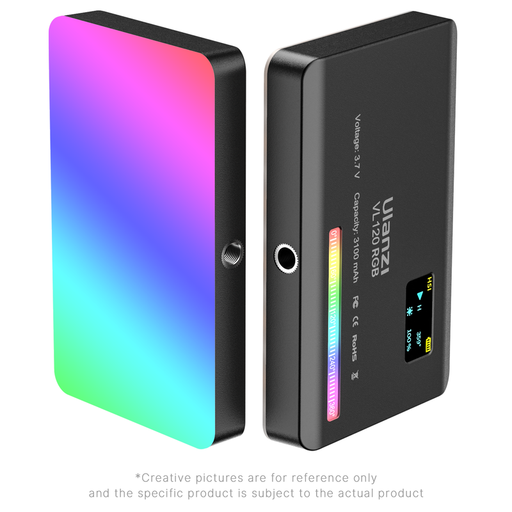
Why It Stands Out: The VL120 is a compact powerhouse that packs full RGB capabilities into a pocket-sized frame. It’s an incredibly versatile tool for anyone needing a primary or secondary on-camera light.
Pros:
Who is it for? Vloggers, YouTubers and run-and-gun videographers who need a reliable, all-in-one lighting solution that can adapt to any environment, from natural-looking fill light to creative colour effects.
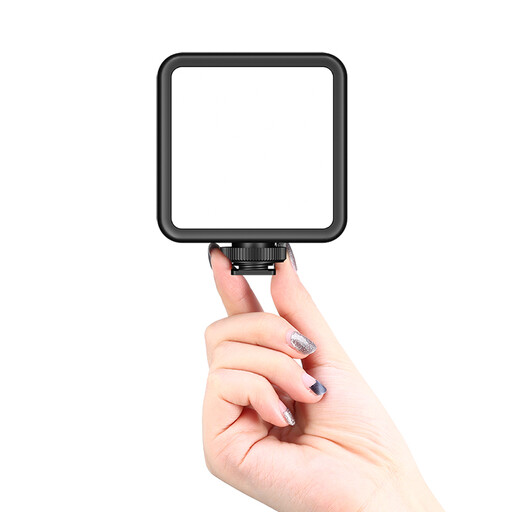
Why It Stands Out: While not a full RGB light, the VL49 is a brilliant choice for those prioritising portability and simplicity. Its magnetic back and tiny footprint make it exceptionally useful for placing light in unconventional spots.
Pros:
Who is it for? Content creators on a budget, macro photographers or anyone needing a small, discreet fill light. It's an excellent secondary light to complement a main key light or for adding a touch of light in product photography.
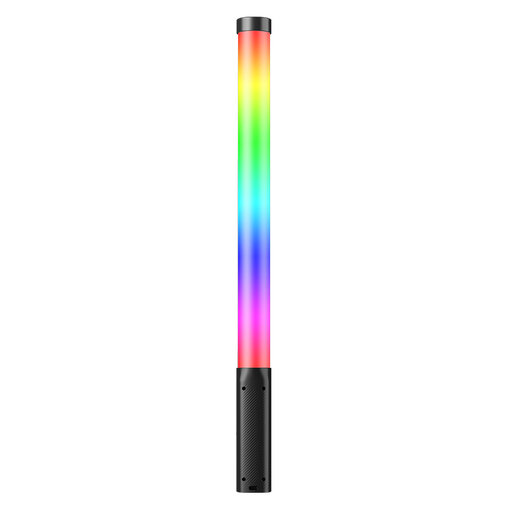
Why It Stands Out: The VL119 takes a different approach with its handheld light stick design. This form factor opens up new creative possibilities for shaping light, whether for portraits, product shots or atmospheric video scenes.
Pros:
Who is it for? Portrait photographers, product photographers and creative videographers who want a versatile tool for light painting, creating dramatic highlights or adding a wash of colour to a background.
If these specific models aren't quite what you're looking for or if you're interested in exploring other gear to complete your creator kit, there is a wider selection available.
Discover more lighting and camera accessories in our rechargeable camera category to find the perfect tools for your setup.
For video and photography where colour accuracy is important, aim for a Colour Rendering Index (CRI) of 95 or higher. This ensures that the light renders colours faithfully, making skin tones look natural and products appear as they would in person.
Absolutely. An RGB video light is a versatile tool that works just as well for still photography as it does for video. You can use it as a main light, a fill light to soften shadows or use the RGB functions to add creative colour accents to your portraits and product shots.
Most modern portable lights, including the ULANZI models mentioned, have built-in rechargeable lithium batteries. They typically charge via a standard USB-C port, meaning you can easily recharge them using a laptop, a wall adapter or a portable power bank, making them ideal for shooting on location.