Viewers putting together a savoury snack plate
Plain lightly salted rice cakes give you a base to pair with a topping or side. Compare the finished plate, not just the rice cakes, if fat content is your main consideration.


For a lower-fat rice-cake base to serve while watching TV, compare plain varieties by their fat content per 100g and choose toppings separately. The plain M&S, Kallo and Tesco products described by their makers list 2.5g–2.9g fat per 100g; flavoured and coated products can have different figures, so check the exact pack rather than relying on the words “rice cake”.
Plain lightly salted rice cakes give you a base to pair with a topping or side. Compare the finished plate, not just the rice cakes, if fat content is your main consideration.
If “light”, “low fat” or “reduced fat” catches your eye, read the fat figure per 100g on the exact product. The phrases do not tell you that different rice cakes have the same nutritional values.
If rice cakes are part of your evening plate, decide what else you want to serve with them. An NHS Healthier Families recipe, for example, pairs rice cakes with soft cheese, fruit, celery and nuts.
Start with the nutrition panel of the exact variety, then consider the toppings and portion you intend to serve.
| Priority | What to check | Your needs |
|---|---|---|
| Fat content | Compare fat per 100g across the exact products. M&S lists 2.5g for its Lightly Salted Rice Cakes, Kallo lists 2.8g for its Lightly Salted variety, and Tesco lists 2.9g for its Lightly Salted Rice Cakes. | I want a plain base and need to compare it with flavoured or coated alternatives on the same per-100g basis. |
| Coatings | Check both fat and sugars per 100g. Marks & Spencer lists 22.7g fat and 29.3g sugars per 100g for its Milk Chocolate Mini Rice Cakes. | A sweet rice cake might suit a different occasion, but I do not want to mistake its coating for the nutrition of a plain cake. |
| Salt and flavour | Compare salt per 100g as well as the flavour name. Ocado lists 1.3g for Snack a Jacks Salt & Vinegar Jumbo; the cited Tesco, Kallo and M&S plain products list 0.23g, 0.3g and 0.33g respectively. | If I choose a ready-flavoured snack, I want to know how its salt figure compares with a plain option. |
| Serving and additions | Check the serving size alongside per-100g values, then consider any topping or side separately. Kallo and Tesco each list 27 kcal per cake for the plain varieties cited here. | I may want more than plain cakes for a TV dinner, so the other foods on my plate matter to the comparison. |
| Ingredients and allergens | Read the current ingredients and allergen statement for the precise variety. Kallo says its Lightly Salted product may contain milk, sesame seeds and soya. | When avoiding an ingredient, I need to check the pack I am buying rather than assume all products from a brand have the same warning. |
Marks & Spencer lists 2.5g fat per 100g for its Lightly Salted Rice Cakes but 22.7g per 100g for its Milk Chocolate Mini Rice Cakes.
Compare the fat figures on the particular plain, flavoured or coated products you are considering.
A comparative label and a statement about the fat content of a product answer different questions; neither replaces the nutrition panel when comparing two packs.
Read the claim in its context and use fat per 100g for a like-for-like product comparison.
Ocado lists 1.3g salt per 100g for Snack a Jacks Salt & Vinegar Jumbo, while the cited plain Tesco, Kallo and M&S varieties list 0.23g–0.33g per 100g.
Check the salt figure for the exact flavour; “popped” and “lightly salted” do not describe the same measurement.
Toppings and sides become part of the plate. NHS Healthier Families shows one way of serving rice cakes with other foods in its soft cheese, fruit, celery and nut recipe.
Decide what you will serve together, then check the relevant labels and portions for the whole plate.
These examples describe particular products and ranges, not every rice cake made by each brand or what is sold on Joybuy.
Its plain and coated rice cakes illustrate why the exact variety matters.
Its Lightly Salted rice cakes are a plain wholegrain option in this comparison.
Its Lightly Salted Rice Cakes provide another plain product to compare per 100g.
Its Salt & Vinegar Jumbo product is a ready-flavoured rice-and-corn snack rather than a plain topping base.
These options include a plain organic rice cake, a Marmite-flavoured rice cake and lightly salted rice crackers. The crackers are a different format; compare each product’s own label when choosing a base or a ready-flavoured snack.
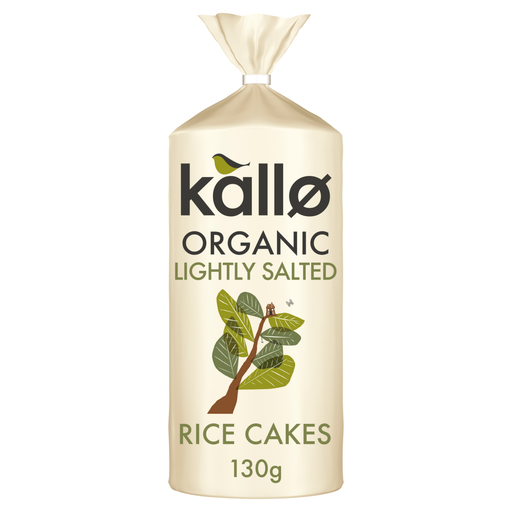 Image unavailable
A plain, lightly salted option to consider if you want to choose your own topping. This is the organic variety, not the Kallo Lightly Salted product whose nutrition and allergen details appear elsewhere in this article; check this pack’s own figures and warnings.
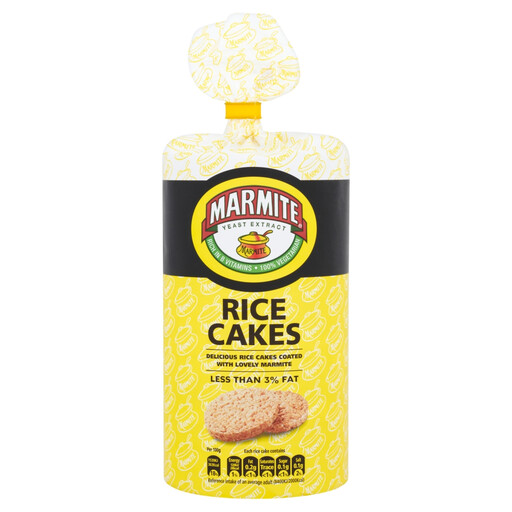 Image unavailable
A ready-flavoured rice cake for a savoury snack rather than a neutral topping base. Check the pack’s fat and salt figures when comparing it with plain varieties, and read its ingredients and allergen statement if you avoid particular foods.
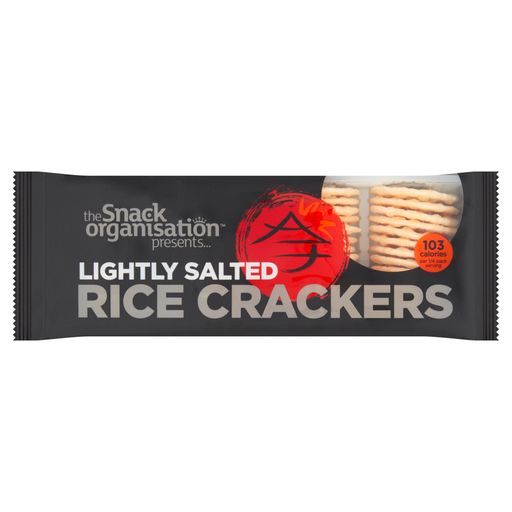 Image unavailable
Lightly salted rice crackers are a different snack format from the plain rice cakes compared above. Check the current pack’s fat and salt values before using either figure to compare products; the salt figures associated with this item conflict.
No. “Reduced fat” describes a comparison, while “low fat” describes a product’s fat content. To compare rice cakes for your plate, read the fat amount per 100g on each exact pack rather than treating either phrase as a general judgement about the product.
Yes, you can serve them with other foods rather than treating the plain cakes as the whole plate. For example, NHS Healthier Families has a recipe pairing rice cakes with soft cheese, fruit, celery and nuts; check the portions and labels of whatever you choose to add.
No: the cooking description does not establish its fat content relative to another product. Ocado lists 5.8g fat per 100g for Snack a Jacks Salt & Vinegar Jumbo, compared with 2.5g–2.9g per 100g on the cited plain M&S, Kallo and Tesco product panels.
Yes, if fat content is driving your choice: compare their per-100g panels rather than their shared name. Marks & Spencer lists 22.7g fat and 29.3g sugars per 100g for its Milk Chocolate Mini Rice Cakes, versus 2.5g fat per 100g for its Lightly Salted Rice Cakes.
Read the ingredients and allergen statement on the current pack of the exact variety. Kallo says its Lightly Salted product may contain milk, sesame seeds and soya; do not assume that statement describes a different Kallo variety.