Hosts setting out a savoury toppings table
A plain or lightly salted rice cake gives guests a base they can top themselves. Keep the toppings separate if you want the choice of topping to remain visible.


For a lower-fat party base, compare plain and lightly salted rice cakes that list no more than 3g fat per 100g, the NHS threshold for a low-fat food. Check salt and allergens on the pack, and serve toppings separately: a chocolate-coated cake or a generously topped plain cake is a different choice from the base alone.
A plain or lightly salted rice cake gives guests a base they can top themselves. Keep the toppings separate if you want the choice of topping to remain visible.
Compare salt alongside fat, and read the final pack's ingredients and allergen statements before serving food to guests with particular requirements.
Keep the lower-fat base distinct from flavoured or chocolate-coated choices rather than assuming every rice cake has a similar nutrition profile.
Choose the rice cake for its role on the table, then compare nutrition on the same per-100g basis and check the pack before serving.
| Priority | What to check | Your needs |
|---|---|---|
| Fat | Compare total fat per 100g across packs. The NHS describes 3g or less per 100g as low fat; per-cake values help with the amount you plan to serve. | I want a lower-fat option for the main platter, not one that only sounds light because it is a rice cake. |
| Salt | Check salt per cake as well as per 100g. Sainsbury's lists less than 0.01g per cake for its No Added Salt rice cakes; Snack a Jacks lists 0.26g per cake for Salt & Vinegar Jumbo. | If other savoury snacks are on the table, I would rather choose the main rice-cake base with its salt content in mind. |
| Toppings and coatings | Compare the cake and any coating separately from toppings you add. M&S lists 22.7g fat and 13.7g saturates per 100g for its Milk Chocolate Mini Rice Cakes. | I want guests to choose their own toppings without mistaking the finished snack for an untopped rice cake. |
| Guest requirements | Read the current ingredients and may-contain statement; do not use a gluten-free claim as a substitute for checking other allergens. Kallo's Organic Unsalted rice cakes carry a may-contain statement for milk, sesame and soya. | For guests with allergies or other dietary requirements, I need to check the particular pack I will serve. |
A plain base and a chocolate-coated cake can differ substantially: M&S lists 22.7g fat per 100g for its Milk Chocolate Mini Rice Cakes.
Compare fat per 100g and put coated cakes on the shopping list as a separate sweet option if you want them.
Sainsbury's No Added Salt rice cakes list less than 0.01g salt per cake, while Snack a Jacks Salt & Vinegar Jumbo lists 0.26g per cake.
Compare both values when choosing the main base; offer a stronger savoury flavour separately if it suits your spread.
Other allergen warnings can still matter. Kallo's Organic Unsalted rice cakes, for example, state that they may contain milk, sesame and soya.
Read the pack you will serve and keep its allergen information available to guests.
A rice cake's nutrition panel does not describe the spreads or other toppings added to it.
Serve toppings separately and check their labels too if the lower-fat objective applies to the finished snack.
Its lightly salted and organic unsalted wholegrain rice cakes provide two bases to compare for a party platter.
Its No Added Salt rice cakes are an example to consider when both fat and salt matter for the main platter.
Its lightly salted rice cakes and milk-chocolate-coated mini cakes illustrate different roles on a party table.
Salt & Vinegar Jumbo Rice Cakes offer a seasoned savoury option rather than a neutral toppings base.
Its Kallo Lightly Salted listing provides per-cake and per-100g values for comparing a lightly salted base.
These options include a lightly salted base and flavoured cakes for separate sweet or savoury parts of a New Year's Eve spread. Compare each pack's fat, salt, ingredients and allergen information for the role you have in mind.
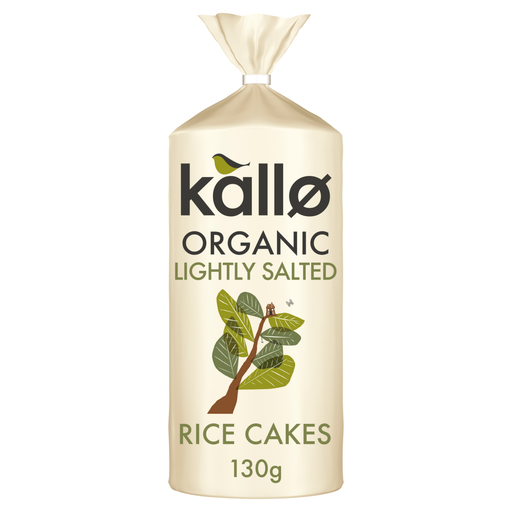 No image available
Consider this lightly salted base for a platter with toppings served separately. Check the pack's nutrition and allergen statements before serving.
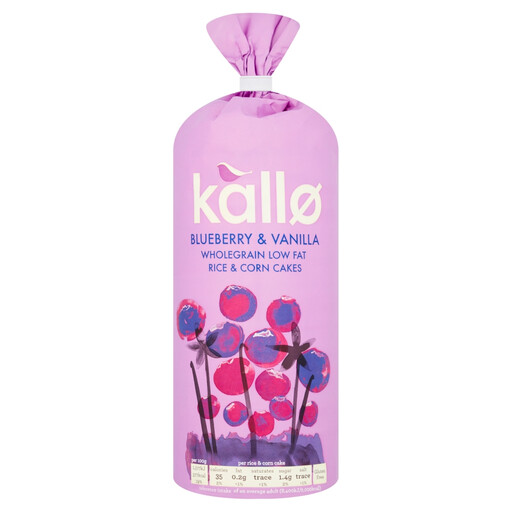 No image available
This flavoured rice-and-corn cake is an option for a separate sweet snack rather than a neutral savoury toppings base. Compare its sugars as well as fat per 100g on the pack.
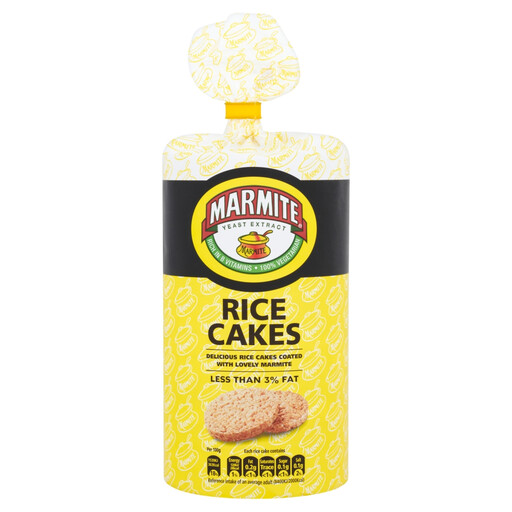 No image available
These flavoured cakes suit a separate savoury bowl rather than a plain toppings platter. Check salt and ingredients on the pack, particularly if guests require a gluten-free option.
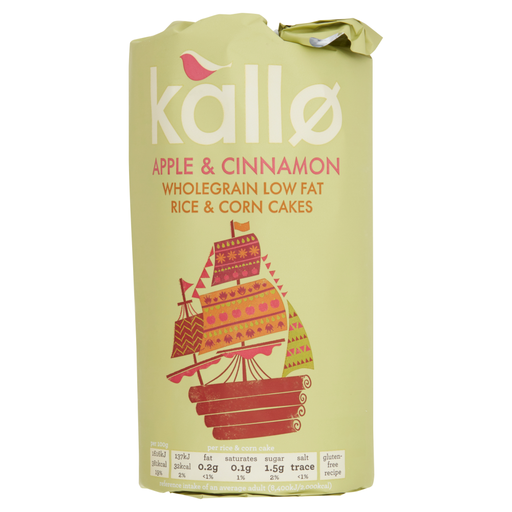 No image available
For a separate sweet selection, compare this apple-and-cinnamon option with the plain base using the fat and sugars values per 100g. Read the allergen statement on the pack before serving.
The NHS describes a food with 3g total fat or less per 100g as low fat. Use that per-100g figure to compare rice cakes, rather than relying on calories per cake or the word 'light' in a name.
Do not assume so. M&S lists 22.7g fat and 13.7g saturates per 100g for its Milk Chocolate Mini Rice Cakes, so compare a coated product's label with that of a plain base before deciding which role it fills.
Use per 100g to compare products on the same basis, then check per-cake figures for the amount you expect to serve. A guest's portion may differ from the portion shown on a label.
No. Read the particular pack's ingredients and allergen statement: Kallo states that its Organic Unsalted rice cakes may contain milk, sesame and soya.
No. Compare the nutrition panel for fat, saturates, sugars and salt as well. Flavouring or a coating can make a rice cake a different choice from a plain or lightly salted base.