Parents comparing fat values
If fat content matters for the packed lunch you are planning, compare the nutrition panels of the exact varieties you are considering. A rice cake’s light texture does not tell you its fat value.


For a school packed lunch, start with the fat value per 100g and the ingredients rather than assuming that every rice cake labelled “reduced fat” has the same nutritional profile. A plain Kallo option has published low-fat product information, while flavoured rice cakes need checking by variety; whichever you choose, read the current pack’s allergen advice and the school’s allergy policy before packing it.
If fat content matters for the packed lunch you are planning, compare the nutrition panels of the exact varieties you are considering. A rice cake’s light texture does not tell you its fat value.
For a child with coeliac disease or a food allergy, check the exact pack’s gluten-free labelling, ingredients and precautionary allergen advice. Consider the child’s individual plan and the school’s allergy policy too.
A flavoured rice cake may be more appealing than a plain one, but fat and salt values can differ between flavours in the same range. Compare the variety that will go into the lunchbox.
Check the nutrition panel first, then the exact ingredients and allergen advice, and finally whether the chosen flavour fits the lunch you intend to pack.
| Priority | What to check | Your needs |
|---|---|---|
| Fat content | Compare fat per 100g on the current packs; use per-cake values when deciding how many to pack. Tesco Groceries lists 2.7g fat per 100g for Kallo Organic Lightly Salted 130g. “Reduced fat” describes a comparison, not the product’s fat value on its own. | I want to compare the varieties on the same per-100g basis, then check the portion I am packing. |
| Allergens | Read the gluten-free label, ingredients and may-contain statement for the exact product. Kallo says its plain unsalted and lightly salted rice cakes are gluten free, but both may contain milk, sesame and soya. Check the school’s policy where an allergen restriction applies. | Before this goes into a lunchbox, I need to know whether its ingredients or precautionary warnings matter for my child or their school. |
| Flavour and salt | Compare the chosen flavour’s nutrition panel, not just its range name. Snack a Jacks lists 0.26g salt per Salt & Vinegar Jumbo cake and 0.13g per Black Pepper & Sea Salt Jumbo cake; those per-cake figures are not a substitute for a per-100g comparison. | My child may prefer a savoury flavour, but I still want to see how that particular cake compares with a plain option. |
Gluten-free labelling does not settle other allergen questions: Kallo’s labelled gluten-free plain cakes carry may-contain warnings for milk, sesame and soya.
Read the current pack for the exact variety. Where relevant, check it against the child’s individual plan and the school’s policy rather than relying on a previous purchase.
The wording describes a reduction against a comparator; it does not tell you how much fat the cake contains per 100g.
Use the nutrition panel to compare fat per 100g, then look at per-cake values for the number you plan to pack.
Snack a Jacks publishes different salt and fat values for different Jumbo flavours. Choosing by the range name alone can obscure the values for the actual cake.
Check the precise flavour’s pack, including its per-100g and per-cake information.
Food brought from home is part of school allergy-safety planning in England, according to Department for Education guidance issued in 2026.
Before packing a new product where an allergy concern applies, check the school’s current policy and any individual arrangements for the child.
These examples show why the exact product and flavour matter; a brand name alone does not establish a rice cake’s nutrition or allergen information.
Kallo publishes ingredients, nutrition and precautionary allergen advice for its plain Organic Unsalted and lightly salted wholegrain rice cakes.
Its Jumbo range offers flavoured rice cakes with nutrition values published by flavour.
Tesco Groceries lists a Tesco Lightly Salted Rice Cakes 130g own-label option alongside branded rice cakes.
These options include a plain lightly salted cake and several flavoured rice-cake snacks. Compare their current packs individually, particularly when fat values or allergens affect what can go into the school lunch.
 No image available
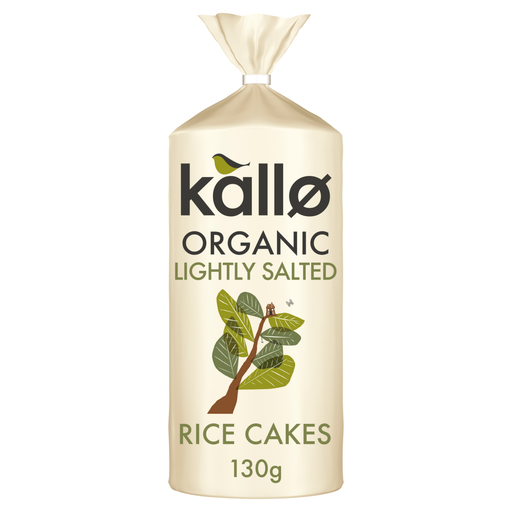
A plain, lightly salted option for comparing with flavoured cakes. Tesco Groceries lists 2.7g fat per 100g for the corresponding Kallo Organic Lightly Salted 130g product. Kallo’s lightly salted product information says it is gluten free but may contain milk, sesame and soya; check the current pack before packing it for school.
 No image available
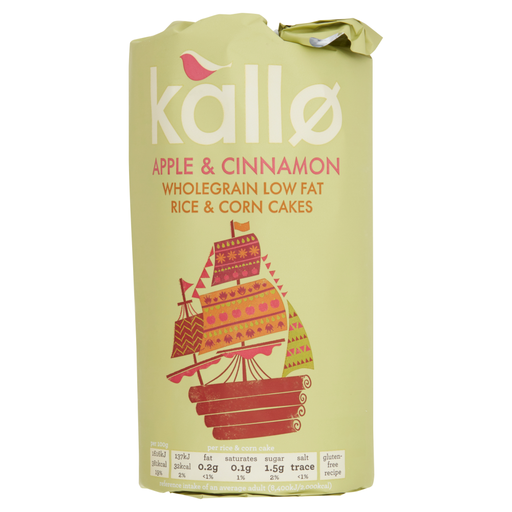
An apple and cinnamon variety if a flavoured cake is preferred. Compare the 127g pack’s fat and sugar values with those of a plain cake, and read its own ingredients and allergen advice before choosing it for a school lunch.
 No image available
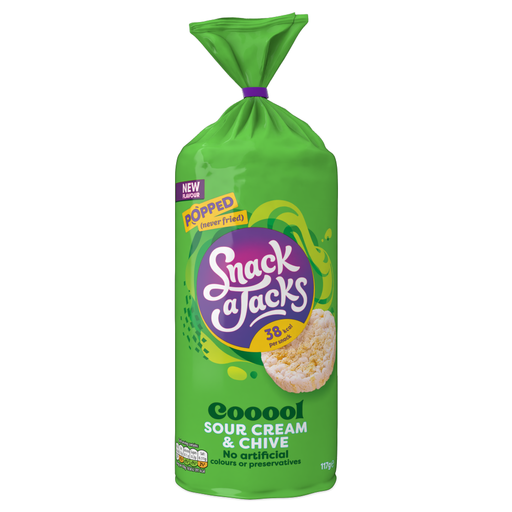
A savoury flavoured option in a 117g sharing pack. Check this flavour’s fat and salt values rather than using figures for another Jumbo variety, and read its ingredient and allergen declaration before packing a portion.
No image available
A Marmite-flavoured option for a child who likes that taste. Check the 110g pack’s fat and salt values against other cakes, and inspect its ingredients and allergen information rather than assuming its gluten status from the rice-cake category.
No. It describes a reduction compared with another product, not the cake’s fat value by itself. Read the fat figure per 100g on the exact pack when comparing varieties, then check the per-cake figure for the portion you plan to pack.
Do not assume so from the product category. Kallo labels its plain unsalted and lightly salted wholegrain cakes gluten free, but their product pages also warn that they may contain milk, sesame and soya. Check every chosen pack for the allergens relevant to the child.
Check the school’s current allergy policy and any individual arrangements before packing a product where an allergen concern applies. Department for Education guidance for England says schools must publish an allergy safety policy and should consider food brought from home, including packed lunches, in their allergy-safety arrangements.