Gluten-free marathon trainees
Look for a gluten-free claim on the exact pack, then check any separate milk, sesame or soya warning that matters to you. A gluten-free label does not address every allergen.


For a marathon-training snack, a plain rice cake labelled gluten-free can be a portable carbohydrate base, but the current pack must also fit any separate allergy requirements. Tesco Groceries and Kallo list 6.3 g and 5.6 g carbohydrate per cake respectively for two plain products; plan the portion and any accompanying food around the training session rather than treating one cake as a complete long-run fuelling strategy. The UK Sports Institute notes that carbohydrate needs rise with exercise duration and intensity.
Look for a gluten-free claim on the exact pack, then check any separate milk, sesame or soya warning that matters to you. A gluten-free label does not address every allergen.
Match the ingredients and any “may contain” statement to the specific allergen you need to avoid. As the Food Standards Agency explains, precautionary wording signals possible unintended allergen presence.
Check carbohydrate per cake before deciding how many to pack or what to eat alongside them. The UK Sports Institute’s guidance links carbohydrate needs to the duration and intensity of exercise.
Start with the allergen you must avoid, then compare carbohydrate portions and the ingredients of the exact format you plan to use.
| Priority | What to check | Your needs |
|---|---|---|
| Allergen fit | Read the current pack’s free-from claim, ingredients and precautionary statements. Tesco Groceries and Kallo both list possible milk, sesame and soya presence for their respective plain gluten-free cakes. | I need the label to address the particular allergen I avoid, not just say “gluten-free”. |
| Carbohydrate portion | Compare carbohydrate per cake for portion planning, or per 100 g across different formats. Tesco Groceries lists 6.3 g per cake for its Free From Wholegrain product; Kallo lists 5.6 g for Organic Unsalted. | For a longer session, I want to work out how the cakes and any accompanying food fit my fuelling plan. The UK Sports Institute says carbohydrate needs rise with exercise duration and intensity. |
| Ingredients and format | Check the exact variant’s ingredients, carbohydrate and fat values. Marks & Spencer lists 79.6 g carbohydrate and 2.5 g fat per 100 g for Lightly Salted Rice Cakes, versus 49.4 g carbohydrate and 16.2 g fat per 100 g for its Barbecue High Protein version. | Before a demanding run, I would choose a format whose ingredients and portion I have already tried in training, rather than assuming plain, coated and protein-enriched cakes are interchangeable. |
Tesco Groceries and Kallo list possible milk, sesame and soya presence for their respective plain gluten-free rice cakes. Gluten-free wording does not settle those separate allergy questions.
Check the current pack’s ingredients and precautionary wording against the specific allergen you avoid.
Tesco Groceries lists 6.3 g carbohydrate per cake for its Free From Wholegrain product, while Kallo lists 5.6 g for Organic Unsalted. The UK Sports Institute says carbohydrate needs increase with exercise duration and intensity.
Use the per-cake figure to plan your portion and try your overall food-and-fluid approach during training.
Marks & Spencer lists different carbohydrate and fat values for its Lightly Salted and Barbecue High Protein products; its Milk Chocolate Mini Rice Cakes also include milk chocolate and soya lecithin.
Compare the nutrition panel and allergen information for the exact variant you intend to eat.
An online product page cannot tell you what is printed on the particular pack you have in hand.
Read that pack’s current ingredients, allergen statements and storage directions before packing it for training.
These examples illustrate differences between specific rice-cake products; a brand name alone does not establish allergen suitability.
Tesco Groceries labels its Wholegrain Rice Cakes as wheat- and gluten-free.
Kallo’s Organic Unsalted Wholegrain Rice Cakes are labelled gluten-free.
Marks & Spencer lists both lightly salted and more complex gluten-free rice-cake formats.
Snack a Jacks lists several flavoured Jumbo rice-cake products.
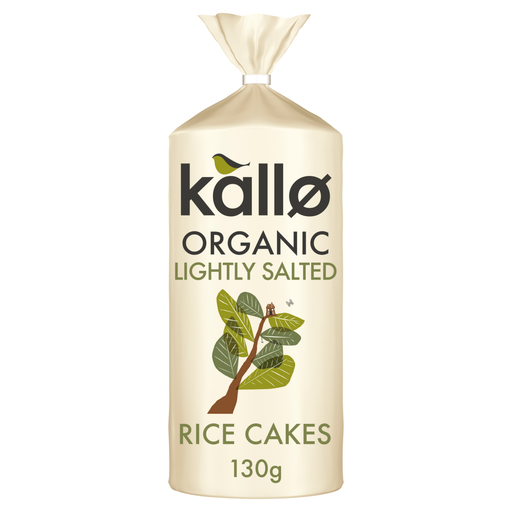
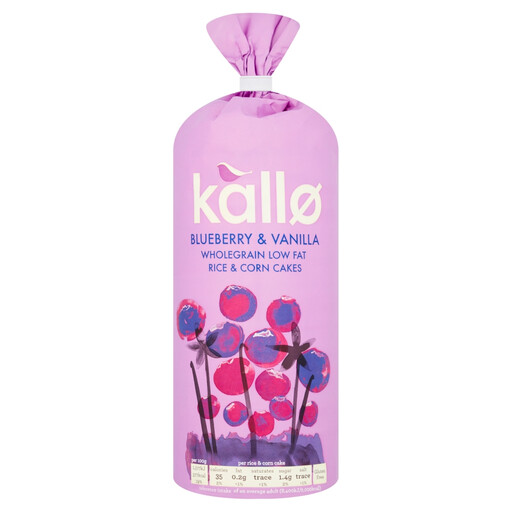
These Kallo options cover a lightly salted cake and a flavoured rice-and-corn cake. Check each current pack against your allergen requirements and planned carbohydrate portion.
 No image available
A lightly salted option to consider as part of a planned training snack. Check the current pack for its gluten-free claim, carbohydrate per cake and any milk precautionary wording relevant to your needs.
 No image available
A flavoured rice-and-corn option for a training snack. Check the exact pack’s gluten-free claim, carbohydrate information and milk, sesame and soya allergen wording before deciding whether it fits your needs.
Not necessarily. Tesco Groceries and Kallo both give “may contain” warnings for milk, sesame and soya on the respective plain gluten-free products described here. Check the current pack against the allergen you need to avoid and follow your individual allergy advice.
Do not assume that a small number of cakes covers your fuelling plan. Tesco Groceries lists 6.3 g carbohydrate per cake for its Free From Wholegrain product and Kallo lists 5.6 g for Organic Unsalted; the UK Sports Institute says carbohydrate needs rise as exercise gets longer and more intense. Calculate portions from the pack and try the overall plan in training.
Choose a format whose ingredients and portion you have already tolerated in training and whose allergen information fits your needs. Formats differ: Marks & Spencer’s Milk Chocolate Mini Rice Cakes include milk chocolate and soya lecithin, so do not treat them as interchangeable with a plain cake.
The Food Standards Agency describes precautionary allergen labelling as a warning that a regulated allergen could be unintentionally present, for example through cross-contact. It is separate from the ingredient declaration and matters when it names an allergen you must avoid.
Follow the directions on the pack you bought. Marks & Spencer instructs customers to keep its Lightly Salted Rice Cakes in an airtight container once opened.