Hosts planning individual snacks
If guests will take cakes from a platter, the calories and weight of each cake matter alongside the per-100g figures. Any topping becomes part of the finished serving.


If calories per cake are your main consideration, start with plain or lightly salted rice cakes: Kallo lists 27 kcal per Lightly Salted cake, while the flavoured and coated examples here range from 47.44 to 84 kcal per cake or stated serving. For a party, compare serving weights as well as calories, and check sugars, salt, ingredients and allergen statements before choosing what to offer guests.
If guests will take cakes from a platter, the calories and weight of each cake matter alongside the per-100g figures. Any topping becomes part of the finished serving.
A plain cake gives guests a base for toppings; a flavoured cake can be served as it is. Check each product’s nutrition panel rather than assuming the two formats have similar figures.
Vegan or gluten-free wording does not answer every allergen question. Keep the current pack available so guests can check ingredients and precautionary statements for themselves.
Start with the cake or serving a guest would actually take, then use the per-100g panel to compare products with different serving weights.
| Priority | What to check | Your needs |
|---|---|---|
| Calories and portion | Read the kcal per cake or stated serving and its weight. Use kcal per 100g for a common comparison basis; NHS food-label guidance notes that a manufacturer’s portion may differ from yours. | I’m putting out individual snacks, so I want to know what one cake represents. Kallo lists 27 kcal per Lightly Salted cake; Tesco lists 47.44 kcal per 12g Salt & Vinegar cake. |
| Plain or flavoured | Compare the calories and sugars for the particular flavour or coating. Tesco Groceries lists 50 kcal and 2.4g sugars per 13g Snack a Jacks Caramel serving; Kallo lists 84 kcal per Yoghurt Topped cake. | A ready-flavoured sweet or savoury cake would be useful if I do not want to prepare toppings, but I would compare it with a plain option rather than treating all rice cakes alike. |
| Salt and other figures | Read salt, sugars and saturates per 100g as well as energy. Tesco lists 1.45g salt per 100g for its Salt & Vinegar cakes; Kallo lists 32g sugars and 14g saturates per 100g for its Yoghurt Topped cakes. | If I’m choosing between savoury and coated sweet snacks, I want to see more than the calorie figure before putting both on the table. |
| Ingredients and allergens | Check the current pack’s ingredients, dietary wording and precautionary allergen statement for each product. Kallo says its Lightly Salted cakes may contain milk, sesame seeds and soya despite being described as vegan and gluten free. | Guests may have different requirements, so I need the packaging available rather than relying on a general description such as “rice-based”. |
Kallo lists 27 kcal per Lightly Salted cake and 84 kcal per Yoghurt Topped cake. The name “rice cake” does not describe the nutrition of every coating or flavour.
Check the stated calories for the exact product and serving, then read sugars, saturates and salt where those figures matter to your choice.
A per-cake figure describes that product’s cake, not a fixed weight shared by every brand. NHS food-label guidance also notes that the manufacturer’s portion may differ from the amount you serve.
Use per-cake figures to plan the platter and per-100g figures to compare products on the same weight basis.
Kallo describes its Lightly Salted cakes as vegan and gluten free but says they may contain milk, sesame seeds and soya. Tesco Salt & Vinegar cakes contain milk and may contain nuts.
Check the current pack against each guest’s specific requirements, and leave the ingredient and allergen information available when serving.
These examples show why it helps to compare individual products, not assume that every cake from one brand has the same nutrition or ingredients.
Kallo has both a lightly salted wholegrain cake and a coated sweet example.
The Caramel Jumbo cake is a sweet, ready-flavoured example.
Tesco’s Salt & Vinegar rice cakes offer a savoury, ready-flavoured comparison.
M&S has lightly salted wholegrain cakes and a separate barbecue protein product.
These options include plain and flavoured rice cakes for a party platter, plus a five-spice rice cracker. For any product you are considering as a lower-calorie choice, check the current pack’s serving size and nutrition panel before comparing it with the examples above.
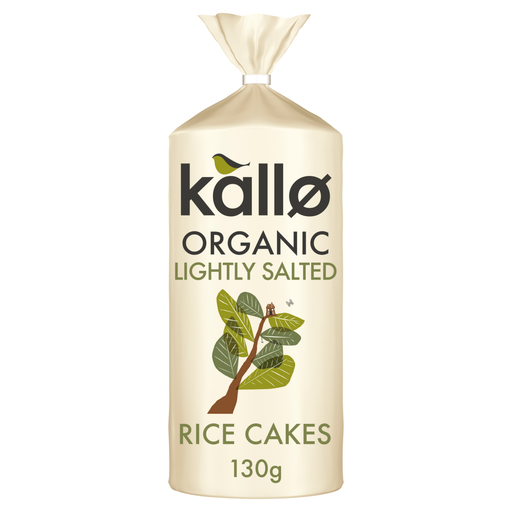 No image available
A lightly salted option if you want to offer plain cakes or add your own toppings. Check the nutrition and allergen information for this Organic variant on its current pack; it is not the same named product as Kallo Lightly Salted.
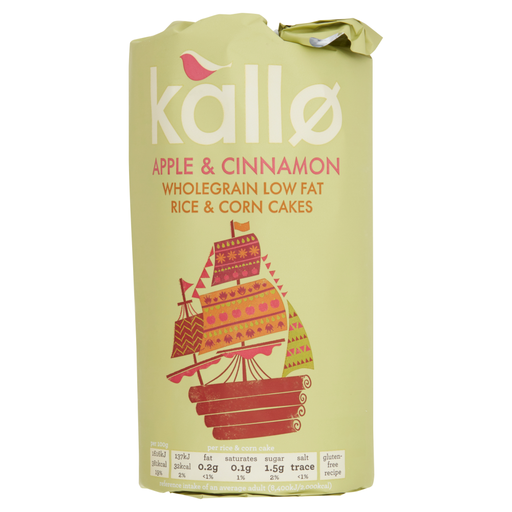 No image available
An apple-and-cinnamon flavoured choice to serve without preparing toppings. Compare its per-cake and per-100g figures with the plain options, and check the current ingredient and allergen panel for guests.
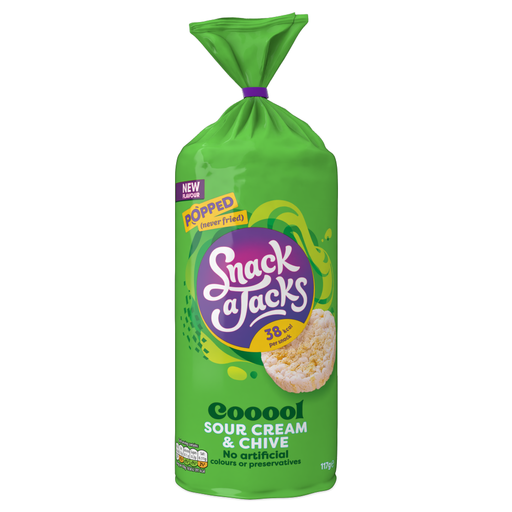 No image available
A ready-flavoured savoury choice for the platter. Read the current pack for calories per cake, salt per 100g and ingredients before deciding whether it suits your guests.
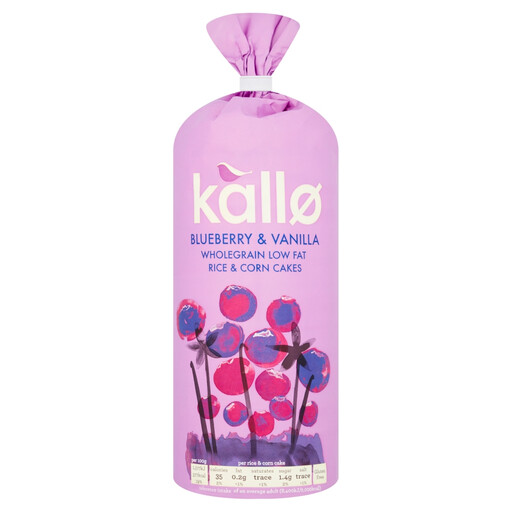 No image available
These rice and corn cakes provide another ready-flavoured option. Check the serving weight, sugars and allergen information on the current pack when comparing them with other sweet cakes.
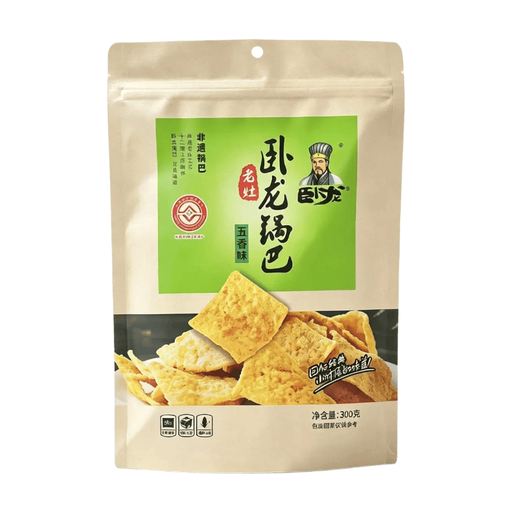 No image available
A five-spice cracker option rather than an individual rice cake. If calories per piece are important for your platter, check the pack’s serving weight and nutrition figures before comparing it with the cakes.
No single calorie figure applies to every rice cake. Kallo lists 27 kcal per Lightly Salted cake and 84 kcal per Yoghurt Topped cake, so check the exact product and serving rather than relying on the category name.
Use both: per-cake calories describe an individual item on the platter, while per-100g figures let you compare products with different cake weights. NHS food-label guidance notes that a manufacturer’s stated portion may differ from the amount you serve.
No. Kallo describes its Lightly Salted cakes as vegan and gluten free, but says they may contain milk, sesame seeds and soya. Check the current pack’s ingredients and precautionary statement against each guest’s specific requirements.
Read salt, sugars and saturates when comparing flavoured or coated cakes. NHS food-label guidance describes nutrition information per 100g and sometimes per portion, allowing you to consider those figures alongside the serving you plan to offer.