Regular rice-cake makers with a preferred dish
If you already use a plate, tin or mould, its outside width and height determine which steaming compartment is practical. Check the space beneath the lid as well as the basket itself.


Choose a multi-tier food steamer if rice cakes are a regular use and you want separate levels for other foods. Choose a rice cooker with a steam basket if cooking rice or grains is the main job and steaming is occasional. Either way, measure your rice-cake dish and confirm usable basket width, height and lid clearance before buying; stated capacity alone cannot tell you whether it fits.
If you already use a plate, tin or mould, its outside width and height determine which steaming compartment is practical. Check the space beneath the lid as well as the basket itself.
Separate tiers may help you keep a rice-cake dish apart from other foods during the same session. Consider how many removable pieces everyone will need to clean and where the appliance will go afterwards.
If rice or grains will be the appliance’s regular job, a cooker with a supplied steam basket may make more sense than a dedicated multi-tier steamer. The basket still needs to accommodate your rice-cake dish.
Decide whether regular, separate-level steaming or everyday rice cooking matters more, then check dish fit. For shared use, cleaning, storage and a suitable socket also affect how practical either choice will be.
| Concern | What to check | Who this matters to |
|---|---|---|
| Rice-cake dish fit | Measure the dish including its rim or handles. Confirm usable basket width, height and lid clearance rather than relying on total capacity or an overall diameter. | If I use the same shallow mould regularly, I need it to sit securely beneath the lid with room for steam to circulate. Around 33% of consumers put dish fit and dependable steaming first. |
| Separate cooking levels | Check the number of tiers you would use at once and whether the assembled steamer fits your worktop and storage space. | When several foods need steaming during a shared mealtime, I want separate levels without having to run another batch. Roughly 27% of consumers prioritise cooking several foods or portions in one session. |
| Cleaning and shared use | Identify which removable parts can go in the dishwasher, and check the appliance’s stored size and socket placement. | I need an appliance that housemates can clean and put away after use, without crowding the sink or sockets. About 27% of consumers make cleaning, storage and safe repeat use their primary concern. |
| Rice and grain cooking | Check whether the appliance cooks rice as a main function and whether its supplied steam basket fits your intended dish. | If I cook rice more often than rice cakes, I would rather use one cooker for regular meals and steam only occasionally. Around 13% of consumers put rice-and-grain multi-use first. |
A supplied rice bowl or steam basket does not establish the space available for your separate plate, tin or mould.
Measure the dish before ordering and confirm the usable basket width, height and lid clearance. Treat litres and overall dimensions as initial size references only.
A timer can end a selected cooking cycle, but it does not replace supervision. Tefal’s appliance guidance and Electrical Safety First advise against leaving an operating small electrical appliance unattended.
Stay available while it runs, and follow the model’s instructions for switching off, unplugging and handling hot parts.
Electrical Safety First warns against overloaded sockets in kitchens. Water, hot surfaces and trailing leads also need attention when worktop space is shared.
Choose a stable, dry position away from the sink, avoid overloading the socket and do not use an appliance with a damaged lead.
Dishwasher-safe baskets or pots do not mean the powered base can be immersed or put in a dishwasher.
Check the cleaning instructions for each part, disconnect the appliance before cleaning and keep the electrical base out of the water.
These examples show how particular product lines approach steaming and rice cooking; the brand name alone cannot establish whether your dish will fit.
Its 14453 is a dedicated three-tier food steamer, while a separate 1.8 L rice cooker has a steaming tray.
The VC145140 offers a compact, two-bowl stainless-steel food-steamer arrangement.
Its reviewed 9 L model is a dedicated steamer that can be assembled with one, two or three tiers.
The reviewed 5 L rice cooker is a rice-first, multi-function alternative with an included steam basket.
These choices cover cooking pots with steaming accessories and a rice cooker with a steam basket. They are worth considering when occasional steaming or another cooking use matters to you; confirm the space available for your rice-cake dish before choosing one.
 No image available
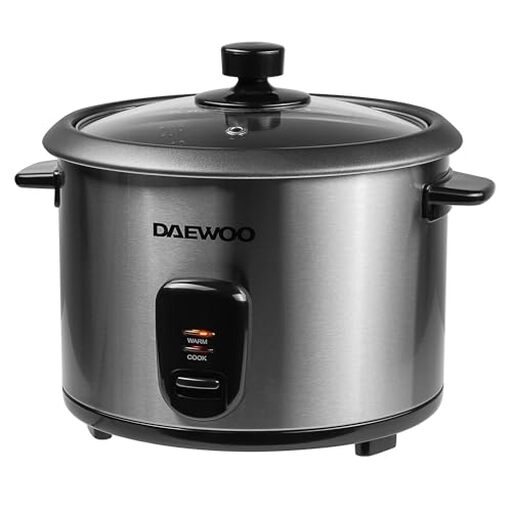
Consider this cooking pot if you want a steam basket for occasional use rather than separate steaming tiers.
The listed variant is 600 W and includes a glass lid. Check the capacity for this variant, as the stated figures conflict, and confirm that your dish fits beneath the lid.
 No image available
This is a rice-first choice if rice cakes will be an occasional steaming task.
The product name specifies a 4-to-10-cup range, a non-stick bowl, a glass lid, a measuring cup and a spatula. Confirm the basket’s usable width and lid clearance against your rice-cake dish.
 No image available
Consider this pot if you want to use a steaming basket alongside cooking in the main pot, rather than use stacked steaming tiers.
It has a transparent glass lid. Confirm the basket’s usable dimensions and lid clearance for your dish, and follow the product’s warnings about hot steam at the outlet.
Not necessarily. Measure the outside of your plate, tin or mould, then confirm the usable basket width, height and space beneath the lid; the presence of a steaming accessory does not establish those dimensions.
Do not leave an operating steamer unattended. A timer or automatic shut-off does not replace supervision, as Tefal’s appliance guidance and Electrical Safety First’s kitchen advice make clear.
Use a stable, dry position away from the sink, with the lead kept clear and a socket that is not overloaded. Check the appliance and cable before use; Electrical Safety First advises keeping kitchen electrical fittings separated from the sink where possible.
Yes, check the rules for your property and agree where the appliance can be used and stored. Local shared-kitchen standards, tenancy terms and arrangements with the person managing the property may affect what is practical.