Frequent family sushi makers
If you regularly make sushi, sushi bowls or hand rolls for several people, look for short-grain cooking guidance and enough usable capacity to avoid repeated batches.


Choose a cooker that accommodates your usual amount of uncooked rice, then check its instructions for short-grain or sushi rice. If sushi is an occasional family meal, a basic model that explicitly handles it may be enough; if you make it regularly or want to cook other dishes, consider a model with suitable rice guidance or additional functions. A stated capacity or programme does not replace checking the bowl markings and cooking instructions for the exact model.
If you regularly make sushi, sushi bowls or hand rolls for several people, look for short-grain cooking guidance and enough usable capacity to avoid repeated batches.
If sushi rice is an occasional meal, check that a straightforward cooker handles the rice you use, fits your usual batch and has cleaning instructions you can follow.
If the cooker will also prepare steamed accompaniments or other dishes, compare the exact model’s functions and accessories as well as its rice-cooking instructions.
For a family sushi meal, settle the rice method and usual batch size before deciding whether extra cooking functions would be useful.
Consider when: Sushi rice is a regular meal and the exact cooker has a named setting or manufacturer instructions for short-grain rice.
Bear in mind: Confirm the programme and fill limits for the model you buy; a programme name does not establish the finished texture independently.
Consider when: You make sushi occasionally and the model explicitly handles sushi rice or supplies a suitable short-grain method.
Bear in mind: A general white-rice setting is not necessarily a dedicated sushi-rice programme.
Consider when: You will use the listed steaming or other cooking modes alongside rice preparation.
Bear in mind: Extra modes do not establish a sushi-rice method; check the instructions and the appliance’s worktop fit.
| Concern | What to check | Who this matters to |
|---|---|---|
| Short-grain rice | Check the exact model’s sushi or short-grain instructions, including the specified water measure. | If I make sushi regularly, I want a stated method rather than guessing from a general white-rice setting. Roughly 36% of consumers would make short-grain handling their primary concern. |
| Family batch size | Compare your usual uncooked-rice amount with the model’s minimum and maximum markings; use its supplied cup measure. | When I prepare rolls or bowls for several people, I want to cook enough rice in one cycle. For around 29% of consumers, batch capacity would come first. |
| Simple operation | Check the controls, removable bowl, included measuring tools and cleaning instructions for the exact model. | If sushi is an occasional meal, I would rather have controls I will use routinely than a long menu of modes. Simplicity would be the main concern for roughly 21% of consumers. |
| Other cooking tasks | Confirm which steaming or other modes and accessories the particular model includes, and which parts its instructions allow you to wash. | When I also want to prepare accompaniments or other meals, the cooker needs to do more than make rice. Around 14% of consumers would prioritise those additional uses. |
Listings may use different cup measures or refer to uncooked rice, cooked rice or portions. A headline cup figure alone may not tell you whether your usual family batch fits.
Check the exact model’s litre capacity, supplied measuring cup and minimum and maximum rice markings.
A basic cooker may cook sushi rice without having a dedicated programme. That distinction matters if you want model-specific guidance for frequent sushi meals.
Look for explicit sushi or short-grain compatibility, or a suitable method in the exact model’s instructions.
Keep-warm during serving is not a substitute for refrigerating rice you plan to save.
Move leftovers into smaller portions and chill them promptly. GOV.UK advises refrigerating leftover rice and consuming it within 24 hours.
Steaming and other functions can be useful for wider meal preparation, but they are not needed solely to cook sushi rice.
Choose a multifunction model if its listed modes match dishes you intend to make, and check that the appliance fits your available worktop space.
Its Sakura range is positioned for people seeking short-grain or sushi-rice guidance.
Its listed rice cooker and steamer models are options for households that also want other cooking modes.
Its listed 1.5L cooker offers a straightforward route for occasional family sushi meals.
Its listed 1.8L rice cooker and steamer is a basic option for people checking larger family batches.
Its listed 1.8L cooker is an alternative for households seeking uncomplicated rice cooking.
These CUCKOO cookers offer different capacities and cooking controls for family meals. Before choosing one for sushi rice, match its batch markings to your usual quantity and check the exact instructions for a suitable method.
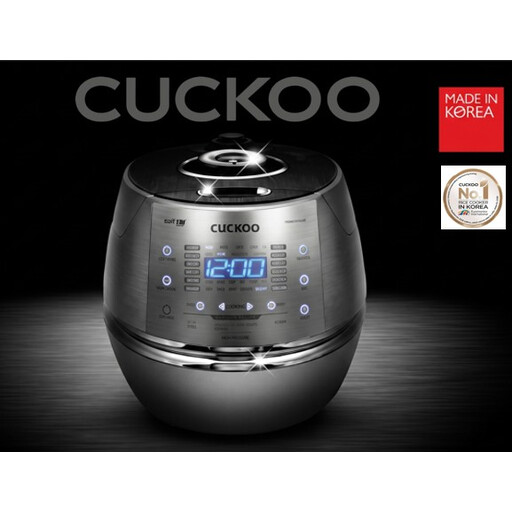 Image unavailable
Consider this model if you want to check a 1.8L cooker against your usual family batch and its instructions for sushi rice.
The product name specifies induction heating and programmable controls. Confirm the applicable rice method, batch markings and supplied plug before ordering.
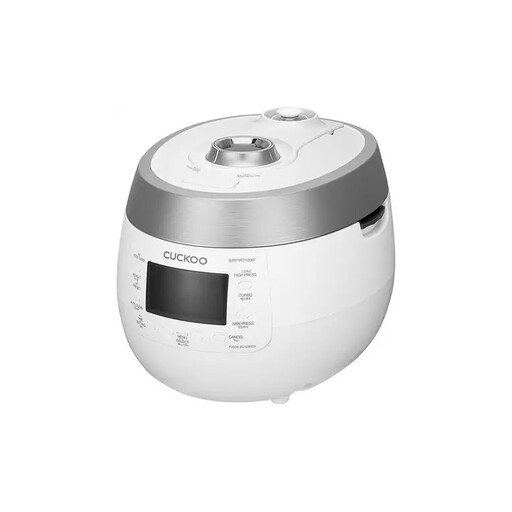 Image unavailable
Consider its pressure-cooking options if you also want to explore meals beyond your usual rice batch; check the model instructions for sushi rice.
The product name states 1150W and 15 programmes. Confirm the usable batch range, worktop fit and supplied plug, and follow the instructions for pressure and steam operation.
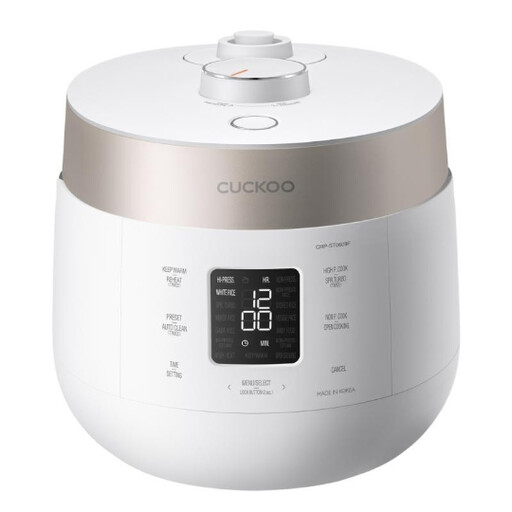 Image unavailable
Check this smaller model only if its batch markings accommodate the rice you normally make for the family.
The product name states 850W. Before choosing it for sushi, confirm a suitable short-grain method in the model instructions, along with the supplied plug; follow its pressure and steam directions.
Yes, if the exact model states that it handles sushi or short-grain rice, or gives an appropriate method in its instructions. The product information describes the Cookworks 1.5L cooker as handling sticky sushi rice, but that does not establish a dedicated sushi programme.
Choose by your usual amount of uncooked rice and the exact cooker’s minimum and maximum markings. Listings from Instant Pot UK include models described as 1.5L, 1.8L, 2.8L and 5L, but their stated cup figures should be read alongside each model’s supplied measuring cup rather than treated as identical portions.
Keep-warm can help while serving, but refrigerate rice you intend to save rather than leaving it to cool in the cooker. GOV.UK advises putting leftover rice in the fridge and consuming it within 24 hours.
Check that the exact appliance supplied has the voltage and plug arrangement required for your location, and follow its electrical and steam-safety instructions. Do not assume that a model name alone identifies the supplied plug or every detail of its local configuration.
Follow the exact model’s manual for cleaning its removable bowl and accessories, and keep the electrical base out of water. Yum Asia’s Sakura manual also warns against touching the steam vent because it can cause burns; take the same care with the steam-release instructions for the cooker you use.