
24/7 Customer Support

Free returns

Same-day & Next-day Delivery

Quality Guaranteed

Unlock Your Welcome Offers: FREE Delivery | Up to 80% OFF | Free 30-day JoyPlus trial
Download the APP
Navigating the world of rice crackers online can feel like a gamble. You see a picture of a delicious-looking snack, but what arrives can be a different story. As a Joybuy Product Recommendation Officer, my role is to help you see past the marketing jargon and make choices that you'll be happy with. Many shoppers find themselves disappointed by snacks that don't live up to their description, especially when exploring new flavours.
Let's look at a few common pitfalls when buying Asian snacks online and how to sidestep them:
To ensure you get the crunch and flavour you're craving, focus on these core details. They are far more telling than the promotional text on the front of the pack.
The first place to look is the ingredients. The primary grain should be high on the list—often rice, but sometimes millet or a blend of cereals. More importantly, look for the preparation method. Terms like "non-fried" or "baked snacks" are good indicators, but you should still check the fat content in the nutritional information to get the full picture. Some gluten-free crackers are available, but always check for soy sauce in the ingredients, as it can sometimes contain wheat.
Don't just rely on the flavour name. To understand what you're getting, look for specific seasoning ingredients. Classic Japanese rice crackers, or senbei crackers, are often seasoned with soy sauce for a simple, umami-rich taste. In contrast, many popular Chinese snacks UK shoppers are discovering feature complex spice blends. If you see ingredients like "Sichuan peppercorn," "chilli powder" or "shichimi togarashi," you can expect a more intense and layered experience. This helps you distinguish between a simple salted cracker and authentic spicy crisps.
Always scan the allergens section, which is typically highlighted in bold. Common allergens in rice crackers include soy, sesame and sometimes milk or wheat. Cross-contamination warnings ("May contain...") are also important if you have a severe allergy. Finally, confirm the net weight (e.g., 90g, 300g, 520g) to accurately judge the value and ensure the quantity meets your needs, whether it's for a personal treat or for sharing.
To help you find a snack that fits your preferences, here are a few recommendations matched to different snacking styles.
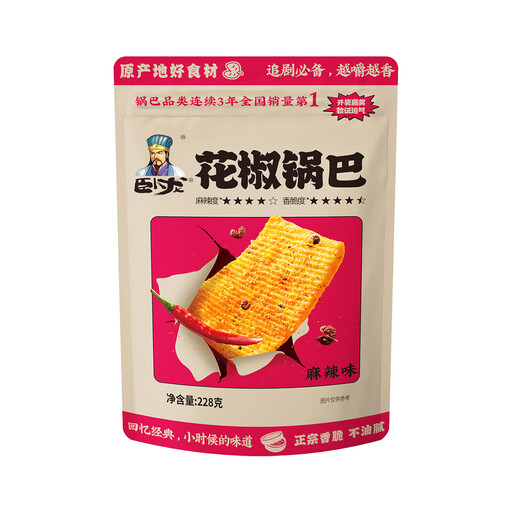
Why This Fits Their Persona: This is for the snacker who is bored of standard flavours and actively seeks out the authentic, tingling 'mala' sensation characteristic of Sichuan cuisine. It's a bold choice that delivers a genuine taste experience.
It avoids the vague flavour trap by being extremely specific. The name includes "Sichuan Peppercorn" and "Numbing" and the ingredients state Sichuan peppercorns (≥0.5%), setting clear expectations for its unique heat.
Features an authentic 'mala' flavour profile. The crackers are made with a non-fried, low-temperature baking process.

Why This Fits Their Persona: Ideal for someone looking for a simple, satisfying crunch without excessive seasoning or fat. The addition of beans provides a nutritional point of difference from standard rice-only crackers.
It sidesteps the "healthy halo" trap by having a transparent and simple ingredient list. With just 5.4g of fat and 0.5g of sugars per 100g, its nutritional profile backs up its wholesome image.
Made with rice, adzuki beans and black soybeans, offering 12g of protein per 100g. The flavour is a simple sea salt seasoning.
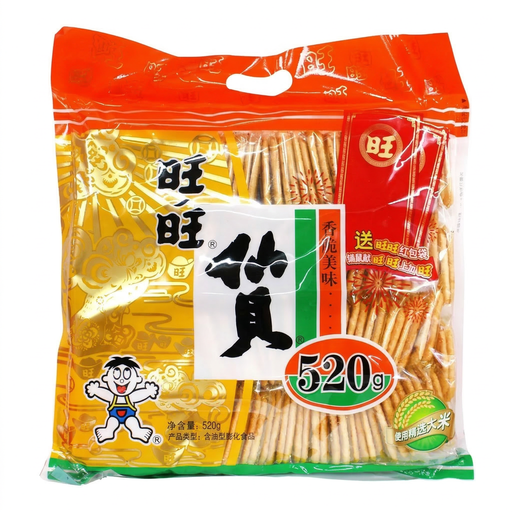
Why This Fits Their Persona: Perfect for households needing a reliable, crowd-pleasing snack. The large quantity and individual packs make it ideal for lunchboxes, after-school snacks or feeding a crowd at a gathering.
This product counters the "value pack" illusion with clear information. The title specifies it's a 520g bag containing 88 individual packs, so you know exactly what you're getting for your money.
Excellent value and convenience. The individual wrapping maintains freshness and helps with portion control.
We have compiled a complete, real-time list of products that fully satisfy these strict selection criteria and UK safety regulations.
Not necessarily. While the primary ingredient is rice, which is naturally gluten-free, many rice crackers, especially traditional senbei crackers, are seasoned with soy sauce. Some soy sauce is brewed with wheat, which introduces gluten. If you require a strictly gluten-free cracker, it is essential to check the allergen information for "wheat" or look for products specifically labelled "gluten-free."
Senbei are a traditional type of Japanese rice cracker. They are typically larger, circular and have a firm, satisfying crunch. The classic flavour profile is savoury, derived from a glaze of soy sauce and sometimes mirin, often with a sheet of nori seaweed. Other rice crackers, particularly modern varieties from China or Thailand, can come in many shapes and sizes and feature a much wider range of flavours, from intense spicy crisps to cheesy or sweet-and-sour seasonings.
The key to maintaining crispness is to protect the crackers from air and moisture. Once a pack is opened, transfer any remaining crackers to an airtight container. If they do lose some of their crunch, you can often revive them by spreading them on a baking tray and heating them in an oven at a low temperature (around 120°C) for a few minutes. Let them cool completely before eating.